Hive Minds and High-Rise Horror: How 'Colony' Rewrites the Zombie Rulebook
Yeon Sang-ho's 'Colony' deploys a hive-mind zombie collective in a Korean shopping mall, turning the genre's classic tropes into a terrifying study of emergent intelligence. The film's choreographed chaos signals a new era where horror's monsters are as smart as they are savage.
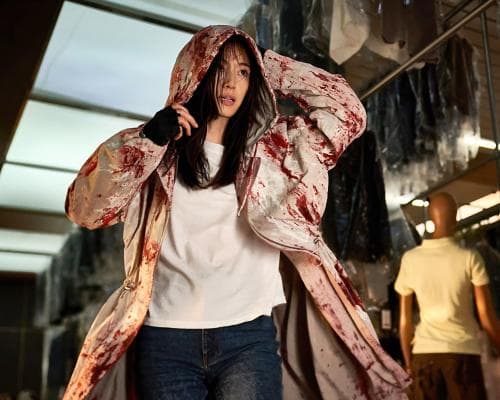
The first scream doesn't come from a victim. It comes from the monster—and that changes everything. In Yeon Sang-ho's latest K-zombie spectacle, 'Colony,' the undead don't just shamble and bite; they sync. One infected spots you, shrieks, and the entire horde pivots in unison, a single predatory organism with a thousand limbs. It's the most chilling use of collective intelligence since a slime mold solved a maze in a lab, and it's the reason this film isn't just another gore-fest. It's a thesis on how fear itself can be networked.
Sang-ho, the visionary behind 'Train to Busan,' knows the genre's DNA. But 'Colony' opens with a biotech CEO monologuing about ant colonies and maze-solving slime mold—science that sounds like a TED Talk before the blood hits the ceiling. That's the tell. This isn't Romero's consumerist critique, though it does trap its survivors in an upscale mall straight out of 'Dawn of the Dead.' Instead, Sang-ho is building a smarter monster: a zombie horde that acts less like a virus and more like a distributed neural network. When the first victim rises, injected with a disgruntled employee's bright green bioweapon, the tower block becomes a petri dish for a new kind of terror.
The real innovation isn't the green goo or the gore. It's the movement. Choreographer Jeon Young, a Sang-ho collaborator since the beginning, enlisted South Korea's top contemporary dancers to embody the infected. Their bodies jerk with angular, unnatural precision, writhing and entwining like a living sculpture. The action sequences feel less like a fight for survival and more like a performance at Sadler's Wells—if the dancers were trying to eat the audience. This is horror as ballet, where the zombies' coordinated spasms make them terrifyingly efficient. They don't just chase; they envelop. They don't just kill; they communicate through motion.
This is a bet on the intelligence of the monster, not just its appetite. In the broader landscape of genre cinema, zombies have been dumbed down for decades—slow, moaning, easily outsmarted. 'Colony' flips that script. Its horde is an emergent intelligence, a swarm that learns and adapts. The moment one infected screams, the entire group turns and attacks, a coordinated response that feels like a biological Wi-Fi. It's a terrifying metaphor for our hyper-connected age: the mob isn't mindless; it's a hive mind, and it's watching you through every pair of eyes.
The market for this kind of elevated horror is booming. Netflix's 'All of Us Are Dead' and the 'Train to Busan' franchise proved that Korean zombies are a global export. But 'Colony' pushes further, blending hard sci-fi with visceral action. The film's early exposition isn't a flaw; it's a foundation. By grounding the horror in real science—ant colony behavior, slime mold intelligence—Sang-ho makes the impossible feel inevitable. This isn't just a movie; it's a proof-of-concept for how the genre can evolve. The choreography, the collective intelligence, the high-rise claustrophobia—it all signals a new arms race in horror filmmaking.
For the industry, 'Colony' is a warning shot. It says that audiences are ready for monsters that think, not just kill. It says that movement can be as scary as makeup. And it says that the zombie film, long declared dead, has plenty of life left if you're willing to rewire its brain. The hive mind isn't just a plot device; it's a creative strategy. As the credits roll, you're left with a chilling question: What if the next outbreak isn't a virus, but an idea—one that spreads through every screen, every signal, and every shared scream? In 'Colony,' that idea is already here, and it's dancing.