GTI Prices Dangote Refinery at N493, Below N525 IPO as Africa's Biggest Share Sale Tests Investor Nerve
GTI Research values Dangote Refinery at N493 per share, under the N525 IPO price, as Africa's largest share sale faces a valuation reckoning.
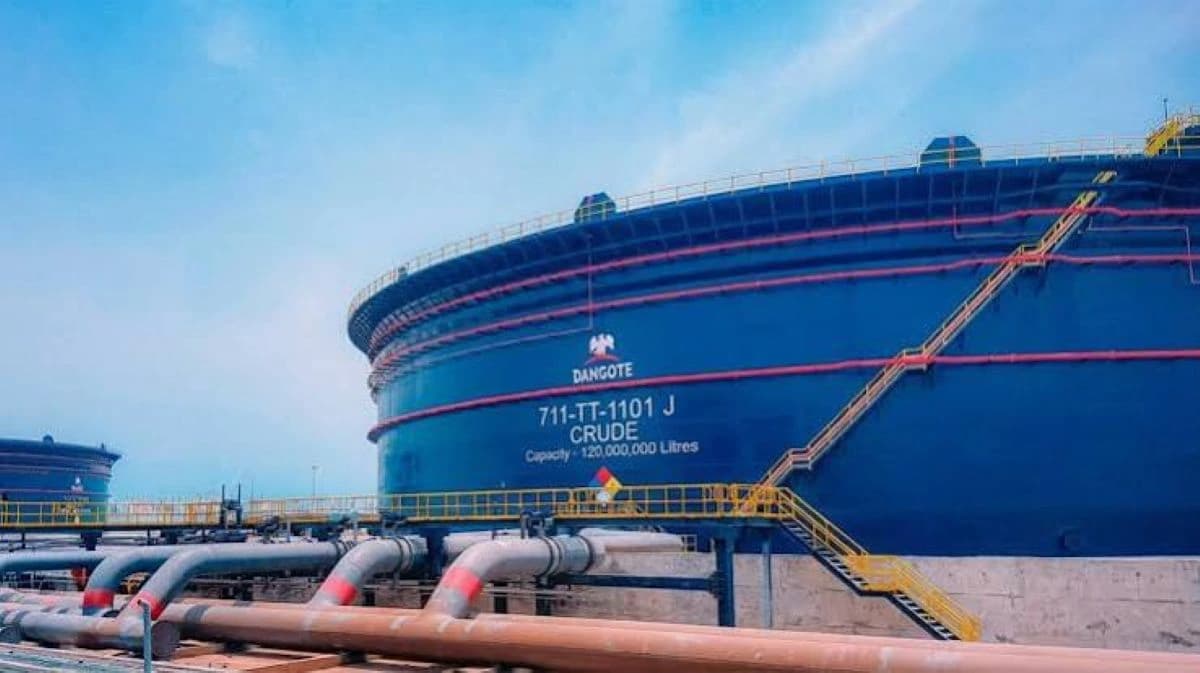
Africa has never seen a share sale like this. Aliko Dangote — the continent's most recognizable industrialist — is asking the public to buy into the refinery that was supposed to change how Nigeria, and much of West Africa, thinks about fuel. The offer is open. The money is not yet in. And now one of Nigeria's more closely watched research houses has done the arithmetic and come back with a number that sits below the asking price.
GTI Research, in a 22-page valuation report led by analyst Abiodun Ogunniyi and published on September 16, 2026, puts a probability-weighted fair value on Dangote Petroleum Refinery and Petrochemicals at roughly N493 per share. The IPO is priced at N525. That gap is small in percentage terms — about 6.1% above GTI's central estimate and 4.4% above its base case — but it is the direction that matters. GTI labels the offer "FULLY VALUED," and its bull case still sits about 21.9% higher, which tells you how wide the range of plausible outcomes remains. The deal itself is enormous: 4.1 billion ordinary shares at N525 each, a minimum subscription of ten shares (N5,250), an indicative post-offer market capitalisation of N65.22 trillion, or about $47.83 billion. Subscription closes October 13, 2026.
For readers outside Lagos, the context is this: Dangote Refinery is not a normal listing. It is a 700,000-barrel-per-day complex that has become the single most consequential private industrial project in Nigerian history, and its financials have swung violently. A net loss of $1.51 billion in FY2024 narrowed to $475.8 million in FY2025, then flipped to a $1.82 billion net profit in the first half of 2026 alone. Operating cash flow hit $1.51 billion in that same half, with closing cash of $4.27 billion. GTI calls it a "fundamental step-change." The company plans to double capacity to 1.4 million barrels a day by 2029. Dangote's beneficial ownership is expected to remain around 84.4% after the offer — a thin free float that GTI flags as a source of post-listing volatility.
The valuation debate turns on method. A simple peer comparison — five comparable refiners trading at an average of 4.79 times EBITDA and 8.54 times earnings — makes the N525 price look expensive, at 8.9 times EBITDA and 12.6 times profits. That implies investors are paying roughly 86% more per unit of profitability and 47% more per unit of earnings than they would for a comparable refiner elsewhere. But GTI deliberately gives that method only about a quarter of the weight. Seventy percent of its model tries to capture future growth, which is why its final number lands close to the IPO price rather than far below it. The report also flags crude supply as a material weakness and describes the investment as "a 3-5 year holding proposition, not a short-term trade."
What this signals about African capital markets is subtler than a simple overpricing story. Nigeria's exchange has spent years trying to attract listings of genuine scale; here is one that could anchor the market for a decade. But the pricing conversation is now being conducted in the language of discounted cash flows and peer multiples, not national pride. That is a maturation. It is also a warning: when a flagship asset prices above independent fair value, the first-day pop can mask a longer grind. The refinery's ability to sustain current refining margins and execute its Phase 2 expansion will matter more than Monday's demand.
For Dangote, the bet is that investors will look past the near-term premium and buy the growth story. For everyone else watching African wealth, the question is whether this IPO becomes the template for how the continent's largest private assets meet public markets — or a cautionary tale about what happens when they do. The offer closes October 13. The market will render its verdict long after that.