Gold's quiet voyage: A Dutch bank's crisis playbook reaches Oceania's shores
Dutch bank moves tonnes of gold in a 'crisis preparedness' drill, a signal for Oceania's wealth holders watching global capital flight and safe-haven shifts.
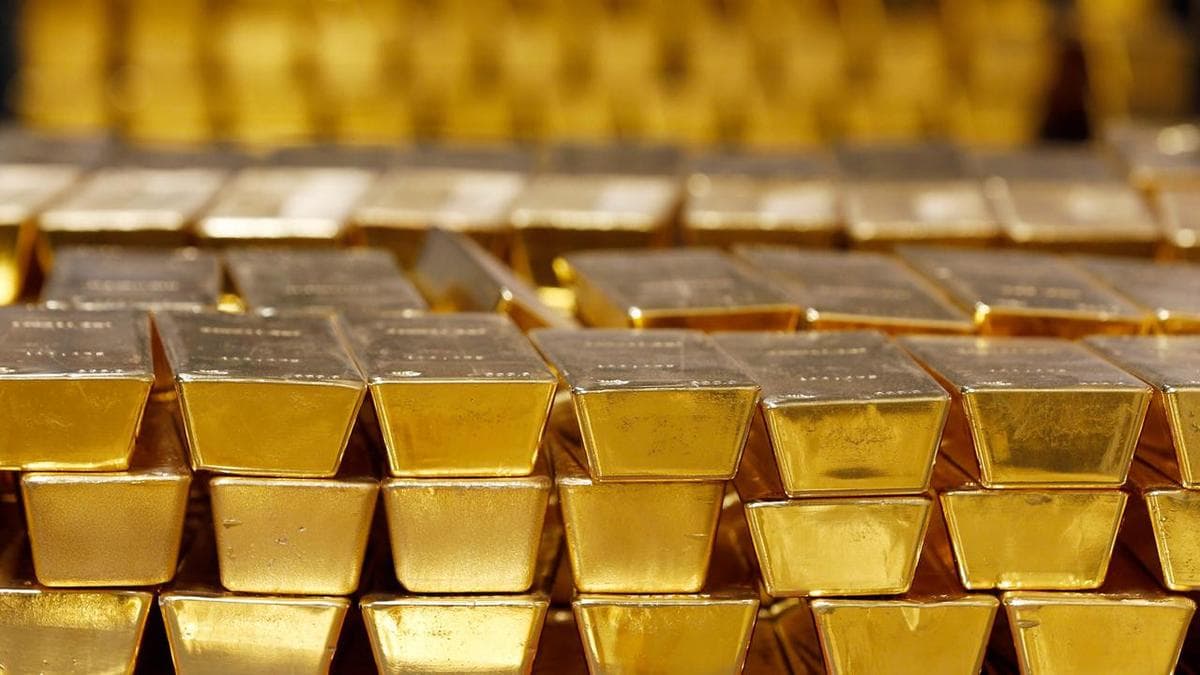
For anyone who tracks the movement of serious money in Oceania, the most telling signal this week did not come from Sydney or Auckland. It came from a vault in the Netherlands, where a Dutch bank quietly shifted tonnes of physical gold under the banner of 'crisis preparedness'. The news, broken by Reuters and carried in The West Australian, is a reminder that the world's oldest currency is still the ultimate hedge for institutions that do not trust paper promises.
The operation involves a Dutch bank — the report identifies it as such but does not name the institution — moving substantial quantities of bullion, measured in tonnes, as part of a contingency exercise. The stated purpose is straightforward: ensure the bank can access and relocate its gold reserves if a crisis disrupts normal financial infrastructure. No exact tonnage or destination was disclosed in the source, and no valuation was given, but the very act of rehearsing a gold evacuation speaks volumes about how the upper echelons of European banking view the current climate.
To understand why this matters in Oceania, you have to appreciate that gold is not just a commodity here; it is a cultural and economic anchor. Australia is one of the world's top gold producers, with vast operations in Western Australia's goldfields — the very region where The West Australian is the dominant voice. For Perth's mining executives and the family offices that bankroll them, a Dutch bank's crisis drill is not an abstract European story. It is a validation of what many local players have been doing quietly for years: holding physical metal outside the traditional banking system, often in private vaults or in the Singapore freeport, as insurance against currency debasement and geopolitical fracture.
The deal also fits a broader pattern of capital behaviour across Oceania. New Zealand's superannuation fund, Australian pension giants, and high-net-worth individuals have all increased their exposure to gold and other hard assets in recent years, even as equity markets hit record highs. The Dutch move suggests that this is not merely a regional quirk but a coordinated shift among global custodians. When a European bank bothers to rehearse moving tonnes of bullion across borders, it is effectively admitting that the unthinkable — a banking freeze, a cyber-attack on settlement systems, or a sudden loss of confidence in fiat currencies — is now a scenario worth planning for.
For the international reader, the local context is crucial. Oceania's wealth is disproportionately tied to extractive industries and long supply chains. A crisis that disrupts gold logistics would ripple through Western Australia's economy, affecting everything from mining royalties to the Perth Mint's refining business. The Dutch bank's move is therefore a mirror held up to our own vulnerabilities: if a European institution needs a gold evacuation plan, what does that say about the resilience of our own financial plumbing, which relies on the same global clearing systems?
The forward-looking takeaway is not doom-mongering but prudence. The Dutch bank's exercise is a quiet admission that the era of cheap money and endless liquidity is over, and that wealth preservation now requires physical, portable, and politically neutral assets. For Oceania's billionaires and their advisors, the message is clear: gold is no longer a relic of the past but a cornerstone of future-proof balance sheets. As the world's central banks continue to buy bullion at record levels, and as European institutions rehearse crisis logistics, the smart money in Perth and Auckland is watching closely — and likely adding a few more bars to the vault.
In the end, this is not a story about a single bank. It is about the changing architecture of global wealth, and how a quiet drill in the Netherlands echoes all the way down to the iron-rich Pilbara and the green hills of Otago. The gold may be moving in Europe, but the lesson is universal: when the storm comes, the safest harbour is the one you have already built.