FIFA's $5B Power Play: The Inside Move That Could Unseat Infantino
As FIFA's commercial empire faces a rare leadership challenge, the man who once opposed its controversial World Cup rights sale is being courted by African federations. The outcome could reshape the economics of global football and the fortunes of its governing body.
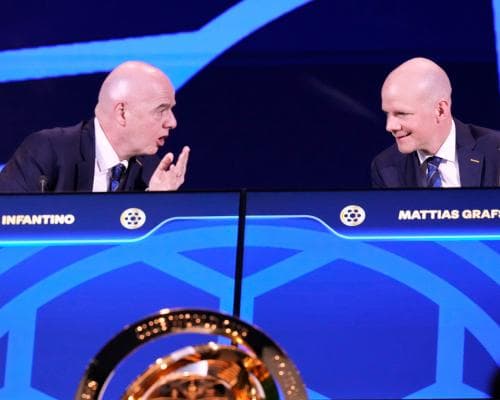
The most valuable asset in global sports isn't a player, a club, or even a World Cup final. It's the office that controls the calendar, the rules, and the money. And that office is suddenly in play. Word from Zurich is that FIFA's general secretary, Mattias Grafström, has been quietly approached by African power brokers to consider a run against Gianni Infantino in next year's presidential election. The fact that this is even a conversation is a signal that the old order—and its carefully managed capital flows—might be cracking.
The scale of what's at stake is staggering. FIFA's 'FIFA Forward Enterprise' plan, which would have sold off 20% of the World Cup's commercial rights, was abandoned after internal backlash. That deal, had it gone through, could have unlocked billions in upfront cash—a liquidity event that would have made sovereign wealth funds blush. It's not just about who runs the game; it's about who controls the revenue streams that feed confederations, national associations, and, ultimately, the infrastructure projects and executive bonuses that flow from them.
Here's where it gets personal. Grafström, a 45-year-old Swede, initially kept his distance from the FFE plan, telling staff in a memo that 'individuals, unstable moments and unfortunate episodes come and go.' That's not just corporate-speak; that's a rebuke. He then signed a letter of 'full support' for Infantino 24 hours later, after COO Kevin Lamour—who had heavily criticized the plan—was sacked. Now, sources say up to 15 African federations are ready to turn their backs on Infantino, despite the Confederation of African Football's claim of unanimous support. Two federation presidents have already called Grafström directly. He was surprised, non-committal, but he didn't hang up.
The heritage angle here is delicious. FIFA has been a family business since its founding in 1904, but the 'family' has rarely been this fractious. Infantino, 56, has centralized power and money like no predecessor, but his reign has also attracted legal scrutiny and political opposition. The fact that a general secretary—the hired help, in football's aristocratic terms—is being courted as a potential challenger is a seismic shift. It's as if the COO of a family office decided to run against the patriarch, with the heirs splitting into factions.
For markets and the wealthy, this is a governance signal. FIFA's commercial rights are a multi-billion-dollar asset class. Broadcasters, sponsors, and investors have priced in Infantino's stability. A contested election introduces uncertainty, and uncertainty discounts future cash flows. If Grafström runs, expect the next 12 months to be a war of leaks, endorsements, and financial promises. The African vote—historically a bloc—could fragment, and that's where the real power lies. The Confederation of African Football's 'unanimous' support is now a fiction, and everyone knows it.
What happens next? Grafström has a choice: stay in the shadows and consolidate his position, or step into the light and force a reckoning. If he runs, he'll need to build a coalition beyond Africa—Asia, Oceania, maybe even parts of Europe. He'll need to promise more money, more transparency, or both. The smart money says Infantino still wins a contested vote, but the odds are shortening. The real lesson for wealth builders is simple: control of an asset is only as secure as the loyalty of its key stakeholders. When a number two starts getting phone calls, the number one should start worrying. The World Cup's next cycle—and its billions—may depend on it.