FIFA's $25B Shadow Deal Dies, But Europe's Clubs Just Drew a Hard Line
The most powerful clubs in world football just did something investors rarely see: they stared down the sport's governing body, threatened to walk away from its flagship global tournament, and won — all before breakfast. In the early hours of August 1, FIFA shelved its privately backed Football Forward Enterprise (FFE), a scheme that would have funneled billions in broadcast and sponsorship rights through a secretive corporate structure. But the real story isn't that the plan collapsed. It's that Europe's elite clubs — the revenue engines of the entire sport — are now openly flexing their commercial muscle, and FIFA blinked.
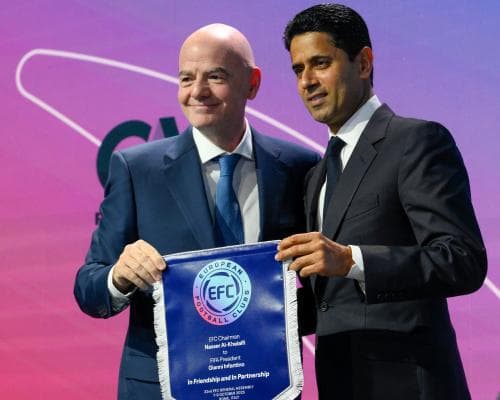
The ultimatum came in a letter dated July 31, signed by Charlie Marshall, chief executive of the European Football Clubs (EFC) group, and addressed to FIFA's secretary general, Mattias Grafström. The message was blunt: unless Gianni Infantino withdrew the FFE proposal, Europe's top clubs would reconsider participation in future Club World Cups. Not just the men's tournament, but the women's edition too, and potentially the entire international match calendar. The letter warned that FIFA's actions could constitute a "substantial breach" of the existing memorandum of understanding between the two bodies — a legal escalation that could unravel the very framework that keeps global football functioning.
At the heart of the dispute is money — vast, compounding, global money. The FFE was designed to consolidate all FIFA's commercial rights, including broadcasting, sponsorship, and data, under a single private umbrella. That would have given FIFA, and its private backers, direct control over revenue streams that clubs currently share. The EFC's counter-demand was simple: the joint venture already agreed between the two bodies must be completed before FIFA sells any television rights for the 2028 Women's Club World Cup. In other words, the clubs want a seat at the table — not as partners, but as gatekeepers. They argued, witheringly, that the agreed joint venture had "made no meaningful progress over the past year" — a pointed contrast to the rapid, secretive advancement of the FFE.
The numbers behind this power play are staggering. FIFA's Club World Cup, expanded to 32 teams for 2025, is expected to generate over $2 billion in revenue, with broadcast deals inked with DAZN reportedly worth nearly $1 billion alone. The FFE was rumored to be backed by private equity firms eyeing a 10-15% stake in FIFA's commercial operations, with valuations north of $25 billion. That's not just football money; that's sovereign-wealth fund territory. The clubs, who generate the actual product — the matches, the stars, the drama — were being asked to watch from the sidelines while FIFA monetized their labor. Their threat to boycott wasn't about pride; it was about protecting the value of their most valuable asset: their participation.
This is a classic capital story: the asset owners vs. the middlemen. In public markets, when a company's key suppliers band together to demand better terms, the stock usually wobbles. Here, the "suppliers" are the 12 richest clubs in Europe, with combined annual revenues exceeding $10 billion. They have the leverage, and they know it. The international match calendar — the system that allows national teams to pull players from club duty — is fragile, and without club cooperation, it collapses. FIFA needs the clubs more than the clubs need FIFA. That's the message the EFC delivered, with a legal sledgehammer.
For the wealthy investors and family offices that increasingly treat football clubs as trophy assets, this standoff is a warning shot. The days of passive ownership, where a billionaire buys a club and lets FIFA set the rules, are over. The clubs are now asserting their commercial sovereignty, and that changes the risk profile of every football-related investment. If the clubs win this battle — and they already have — expect more aggressive revenue-sharing demands, more direct-to-consumer broadcast deals, and a more fragmented commercial landscape. For the sport's global sponsors, the uncertainty is real: who, exactly, will hold the rights to the game's biggest events in 2028 and beyond?
FIFA's retreat is not the end; it's the opening bid. The EFC letter makes clear that the joint venture is non-negotiable, and the clubs will not wait indefinitely. The next move is already being telegraphed: the Women's Club World Cup rights will be the test case. If FIFA tries to sell them without the clubs' blessing, expect the boycott threat to become reality. For investors, the takeaway is simple: in the new football economy, the clubs hold the cards, and FIFA's monopoly on global tournaments is cracking. The smart money is already betting on the clubs — and on the chaos that comes with their rise.