FiberOne's seven-state push turns broadband into a community-building tool across Nigeria
FiberOne Broadband expands to seven Nigerian states, pairing network growth with road repairs, school connectivity, and youth training to win local trust.
For anyone tracking capital in Africa, the most interesting move this quarter isn't a mega-deal or a flashy fintech raise. It's a Nigerian internet provider quietly turning broadband into a community-building tool. FiberOne Broadband is expanding to seven more states before year-end, but what sets this apart is how it's doing it: by fixing roads, lighting streets, and training local youth alongside laying fiber. In a market where infrastructure gaps often stall digital ambitions, this dual-track approach is a signal worth decoding.
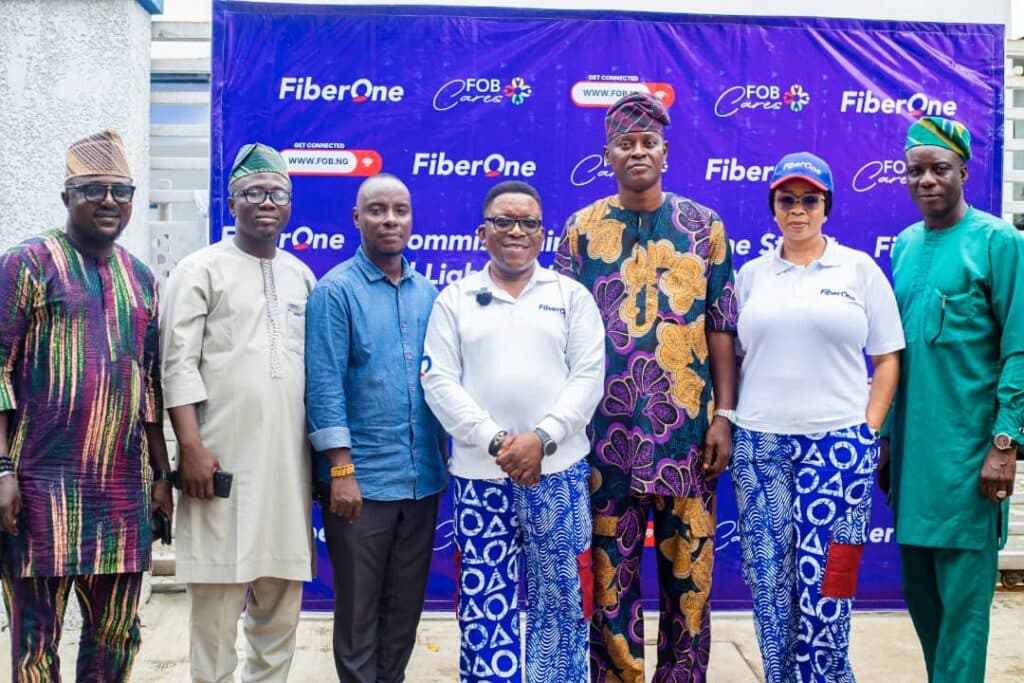
FiberOne, a Lagos-based ISP, already operates in Lagos, Abuja, Port Harcourt, Ilorin, and Ibadan. Now it's adding Abeokuta, Edo, Ondo, Delta, Kano, and Kaduna to its network. The company isn't just selling connections; it's investing in the communities it enters. In Lagos's Kosofe Local Government Area, it recently commissioned a road rehabilitation and street-lighting project in Anthony and Mende, covering streets like Olorunlogbon and Ajose Osborne. Local officials and residents showed up, with Councillor Gbenga David praising the effort but pushing the company further: create jobs and training for the area's youth. That's a telling moment—communities are starting to expect more from corporate players, and FiberOne seems to be listening.
Behind this lies a deeper strategy. FiberOne's head of regulatory and public relations, Kehinde Joda, points to the FiberOne Training Academy (FOTA), which offers free practical engineering training to locals. Top performers get hired. The company is also pushing STEM education through its MindMasterz quiz competitions and connecting schools via Project Giga, which will jump from 10 schools in 2025 to 30 in 2026. These aren't side projects; they're core to how FiberOne operates. In a country where the telecom sector suffers from a chronic shortage of technical talent, this is a smart way to build a workforce while also building goodwill. It's also a response to the reality that in Nigeria, infrastructure gaps—like poor roads and unreliable power—affect everything, including internet adoption.
The expansion into northern states like Kano and Kaduna is particularly significant. These regions have historically been underserved by broadband providers, and FiberOne's entry could help bridge a digital divide that has economic and social implications. But it's not just about geography. The company is also rolling out products like Power Packs (battery backups for routers) and Wi-Fi 6 extenders, addressing the practical pain points of Nigerian users who deal with power cuts and weak signals. This customer-centric approach, combined with community investment, is a template for how infrastructure companies can thrive in emerging markets: by embedding themselves in the local fabric rather than just extracting revenue.
For observers of African wealth, this story is about a different kind of capital—social capital. FiberOne's model suggests that long-term success in Africa's broadband market depends on more than just laying cable; it requires earning trust through visible, tangible benefits. As the company's commercial head, Omotola Olajubu, notes, the network is expanding into new Lagos areas like Satellite Town and Alimosho, but the community work is expanding too. The Light Up Project is set to spread to other neighborhoods. This isn't philanthropy for its own sake; it's a business strategy that recognizes that in Nigeria, a connected community is a loyal customer base.
Looking ahead, FiberOne's dual-track expansion could become a case study for other infrastructure players across the continent. The question is whether this model scales beyond Nigeria's commercial capital. If FiberOne can replicate its community-first approach in Kano and Kaduna, it might not just build a bigger network—it could redefine how African companies approach growth. For now, the company's mantra, as Joda puts it, is simple: 'When we start, we don't stop.' That persistence, paired with a genuine investment in people, might just be the formula for winning Africa's next digital frontier.