Falklands Oil: The Geopolitical Storm That Just Sank Rockhopper
Argentina's President Javier Milei has threatened sanctions against oil firms operating near the Falkland Islands, sending shares in UK explorers Rockhopper and Borders & Southern plummeting. The move escalates a sovereignty dispute that could delay the Sea Lion project's 2028 first oil and reshape the economics of offshore energy in the South Atlantic.
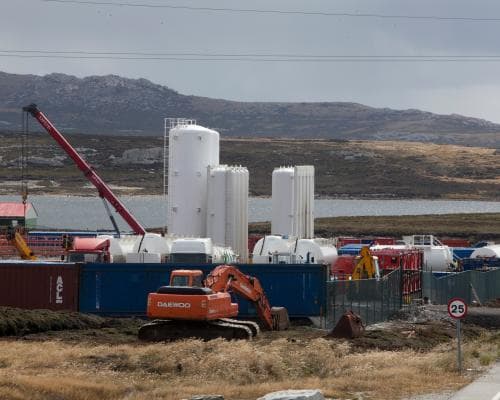
London's trading floor had barely opened when the numbers started flashing red. Rockhopper Exploration, named after the penguin that waddles across the Falklands' shores, saw its shares plunge 10% in early trading, before settling at a two-month low of 71.1p. Borders & Southern, another UK-based explorer in the same waters, fared even worse, dropping 15%. The cause? Not a dry well, not a rig failure, but a television address from Buenos Aires. Argentina's President Javier Milei, the chainsaw-wielding libertarian who promised to shrink the state, has found a new target: the oil companies circling the islands he calls Las Malvinas.
Milei's rhetoric was uncharacteristically bellicose. He called the Sea Lion oilfield, discovered by Rockhopper in 2010 and located 220 kilometers north of the Falklands, a 'clear and present danger' to Argentina's national security. 'Argentina will not stand idly by,' he declared, adding that 'the winds of change' support his country's claim. For investors, this was a stark reminder that in the high-stakes game of offshore energy, geology is only half the battle. The other half is geopolitics. Rockhopper and its Israeli partner Navitas Petroleum had been preparing to drill in the coming months, with first oil targeted for 2028. That timeline now looks fragile, as Milei threatens sanctions against any firm that advances the project.
The Sea Lion field isn't just another oil prospect. It sits in the North Falkland Basin, a region that holds an estimated 1.7 billion barrels of oil equivalent, according to Rockhopper's own assessments. The project has already survived a decade of low oil prices, regulatory hurdles, and a previous Argentine government's threats. But Milei's intervention is different. Unlike his predecessors, who often used the Falklands as a rhetorical tool, Milei has tied the issue to his broader economic agenda. He's courting Western investment, yet he's also positioning himself as a defender of Argentine sovereignty. This dual stance creates a volatile cocktail for any company with exposure to the region. Rockhopper's management now faces a choice: accelerate the drilling schedule to outrun the political storm, or pause and hope that diplomacy cools the temperature.
The market's reaction is telling. Rockhopper's shares had been climbing since late 2024, buoyed by optimism about the Sea Lion project and a broader rally in North Sea and Atlantic oil plays. Thursday's drop wiped out weeks of gains, and the options market is pricing in further volatility. Borders & Southern, which has yet to produce a barrel from its holdings, is now trading at a fraction of its 2011 highs, when the Falklands boom was at its peak. The sell-off isn't just about the immediate threat of sanctions. It's about the long-term cost of capital. If Argentina makes good on its threats, insurers may raise premiums for vessels operating in the region, and logistics costs could balloon. For a project like Sea Lion, which needs oil prices above $50 a barrel to break even, even a 10% increase in costs could push the economics to the edge.
This is not just a story about two small explorers. It's a signal for the entire offshore energy sector, which is increasingly moving into contested waters. From the South China Sea to the Eastern Mediterranean, the world's most promising oil and gas reserves are often found in places where sovereignty is disputed. The Falklands, with its harsh weather and remote location, was already a challenging frontier. Now it has become a geopolitical flashpoint. Milei's threat is a reminder that energy security is not just about supply chains and technology. It's about the willingness of governments to protect their claims, even at the cost of economic progress. For the UK, which has maintained its sovereignty over the islands since 1982, the pressure is mounting. London has not yet issued a formal response, but diplomatic sources suggest that the UK will treat any sanctions as an unfriendly act.
What happens next will depend on how quickly Rockhopper and Navitas can move. The two companies have already secured drilling rigs and are in the final stages of environmental approvals. If they can spud a well before Milei's threats become concrete action, they may be able to de-risk the project. But the window is narrowing. Argentine elections are due in 2025, and Milei's populist rhetoric is likely to intensify as he seeks to rally nationalist support. For investors, this is a classic binary risk: either the project goes ahead and delivers a windfall, or it gets mired in a political quagmire that could take years to resolve. The smart money is hedging its bets.
For the broader market, the Falklands saga is a cautionary tale about the limits of pure-play exploration. Rockhopper's plunge is a reminder that in the energy sector, the biggest risks are often not geological but political. As the world transitions to cleaner energy, the remaining oil reserves will increasingly lie in hostile or disputed territories. The companies that thrive will be those that can navigate this new reality, with deep pockets, diversified portfolios, and strong government backing. Rockhopper, with its single-minded focus on the Falklands, is now a case study in vulnerability.
Looking ahead, the next few months will be critical. If drilling proceeds and the Sea Lion field comes online as planned, Rockhopper could become a major player in the South Atlantic. But if Milei follows through on his sanctions, the project could be delayed indefinitely, and the company's survival would be in question. The irony is that Milei, an avowed free-marketeer, is now using the state's power to block a private enterprise. That's a contradiction that even his supporters may struggle to reconcile. For now, the world watches. The penguins, as ever, remain indifferent.