Falklands 2047: Fishing rights extension locks in Britain's South Atlantic squeeze
Falklands extends fishing licenses to 2047 as oil nears production, tightening UK's grip on South Atlantic waters Argentina claims.
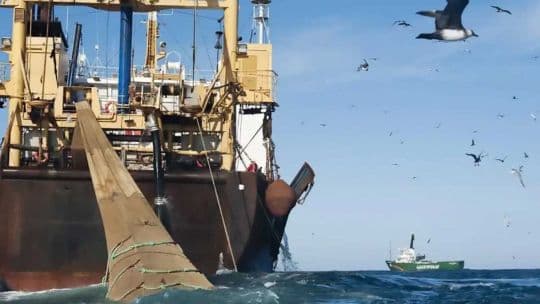
For anyone tracking the quiet accumulation of wealth in the South Atlantic, the news from the Falkland Islands this week was less about fish and more about the long game. While the world's attention flickers between commodity booms and border disputes, the islands' government has just handed the region's main fishing companies a 25-year renewal of their licenses — a move that stretches Britain's commercial footprint in these contested waters to 2047, just as the Sea Lion oil project prepares to start pumping in 2027.
The decision, reported by the Buenos Aires Times, is a classic Falklands two-step: secure the cash flow from squid and finfish today, while betting on hydrocarbons tomorrow. The islands' administration, which runs a quasi-independent economy under British sovereignty, has extended the rights of the principal operators circling the archipelago. No financial figures were disclosed, but the strategic arithmetic is obvious. Fishing is the economic backbone of the Falklands — it funds public services, infrastructure, and the very viability of a community of roughly 3,000 people perched on a windswept outpost. By locking in these companies for another quarter-century, the government in Stanley is ensuring that the islands' budget remains fat while the oil rigs get built.
For outsiders, it helps to know that the Falklands — or Malvinas, as Argentina insists — are not just a geopolitical sore spot. They sit atop rich fishing grounds, particularly for Illex squid, which feeds a global market from Europe to Asia. The companies now holding these extended rights are mostly foreign-owned, with Spanish, South Korean, and British interests historically dominant. They pay license fees that account for a significant chunk of the islands' revenue, and in return they get exclusive access to one of the world's most productive marine zones. This renewal is not a bureaucratic formality; it is a signal that the Falklands government intends to remain a reliable partner for capital, even as Argentina's rhetoric over sovereignty heats up.
The timing is no accident. Sea Lion, the offshore oil field developed by a consortium led by Rockhopper Exploration, is slated to come online in 2027. That project has faced years of delays, cost overruns, and legal tangles, but it now appears to be on the cusp of reality. Oil would transform the Falklands' economy from a fishing-dependent microstate into a bona fide energy player. By extending fishing rights now, the islands' government is essentially telling investors: we can manage long-term contracts, we can provide political stability, and we are open for business — despite Argentina's claims. It's a classic hedge: if oil stumbles, the fishing revenue remains; if oil succeeds, the two sectors can coexist, feeding a growing local economy.
For South America's wealthy and their advisors, this is a reminder that the region's resource wealth is not just about what lies within national borders. The Falklands' move underscores how contested waters can become zones of entrenched commercial interest. Argentina has long argued that the islands are part of its national territory, and it has tried to pressure fishing and oil companies with fines and threats. Yet the reality on the water is that British jurisdiction holds, and capital follows the legal certainty that London provides. This extension to 2047 effectively freezes out any near-term possibility of Argentine control, at least on the fishing front, and makes any future negotiation far more complex — because now you have not just a flag dispute, but a web of contracts binding companies to Stanley for another generation.
What does this mean for the wider region? It suggests that the South Atlantic remains a frontier where sovereignty and commerce are inseparable. For international readers who watch how wealth moves in South America, the lesson is that the Falklands are not a relic of 1982 but a living laboratory of how small jurisdictions can leverage natural resources to punch above their weight. The islands' government has learned the playbook of tax havens and special economic zones, but with a twist: they control a resource that the world needs — food and fuel. As Sea Lion comes into production, expect more headlines about oil barrels and less about squid catches. But this license renewal is the quiet, unglamorous deal that ensures the islands' finances stay solid as they enter the oil era. It is a bet on continuity, and for now, it looks like a winning one.