Everton's Deadline-Day Chaos Signals a New Owner Learning the Hard Way
The Friedkin Group's botched transfer deadline day—losing a £35m sale and a £40m signing—undermines its 'winner' branding and raises fresh doubts about Everton's financial strategy. For wealth builders, the episode is a case study in how ownership reputations and asset values are made and broken in football's high-stakes market.
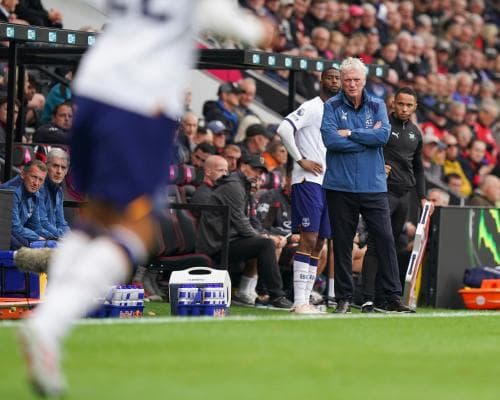
There is a special kind of embarrassment reserved for owners who talk about winning but then fumble the easiest part of the game: writing a cheque. Everton's deadline day was not just a logistical mess; it was a public demonstration of how The Friedkin Group, the American ownership that took over in December 2024, is still learning that in football's transfer market, indecision is a cost you carry on the balance sheet.
Start with the numbers, because they tell the story. Everton accepted a £35m bid from Nottingham Forest for academy product Harrison Armstrong on Saturday morning—a sale that looked like smart deleveraging. But by Tuesday night, Folarin Balogun, the striker who was supposed to be the club's marquee signing, walked away from a £40m move from Monaco. Between those two moments, the club spent £16.5m on Hayden Hackney, a fee that could rise to £25m, but failed to add the attacking firepower that manager David Moyes has been quietly demanding all summer.
The Friedkin Group came in with a reputation for stability, having refinanced the onerous loans left by Farhad Moshiri and cleared the long-term repayment costs of the new stadium. That was real capital discipline—the kind that makes institutional investors nod approvingly. But the transfer window is not a private equity deal. It is a public auction where hesitation is visible, and where the market reads every signal. By pulling out of the Balogun deal at the last minute, TFG signaled that its commitment to competing at the top end is still provisional.
Here is the uncomfortable truth for Everton's new owners: they are now being compared to the very regimes that drove the club into its longest trophy drought in history. Moshiri, for all his faults, at least had a go. He spent recklessly, but he spent. TFG's approach so far has been more conservative, more careful—and in football, careful is often just a synonym for cheap. The club's chief executive, Angus Kinnear, called TFG 'winners' when they arrived, but that label now looks premature, even generous.
The market is watching, and it is not just about player transfers. Everton's valuation, its commercial partnerships, and its ability to attract top talent in future windows all hinge on perception. When an owner publicly fumbles a £40m deal, agents and players take note. The next negotiation starts from a position of weakness, because everyone knows you are willing to walk away. That is a real cost, even if it does not show up on the income statement.
For the wealthy and the institutional investors who follow football's financial flows, this is a lesson in asset management. A football club is not just a collection of players and stadiums; it is a bundle of expectations and narratives. The Friedkin Group has fixed the balance sheet, but it has not yet fixed the brand. And in a market where the top clubs are valued at billions, the gap between stability and ambition is measured in trophies—and in the discounted cash flows that follow them.
Moyes, the veteran manager, knows this better than anyone. He kept his counsel through pre-season, watching the club spend modestly while rivals splashed out. But his patience is not infinite. If TFG cannot deliver a squad that competes for European places, the next conversation will not be about transfer targets—it will be about whether the owner's 'winner' rhetoric was ever more than a marketing line. For now, the odds are stacked against Everton again, but the real fight is not on the pitch. It is in the boardroom, where trust is the most expensive asset of all.