Deepak Parekh, the Man Who Built HDFC, Is Now Advising Fairfax on India's Biggest Foreign Bank Bet
Fairfax is buying 60.72% of IDBI Bank for about $5.5 billion and has enlisted former HDFC chairman Deepak Parekh as an advisor.
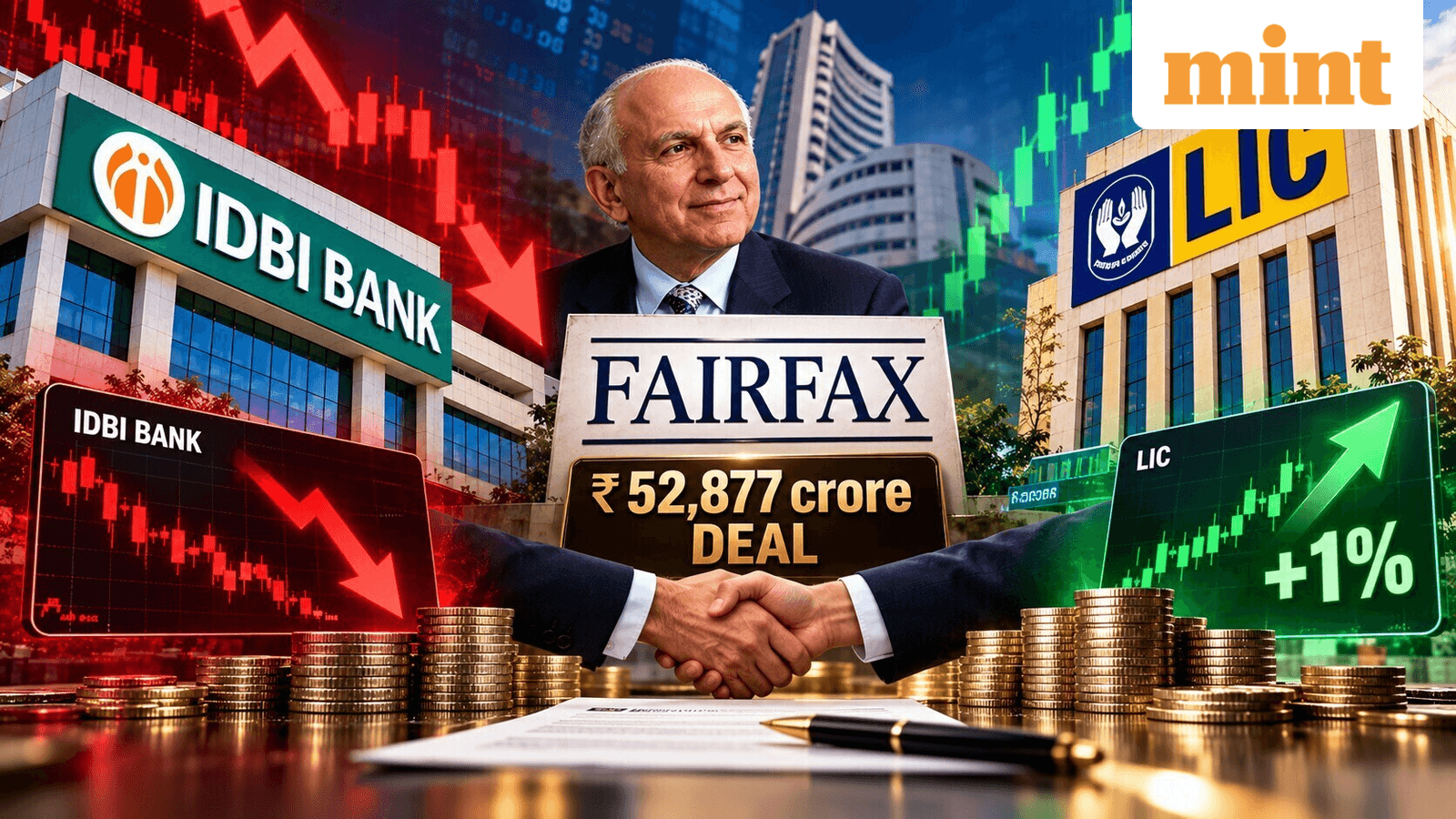
When Canada's Fairfax Financial Holdings agreed to buy a majority of IDBI Bank, the most telling detail wasn't the price tag. It was the phone call. Prem Watsa, the billionaire founder of Fairfax, told investors he has lined up Deepak Parekh — the man who spent four decades turning a small mortgage lender into HDFC, one of India's most consequential financial institutions — to help steer the acquisition. For anyone tracking Asian capital, that name carries weight beyond the balance sheet.
The numbers first. Fairfax will acquire a 60.72% stake in IDBI Bank for roughly ₹53,000 crore, or about $5.5 billion, according to reports. The structure splits neatly: the Canadian insurer takes the Indian government's 30.48% holding for about ₹26,620 crore and state-run Life Insurance Corporation's 30.24% for about ₹26,440 crore. India's Cabinet Committee on Economic Affairs has approved the deal, which is poised to become the largest foreign investment in an Indian bank. It still needs the central bank's "fit and proper" assessment, plus clearance from the Competition Commission of India and other statutory authorities.
Parekh's involvement is the story within the story. He joined his uncle's newly formed Housing Development and Finance Corporation in 1978 as an assistant general manager and built it into a mortgage giant, then spearheaded its move into banking with the creation of HDFC Bank. He stepped down as chairman in June 2023 after the merger of HDFC and HDFC Bank — a transaction he called the biggest in India's corporate history, creating a combined entity with assets of ₹18 lakh crore. Along the way he chaired HDFC Life, HDFC ERGO, HDFC Asset Management and Glaxo India, among others. Paresh Sukthankar, the former HDFC Bank deputy managing director who resigned in 2018 after a 24-year stint, is also being consulted. Fairfax expects IDBI's current CEO and MD, Rakesh Sharma, to continue leading the lender. The reported executive suite includes former CSB Bank CEO CVR Rajendran and NS Kannan, formerly MD and CEO of ICICI Prudential Life and CFO of ICICI Bank, tipped as chairman subject to RBI approval.
Why does this matter to outsiders? IDBI Bank is a legacy Indian institution with a complicated history — a development finance house that became a commercial bank, later weighed down by bad loans and kept afloat by state ownership. The sale process began in 2022 and stumbled earlier this year when initial bids fell below the government's reserve price. Getting a foreign buyer across the line, with domestic heavyweights lending credibility, signals that New Delhi is serious about offloading state assets and that global capital is willing to underwrite the turnaround — provided the right local hands are on the wheel.
For Asia's wealth map, the Fairfax-IDBI deal is a template worth watching. Foreign strategic money is moving into Indian financial services not as a passive investor but as a controlling owner, and it is borrowing the reputational capital of the old HDFC guard to do it. Parekh and Sukthankar are not household names in Toronto or London, but in Mumbai they are the closest thing the financial sector has to a seal of approval. Watsa, an Indian-born Canadian, understands that instinctively.
The remaining hurdles are regulatory, not commercial. The RBI's fit-and-proper review will scrutinise the new leadership slate, and the CCI and other authorities have their say. If approvals land, Fairfax inherits a bank with a national footprint and a mandate to rebuild. If they stall, the message to foreign buyers eyeing India's state-owned assets will be less encouraging. Either way, the deal has already done one thing: it has reminded the region that in Indian finance, institutional memory is an asset you can still hire.