Egypt's UMAMI bets $1 million on AI 'operating system' for learning across MENA
Egyptian edtech UMAMI launches LOS, an AI learning platform backed by EGP 50M, targeting governments and enterprises across MENA.
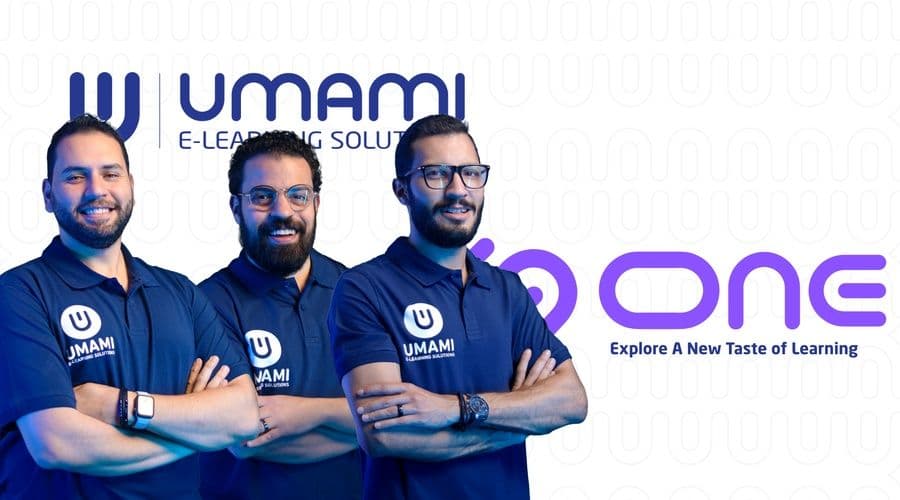
For years, the Middle East's governments have poured money into education and training, only to discover that a diploma or a course certificate rarely translates into a worker who can actually do the job. That disconnect — between what people learn and what economies need — is the gap Cairo-based UMAMI E-Learning Solutions is now trying to close with a product it calls LOS, or Learning Operating System. The company has just announced a phased investment of more than EGP 50 million, roughly $1 million, to build and roll out this AI-powered platform across Egypt and the wider MENA region.
Founded in 2019 by Ahmed Seif El-Din, UMAMI is not a flashy consumer app. It builds digital learning and workforce development tools for governments, ministries, educational institutions, and large enterprises. The new LOS platform is designed to be a single, unified layer that connects learning activities, skills tracking, workforce readiness, performance metrics, and institutional decision-making. The pitch, in essence, is to do for human capability what ERP systems did for enterprise operations or what CRM did for customer management — create a foundational infrastructure that turns scattered data into actionable intelligence.
The timing is deliberate. UMAMI says it has supported large-scale learning initiatives across more than 35 countries, and kept hitting the same wall: institutions were spending heavily on training but had no coherent way to measure whether that investment actually moved the needle on workforce capability. LOS is meant to be that missing operating layer, integrating with formal education, healthcare, technical and vocational training, and corporate environments. For an outsider, the significance here is not just the technology, but the market it targets. In Egypt and the Gulf, governments are the biggest buyers of training and education services, and they are under mounting pressure to show measurable outcomes from national upskilling programs.
This launch also carries a political signal. UMAMI recently became one of the first Egyptian companies to receive the official Startup Label under the country's national Startup Charter, a state-backed framework that recognizes firms meeting rigorous standards in innovation, scalability, and investment readiness. The Charter is tied directly to Egypt's Vision 2030, which aims to build a knowledge-based economy and supports up to 5,000 startups, generating hundreds of thousands of jobs over the next five years. Being among the first to receive this label is not just a badge — it is a statement that Cairo sees edtech as a strategic asset, not a side business.
For anyone tracking capital flows in the Middle East, this deal is less about the $1 million figure and more about what it represents. Egypt's startup ecosystem has gone through a brutal funding winter since 2022, with venture capital drying up and valuations slashed. Yet UMAMI is self-funding its expansion through a phased investment plan, which suggests a level of resilience that many regional founders now envy. It also points to a broader shift: money in the region is moving away from consumer apps and delivery services and toward deep-tech infrastructure — AI, data platforms, and human capital technology — that governments and large institutions are willing to pay for over the long term.
UMAMI's recent inclusion in the 2026 Top 100 Entrepreneurs in Africa list by African Business Heroes adds another layer. It positions the company not merely as an Egyptian player but as a regional hub for edtech, capable of exporting its platform to other emerging markets where the same learning-to-employment gap persists. The ambition, as Seif El-Din put it, is to redefine how organizations and governments develop human capability — a phrase that might sound grand until you consider that nearly every economy in the region is currently trying to diversify away from oil and rentier income, and none can do that without a skilled workforce.
What remains to be seen is whether LOS can actually deliver on its promise of measurable outcomes, or whether it becomes another well-funded platform that struggles to move beyond pilot projects. But the direction is clear. In a region where governments are the ultimate clients, and where the pressure to show returns on education spending is only growing, UMAMI is betting that the future of wealth creation lies not in what you own, but in what your people can actually do. That is a bet worth watching, not just for edtech investors, but for anyone who believes the Middle East's next chapter will be written in classrooms, training centers, and digital dashboards rather than oil fields.