Dolly Parton, the Billion-Dollar Brand Who Never Sold Her Soul, Dies at 80
Dolly Parton's death at 80 closes the books on a self-made empire built on songwriting royalties, savvy branding, and a philanthropy machine that gave away 150 million books. For wealth builders, her life is a masterclass in owning your intellectual property and turning a rags-to-riches story into a generational asset.
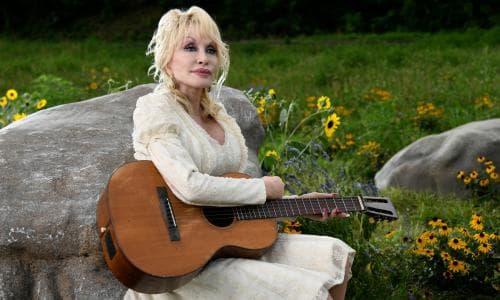
Dolly Parton never ran a hedge fund, but she understood leverage better than most on Wall Street. The country music icon, who died at 80, built a fortune not by chasing every dollar, but by owning the core assets—her songs, her image, and her story—and then licensing them with surgical precision. Her death, announced by her nephew Brian Seaver, closes a remarkable financial narrative: a woman born in a one-room cabin in the Smoky Mountains who became a one-woman conglomerate worth an estimated $350 million to $650 million, depending on how you value a brand that transcended music.
Let's talk numbers, because Parton's business acumen was as sharp as her songwriting. She wrote two of the 20th century's most enduring songs—'Jolene' and 'I Will Always Love You'—in a single day. That latter track, famously covered by Whitney Houston in 1992, became a royalty goldmine. Parton had the foresight to retain the publishing rights, a move that Elvis Presley's manager, Colonel Tom Parker, famously tried to buy. Parton refused, and that decision alone has generated tens of millions in royalties over the decades. She scored 25 country No. 1 singles and 47 Top 10 albums, but the real money was in the catalog—and in her refusal to sell it.
This is the lesson for the wealthy: own your intellectual property, and never let a bigger player dictate your terms. Parton's empire was built on a simple, ruthless principle—control. She controlled her songwriting, her image, and her narrative. Her 'Dolly' brand—the rhinestones, the wigs, the 'it takes a lot of money to look this cheap' quip—was a carefully crafted asset that she monetized across music, film, and even a theme park. Dollywood, which she co-owns with Herschend Family Entertainment, draws millions of visitors annually, and while she never disclosed her stake, industry estimates suggest it's a significant revenue stream. She was the rare artist who turned her persona into a diversified portfolio: music royalties, touring, acting, licensing, and hospitality.
But Parton's financial genius wasn't just about accumulation; it was about strategic giving. Her Imagination Library, which has donated more than 150 million books to children, was a philanthropic powerhouse that also reinforced her brand as the beloved, wholesome, accessible star. This is a classic wealth-preservation move: build a legacy that outlasts your balance sheet. For the ultra-wealthy, Parton's approach is a case study in how to deploy capital for both social impact and reputational returns. She didn't just write checks—she built a system that created a perpetual cycle of goodwill, which in turn kept her brand relevant across generations. That's not just charity; that's brand management.
Now, with her death, the question is: what happens to the Dolly Parton estate? Unlike many celebrities who leave tangled financial webs, Parton was notoriously hands-on with her money. She once said, 'I'm not gonna be a millionaire. I'm gonna be a billionaire.' While she may not have hit that mark, her estate is structured to generate income for decades, likely through a combination of trusts, licensing deals, and the ongoing operation of Dollywood. The music catalog alone—including '9 to 5,' which hit No. 1 in 1980—remains a steady income stream, especially as streaming and sync licensing for films and ads continue to grow. Her death will likely trigger a surge in catalog valuations, as investors look to acquire assets with proven, long-term cash flow.
For the market, Parton's passing is a reminder that the 'legacy asset' class—music catalogs, image rights, and personal brands—is increasingly a hedge against volatility. In a world where interest rates fluctuate and tech stocks swing, a timeless song like 'Jolene' is as close to a bond as you can get. It pays dividends year after year, and its value doesn't crash with the market. Parton's estate is now a prime example of how to structure a portfolio that outlives its creator. The smart money will watch how her heirs handle the assets—whether they sell, license, or double down on the Dolly brand. If they follow her playbook, they'll hold, because Parton knew that the real wealth was in the enduring story, not the quick cash.
In the end, Dolly Parton's death is a moment to reflect on what true wealth looks like. She left behind a fortune, but she also left behind a blueprint. For the wealthy, the lesson is clear: build something that can't be replicated, own it outright, and give back in a way that multiplies your influence. Her life was a masterclass in the intersection of art and capital, and her legacy will continue to generate returns—financial and otherwise—for generations. That's the kind of portfolio that doesn't need a bull market. It just needs time.