Dangote Refinery's real edge: suppliers and customers fund three-quarters of its working capital
Dangote Refinery's N5.27trn operating cycle is mostly financed by suppliers and customer advances, not its own cash — an 11-day cash-conversion cycle.
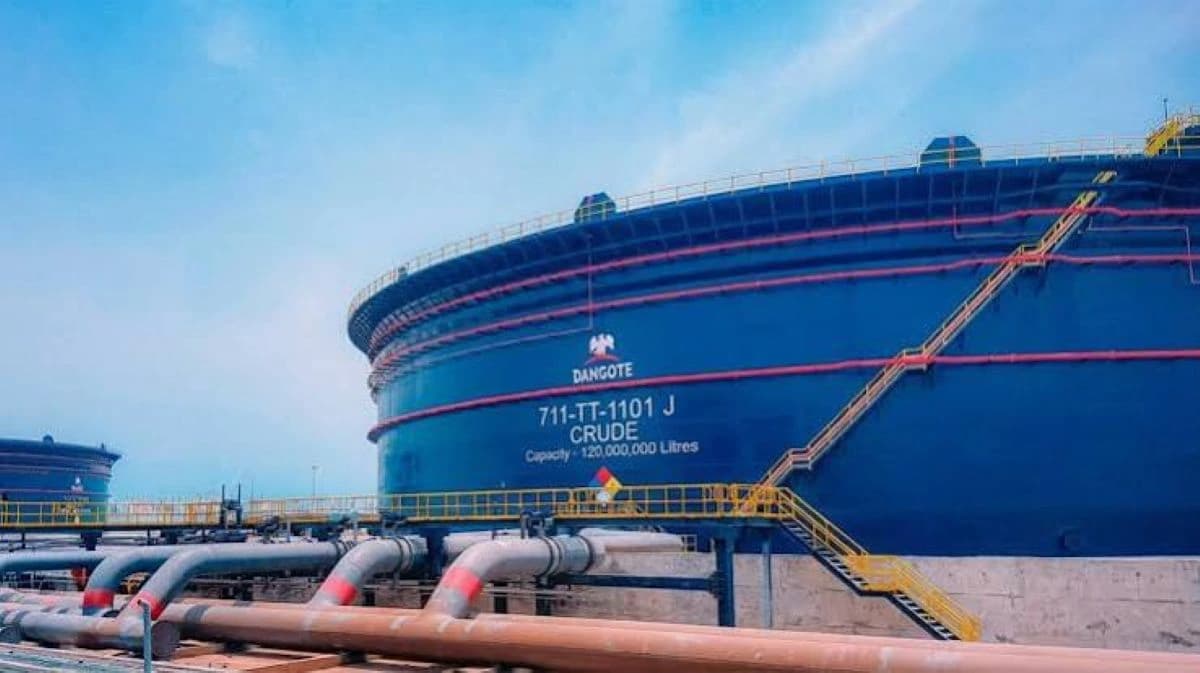
Aliko Dangote built the largest single-train refinery in the world on the edge of Lagos, and for two years the conversation around it has been about one thing: whether the numbers are real. Now, as the refinery moves toward a N525 public offer, the more interesting question is not what it earns. It is who pays for the crude while the money is in motion.
The reported figures are striking. Dangote generated roughly N2.08 trillion in operating cash flow against about N2.51 trillion in profit for the period — meaning around 83% of reported profit converted into operating cash. In June 2026, inventory stood at about N2.82 trillion, up from N1.92 trillion at the end of 2025. Trade payables, the money owed for crude, spare parts and services, climbed from N1.93 trillion to N3.35 trillion over the same six months. Contract liabilities — customer advances for petroleum products not yet delivered — rose from N296 billion to about N655 billion. Add payables and advances together and you get roughly N4 trillion. Against N5.27 trillion of inventory and trade receivables, that means suppliers and customers were effectively financing about three-quarters of the refinery's core operating requirement. On a simple measure, Dangote had only around N1.27 trillion of its own capital tied up in the cycle at June.
For readers outside Nigeria, the scale needs context. Dangote Industries is the conglomerate built by Aliko Dangote, Africa's most prominent industrialist, spanning cement, sugar, fertiliser and now refining. The refinery itself is a bet on ending Nigeria's decades-long paradox: a country that pumps crude but imports refined fuel. It buys crude — much of it domestically, some abroad — processes it, and sells petrol, diesel and jet fuel into a market where demand is vast and supply has historically been unreliable. That business model is brutally cash-hungry. Crude must be paid for before it becomes product, and product must be stored before it is sold. The gap between those two moments is where fortunes are made or trapped.
What the accounts reveal is that Dangote has engineered that gap down to roughly 11 days. Trade receivables represented about 14 days of sales, inventory about 27 days of cost of sales, and payables about 31 days. Inventory movements absorbed N976.6 billion and receivables another N2.51 trillion, but higher payables contributed about N1.54 trillion and customer advances another N371.7 billion. The Reporting Accountant's Report also shows N1.19 trillion in bank guarantees issued in favour of crude-oil suppliers in June 2026, down from N1.42 trillion in December 2025 — evidence that part of the procurement system runs on bank credit rather than unsecured supplier trust. This is not accounting trivia. It is the difference between a business that funds itself and one that must constantly raise fresh capital to keep the tanks full.
For investors watching African capital markets, the signal is broader. African industrial champions are often judged on headline profit, but the continent's operating environment — volatile currencies, patchy logistics, expensive credit — makes working-capital discipline a more honest measure of durability. A short cash-conversion cycle means less of the balance sheet is frozen in transit, and more of each naira of profit can go toward expansion, debt service or dividends. Dangote is not unique in using supplier credit; it is unusual in doing so at this scale while keeping customers paying ahead of delivery.
The test comes after listing. If production and sales rise and the cash-conversion cycle stays near 11 days, the refinery's earnings will keep converting into real cash — and the working-capital machine will stop looking like an accounting curiosity and start looking like a genuine competitive advantage. If receivable days stretch or inventory piles up, the advantage weakens fast. For anyone tracking where African wealth is actually built, that is the number to watch.