Dangote Refinery IPO Sets 10 Million Investor Target Against Nigeria's Six Million Base
NGX chair says Dangote Refinery IPO aims for 10 million retail investors, more than Nigeria's entire active investor base, testing market depth.
Nigeria's stock market has spent years talking about retail participation. Now it has to prove it can deliver at a scale it has never attempted. The proposed initial public offering of Dangote Refinery is being built around a target of 10 million retail investors — a number that would not just stretch Nigeria's capital market but more than double it in a single transaction.
The figure comes from Umaru Kwairanga, chairman of Nigerian Exchange Group, who laid out the ambition at the 2026 Investment Banking Awards organised by the Association of Issuing Houses of Nigeria. His framing was blunt: Nigeria currently has fewer than six million active investors. The Dangote IPO wants 10 million. "That is a very bold target," he said, adding that hitting it would significantly deepen the domestic capital market. He tied the effort to Nigeria's wider ambition of building a $1 trillion economy, and used the platform to push for more large listings — naming NLNG and power companies as candidates — while noting that the Federal Government has directed the Central Bank of Nigeria to encourage companies seeking foreign listings to also list at home.
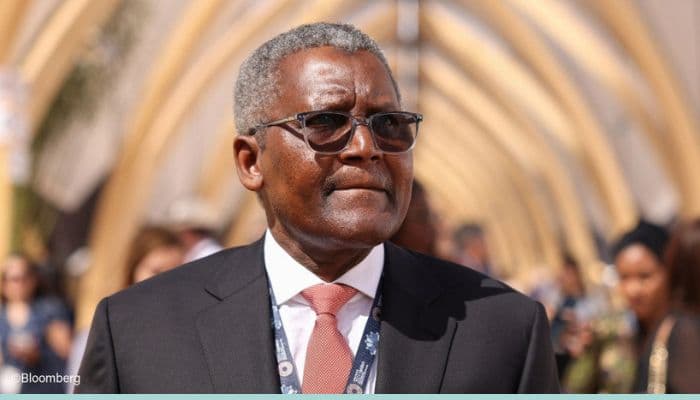
For anyone outside Nigeria, the name Dangote carries a specific weight. Aliko Dangote's conglomerate is the country's most prominent industrial group, and the refinery — a massive processing complex that has reshaped Nigeria's downstream fuel dynamics — is its most consequential project. A public offering of that asset would be the rare case of a mega-infrastructure prize being opened to ordinary Nigerian savers rather than reserved for institutions and offshore funds. That is why the retail target matters more than the headline number. Nigeria's market has depth at the top and thinness at the base; pension funds and a handful of asset managers move most of the volume. Bringing in millions of small accounts is a different exercise entirely.
The awards ceremony itself offered a snapshot of who would have to execute that push. Chapel Hill Denham took Investment Bank of the Year alongside Debt Capital Markets House and Public Sector Bond House, recognised for advisory work and public-sector debt deals completed in 2025. Stanbic IBTC swept Commercial Paper, Corporate Bond and Equity House of the Year. Vetiva Advisory Services won Financial Advisory House, M&A Deal and Innovative Issuance of the Year for advising on the first two series of the Ministry of Finance Incorporated Real Estate Investment Fund, worth N250 billion — part of a N1 trillion public-private housing initiative. Zenith Bank recorded the year's largest equity issuance at N350.4 billion, led by Stanbic IBTC with a syndicate of local advisers. TAJ Bank's Series 2 Mudarabah Sukuk took Corporate Sukuk Deal of the Year, and United Capital was named Most Prolific House.
Read together, the pipeline and the awards tell a story about where Nigerian capital is heading. The deal flow is increasingly domestic: naira-denominated equity, sukuk, housing funds, public-sector bonds. That is a shift from the era when African issuers looked first to London or New York for size. It also raises the stakes. If a Dangote IPO cannot pull in the retail millions, the constraint is not the asset — it is the plumbing: brokerage accounts, digital onboarding, financial literacy, trust. Kwairanga's call for government-linked companies to list is essentially an argument that the market needs more supply of credible names to keep those new investors engaged after the first headline deal.
Kemi Awodein, AIHN president and managing director of Chapel Hill Denham Advisory, marked the association's 30th anniversary by pointing to digitalisation, technology and collaboration as priorities for financing the real economy. That is the right register. Nigeria does not lack capital or ambition; it lacks enough routes for ordinary savers to participate in the country's largest assets. The Dangote offering is the test case. If it works, it changes what a Nigerian IPO can look like for a generation. If it falls short, the lesson will be about infrastructure, not appetite.