Dangote Refinery IPO set to open within days, Africa's largest listing in sight
Aliko Dangote says his refinery's $5bn IPO opens within 12 days, with plans to double capacity and expand to Kenya.
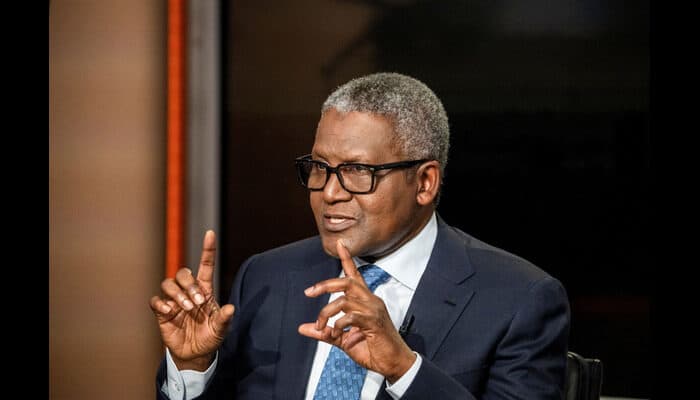
For anyone tracking capital flows into African infrastructure, the next fortnight could mark a genuine turning point. Aliko Dangote, the continent's most prominent industrialist, told investors in Botswana that the long-awaited initial public offering for his massive petroleum refinery will open within 10 to 12 days. The listing aims to raise roughly $5 billion, which would make it the largest equity market debut in African history. This is not just another corporate event; it is a signal that Africa's richest man is betting big on public markets to fund a much larger energy vision.
The core facts are striking. The Dangote Petroleum Refinery, located in the Lekki Free Zone near Lagos, is the largest single-train refinery in the world, with a capacity of 650,000 barrels per day. It reached full nameplate capacity in February and has already tested output at 700,000 barrels per day. Dangote now wants to double that to 1.4 million barrels per day. The IPO, primarily on the Nigerian Exchange Limited (NGX), follows a heavily oversubscribed $2.5 billion private placement. Recent funding rounds peg the refinery's valuation between $40 billion and $50 billion. The group plans to float roughly 5 to 10 percent of the refinery's equity, and the application has already been submitted to Nigeria's Securities and Exchange Commission, which sees no major hurdles.
To understand why this matters, you need context on the Dangote empire. This is the man who built a cement fortune across West Africa, then turned to fertiliser, and finally to the most complex industrial project the region has ever seen: a refinery designed to end Nigeria's paradoxical status as an oil producer that imports its own fuel. The refinery is not just a business; it is a statement of industrial sovereignty. Locally, it has already shifted the dynamics of fuel supply, and the proposed dividend structure is equally audacious: investors would buy shares in naira on the NGX but receive dividends in US dollars, backed by the refinery's foreign exchange earnings from exports. That is a clever way to attract international capital while keeping the listing on a local exchange.
This deal signals something broader about African wealth and capital markets. For years, the narrative has been that African businesses must list in London or New York to access serious money. Dangote is trying to flip that script, using a domestic listing to draw global investors into Nigeria's market. Analysts estimate that a single listing of this magnitude could boost the entire NGX market capitalisation by 30 to 40 percent, with the refinery alone representing roughly a quarter of the exchange's total value. That is a concentration of risk, but also a concentration of ambition. If this works, it could encourage other major African conglomerates to consider local listings rather than seeking primary listings abroad.
The expansion plans add another layer. Dangote also announced a secondary listing for Dangote Cement on the London Stock Exchange, likely in October, which would broaden access to international investors for his most established business. More significantly, he confirmed plans for a new coastal refinery in Kenya, in partnership with East African governments. That project, expected to take up to three years, would supply refined products to Kenya and neighbouring countries, reducing East Africa's reliance on imported fuels. It would be the Dangote Group's biggest refining investment outside Nigeria, and it signals that the Lagos refinery is not an end in itself but a template for pan-African energy infrastructure.
The question now is execution. The SEC approval process will set the final share price and prospectus details, and the market will watch closely to see if the $5 billion target is met. Dangote has a history of delivering on massive projects, but the refinery's real test was always financial as much as technical. If the IPO succeeds, it will not only fund a capacity doubling but also send a clear message: African industrial assets can command global capital on their own terms. If it stumbles, it will give ammunition to those who say the continent's markets are not yet deep enough. Either way, the next few days will be closely watched from Lagos to London, and the outcome will shape how the world values African industry for years to come.