Dangote Plans $10 Billion Power Push, Weighs Scrapping Steel
Dangote plans to invest over $10bn in power, redirecting funds from planned businesses like steel as he warns Africa cannot grow without electricity.
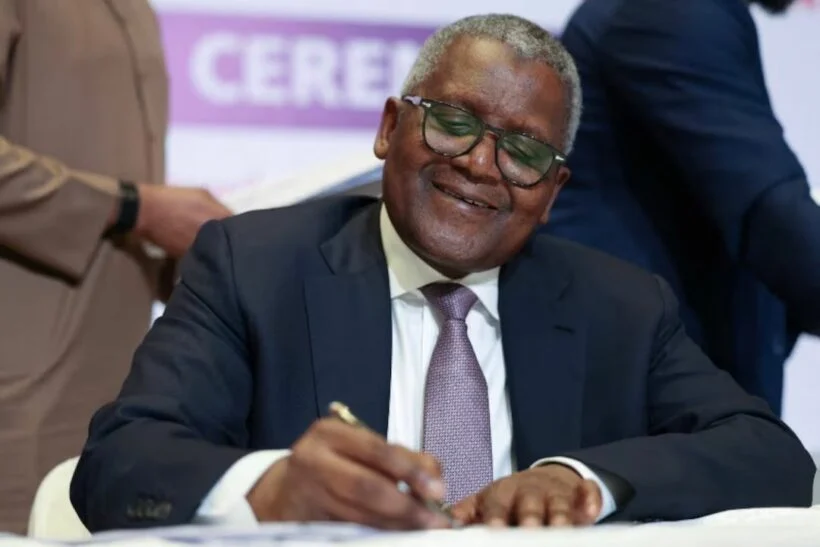
Aliko Dangote has spent four decades building the most visible industrial empire in Africa — cement first, then sugar, fertiliser, and now a refinery that reshaped Nigeria's fuel market. His next bet may be the one that determines whether the continent's manufacturing ambitions are real or rhetorical. In an interview with Al Jazeera on Monday, the Nigerian billionaire said he plans to invest more than $10 billion in power, and that he is prepared to cancel one or two planned businesses — steel among them — to fund it. The steel signal matters. Dangote had been expected to deepen Nigeria's heavy-industry base; shelving it in favour of electricity says he now views electrons, not rolled metal, as the binding constraint on African industry.
Dangote did not say which countries would receive the money, what form the investments would take, or when they would be deployed. What he did give was the logic: more than 600 million Africans live without electricity, and he argued the continent cannot generate economic growth without adequate power. He tied the plan to an expected transformation across Africa over the next three to four years, and framed the group's broader direction around spreading wealth, drawing more people into business, and tightening corporate governance. Those are broad strokes, and readers should treat them as intent rather than a signed capital programme.
For anyone who has watched Dangote Group closely, the pivot is less a surprise than an escalation. The group already generates up to 1,540MW for its own manufacturing subsidiaries, a deliberate hedge against Nigeria's unreliable grid. The Dangote Refinery runs its own 435MW plant. In other words, Dangote has spent years building power capacity because the public grid could not carry his industrial load. Now he appears ready to turn that defensive capability into a standalone business — and to do it beyond Nigeria. The group has also signalled a $17 billion refinery project in Kenya, with construction expected to begin by the end of the month, extending its energy footprint deeper into East Africa.
The context an outsider needs is this: Nigeria's power sector has been slowly prising itself open. Recent reforms have given state governments and private players more room to build and sell electricity, and the Federal Government said in March that the changes had attracted more than $2 billion in fresh investment. That is a fraction of what universal access would require, but it changes the calculus for a conglomerate that already knows how to build, finance and operate large plants. Dangote is not entering a virgin market; he is entering one where the rules have finally started to favour private generation at scale.
What does a $10 billion power pledge from one family-controlled group signal about African capital? It says the continent's largest private fortunes are increasingly willing to underwrite infrastructure that governments have struggled to deliver — and that they see energy as the platform on which every other industrial bet depends. It also concentrates risk. Dangote's empire is already deeply exposed to Nigeria's macro story; adding power and a Kenyan refinery widens the map but ties more of his balance sheet to the same theme. For a continent courting private capital, the vote of confidence is welcome. For Dangote, it is a wager that the next decade of African growth will be built on megawatts, not manifestos.