Warren Buffett, 96, hands over Berkshire chairman's gavel after six decades
Warren Buffett, 96, steps down as Berkshire Hathaway chairman, closing a six-decade era and reshaping how Oceania's investors read global capital.
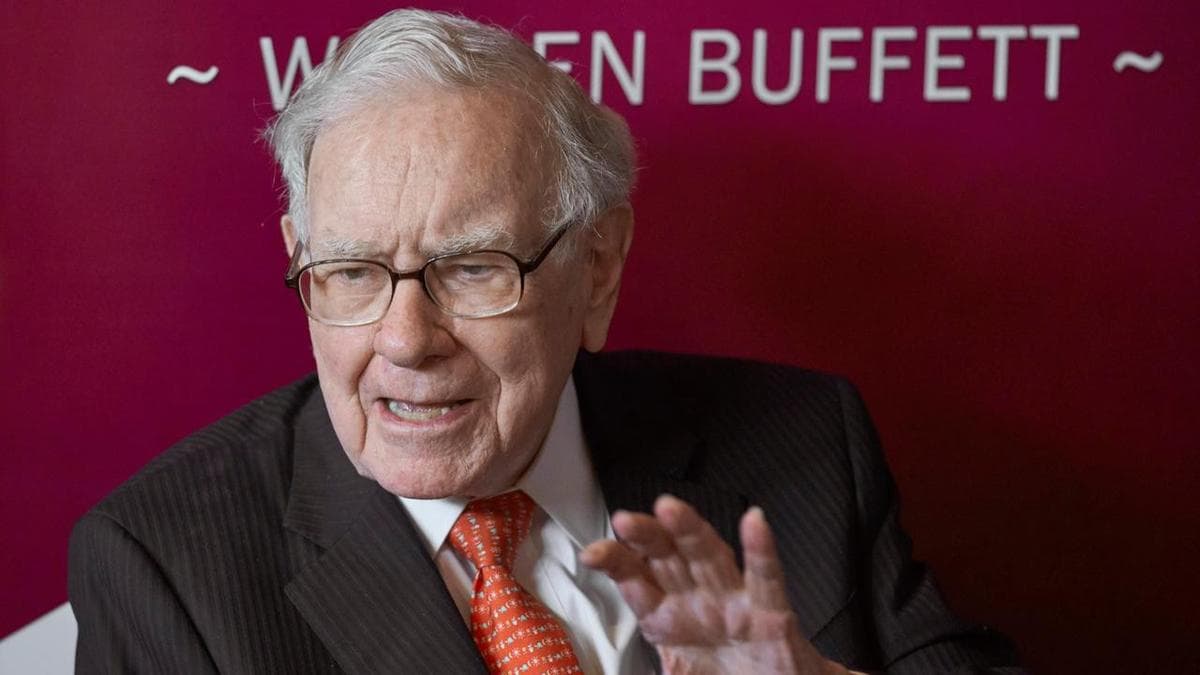
For anyone in Oceania who has ever built a portfolio around patience rather than momentum, Friday brought the end of an era. Warren Buffett, the 96-year-old chairman of Berkshire Hathaway, has stepped down from the role, according to a report from Reuters published by The West Australian. The news lands with particular force in this part of the world, where Buffett's annual letters have long been required reading from Sydney's Martin Place to Perth's St Georges Terrace — a plain-spoken counterweight to the short-term noise that dominates so much of the region's financial commentary.
The facts are spare but consequential. Buffett, born in 1930, has been the public face of Berkshire Hathaway for generations of investors, and his departure from the chairman's seat marks the formal close of a tenure that began in the 1960s. The Reuters report does not attach a valuation, a succession timeline or a named successor to the move, and this column will not invent one. What is clear is that the man who turned a struggling New England textile mill into one of the world's most closely watched conglomerates is no longer its chairman. For a figure whose name has become shorthand for long-horizon investing, the absence of detail around the transition is itself the story.
To understand why this resonates so far from Omaha, consider the company he leaves behind. Berkshire Hathaway is not simply a holding company; it is a sprawling collection of insurance, rail, energy and consumer businesses, and its share register has long been a fixture in the portfolios of Australian superannuation funds and sovereign wealth vehicles. Buffett's approach — buying durable businesses, holding them for decades, and letting compounding do the work — became the intellectual scaffolding for a generation of Oceania's own capital allocators, from the Future Fund to the family offices that have proliferated in Melbourne and Auckland. When he speaks, this region listens, because so much of its own institutional money is parked in the same kinds of assets.
The timing is striking. Oceania's wealth landscape is being reshaped by the transfer of trillions of dollars from one generation to the next, by the rise of private credit, and by a superannuation system that now ranks among the largest pools of retirement capital on earth. Buffett's exit from the chairman's role removes one of the few remaining anchors of the old, patient-capital orthodoxy just as that orthodoxy is being tested. In Perth, the mining houses that have long been Berkshire-adjacent in spirit — long-life assets, conservative balance sheets, a distrust of fashion — will feel the symbolism keenly. The question every boardroom from Brisbane to Wellington will now ask is who, if anyone, inherits that mantle.
There is a local irony here too. Western Australia has spent the past decade courting exactly the kind of long-term, valuation-disciplined capital that Buffett personified, from lithium to iron ore to the sprawling gas projects of the north-west. The state's own billionaires, many of them self-made in resources, have built fortunes on a similar instinct: buy when others flee, hold when others trade. Buffett's departure does not change the geology or the cash flows, but it does remove a reference point that this region's investors have used for fifty years to justify their own restraint.
So what comes next? Berkshire will continue, and its operating businesses will keep generating cash. But the Buffett premium — the willingness of markets to follow a single, ageing oracle — is now a historical artefact. For Oceania's wealthy families and institutional funds, the lesson is not that patient capital has died. It is that the era of one man embodying it has ended, and the discipline must now be institutionalised rather than personified. The next decade of Australian and New Zealand wealth will be built by committees, mandates and successors, not by a single letter arriving each February. That is a quieter inheritance, and a harder one to replicate.