Dangote family office takes centre stage as refinery IPO looms
Aliko Dangote's Dubai-based family office, led by Halima Dangote, prepares for a central capital management role ahead of a landmark refinery share sale.
For decades, Aliko Dangote's empire was a one-man show, a sprawling industrial machine powered by cement plants, sugar mills and, most recently, the continent's most audacious energy bet. But the billionaire is quietly redrawing the architecture of his wealth, and the most telling signal is not a new factory or a flashy acquisition. It is a family office in Dubai, run by his daughter Halima, that is being groomed to become the strategic brain of the entire Dangote universe from early 2027. This is not a cosmetic reshuffle; it is the institutionalisation of one of Africa's most consequential fortunes, timed precisely as the group prepares to sell shares in its $20bn petroleum refinery to the public.
Halima Dangote, who has long operated behind the scenes, says the office has been years in the making and will now take on investment, wealth management, governance and succession duties. The timing is deliberate. Nigeria's Securities and Exchange Commission has approved an offering of 4.1 billion shares at N525 each, a transaction that could raise roughly $1.6bn and become Africa's largest share sale. The refinery, which has already hit its 650,000 barrel-per-day nameplate capacity and tested output at about 700,000 barrels, plans to double that capacity to 1.4 million barrels per day. Proceeds from the IPO will partly fund that expansion, but the deeper story is about who controls the cash once it starts flowing.
Outsiders might see a family office as a rich man's convenience, a way to park money and pay fewer taxes. In the African context, it is something far more loaded. Dangote's fortune is not a portfolio of liquid assets scattered across global markets; it is a dense web of operating companies, political relationships and physical infrastructure, from the limestone quarries of Ogun State to the vast crude-processing complex on the outskirts of Lagos. The new office, based in Dubai but anchored to Nigerian realities, must manage liquidity, allocate capital between cement and energy, and, crucially, decide what happens when Aliko is no longer in the room. The stated goal of preserving the family's interests for eight to ten generations is ambitious, almost unprecedented in a region where business empires rarely survive their founders by more than a single succession crisis.
The refinery IPO is the catalyst. Once the public owns a slice of the energy crown jewel, Dangote's family wealth becomes entangled with minority shareholders, regulatory scrutiny and quarterly reporting. A family office that can coordinate ownership stakes, evaluate new investments and maintain governance discipline becomes essential. The group is also eyeing a potential London secondary listing for Dangote Cement, which would further diversify its investor base. Meanwhile, the founder has announced plans for a refinery in Kenya, signalling that the group's ambitions stretch well beyond Nigeria's borders. Each of these moves generates capital, and capital needs a home, a strategy and a set of rules. That is precisely the void the Dubai office is designed to fill.
What this signals to anyone tracking African wealth is a maturation of the continent's private sector. For years, the narrative was about individuals, larger-than-life tycoons whose names were synonymous with their companies. Dangote, Adenuga, Otedola, the list goes on. But the next phase is about systems, not personalities. A family office that can manage succession across multiple generations is a bet on continuity, on the idea that African capital can be as durable as its Western or Gulf counterparts. It also reflects a practical concern: as the refinery prepares for its landmark IPO, the family needs a vehicle to manage the proceeds, to decide how much to reinvest, how much to diversify into new sectors, and how much to preserve as a legacy buffer.
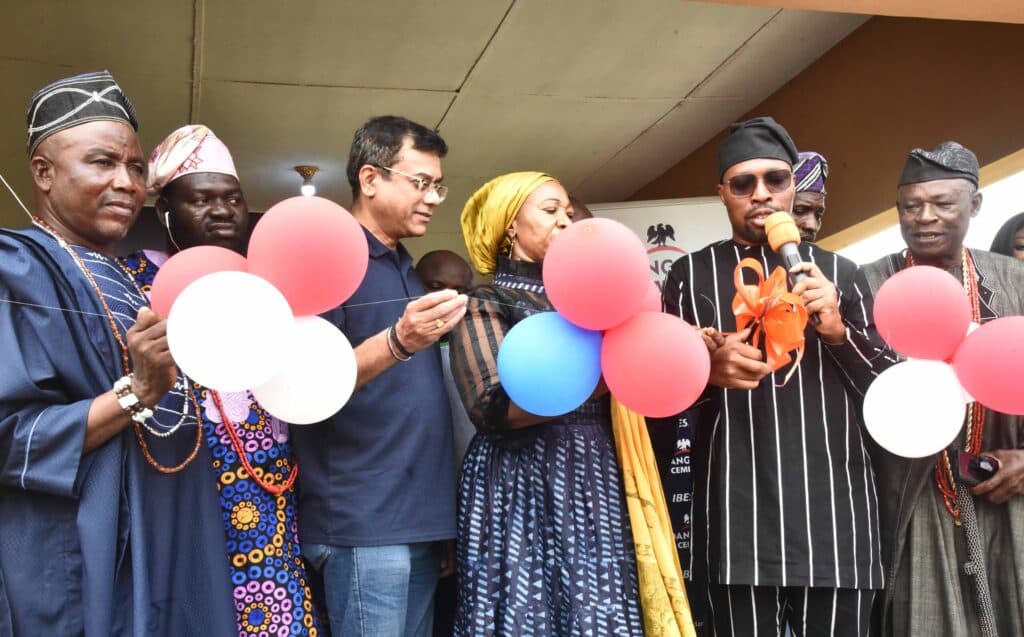
The most telling detail from the source is not in the boardroom, however. It is a photograph from Ogun State, where Dangote Cement's Ibese plant commissioned a garri and fufu processing facility for local communities, with traditional rulers and government officials cutting the ribbon. That image captures the dual nature of the Dangote empire: a global-scale industrial giant that still operates in the granular reality of Nigerian villages, where cassava processing plants and chieftaincy titles matter as much as billion-dollar IPOs. The family office will have to navigate both worlds, managing international capital markets while maintaining the social licence that has underpinned Dangote's rise. As the first quarter of 2027 approaches, all eyes will be on Halima and her team in Dubai, not just for what they manage, but for how they redefine what it means to be a wealthy African family in the twenty-first century. The refinery IPO will be Africa's largest share sale, but the real test is whether the family can build a structure that outlasts the founder's extraordinary ambition.
More in MONEY
Wiluna Mining's Victor Rajasooriar Says He Was 'Not Really' Surprised by Post-Listing Share Price Bloodbath
Woodside CEO Liz Westcott Answers Alex Pearce's Sponsorship Call as Fremantle Captain Pushes Back

Mukesh Ambani's brother Anil sees Reliance Capital creditors recover only 43% as Hinduja bid falls short