Chelsea's Experience Play: Why Xabi Alonso Is the Anti-Chaos Trade
Chelsea's shift from youth-led chaos to seasoned leadership under Xabi Alonso signals a strategic pivot in football's high-stakes wealth game. For owners and investors, it's a lesson in when to stop betting on potential and start buying composure.
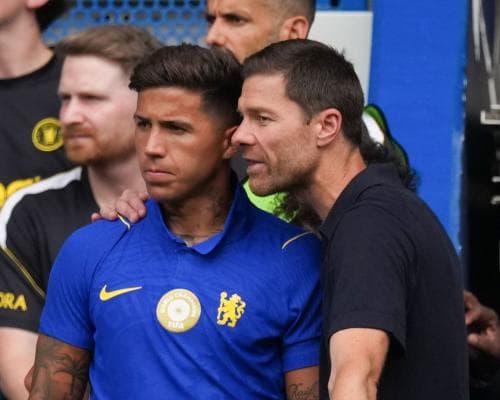
There's a moment every great portfolio manager knows: when the upside of a hot young asset starts getting eaten by its own volatility. Chelsea just hit that moment, and their response is a masterclass in capital preservation. The club that spent two years hoarding the football equivalent of meme stocks — raw, exciting, expensive, and prone to spectacular crashes — has suddenly decided it wants blue-chip stability. The signal is unmistakable. Xabi Alonso, the 44-year-old who turned Bayer Leverkusen into an unbeaten machine, isn't just a new manager. He's a strategic repositioning, a bet that the smartest money in football is now on emotional control, not just technical flair.
The scale of the reset is hard to overstate. Chelsea's summer business has been less about flipping young talent and more about buying maturity. Jordan Henderson and Danny Welbeck, both in their mid-30s, walk into a dressing room still full of teenagers and early-20s prodigies. That's not a retirement home, but it's a deliberate rebalancing. For a club that has spent over £1 billion on transfers since the BlueCo takeover, this is the first time the cheque book has been aimed at experience over potential. The market is watching, and the message is clear: when your assets keep drawing red cards, you don't buy more risk. You buy insurance.
The numbers tell the story. Last season, Chelsea picked up 11 red cards across all competitions — a staggering figure for a club with title ambitions. More tellingly, the wounds were often self-inflicted: dissent bookings, reckless tackles, and a tendency to collapse when the game turned against them. That's not a talent problem; that's a temperament problem. And temperament, as any wealth advisor will tell you, is what separates a lucky windfall from a lasting fortune. Alonso, who was the embodiment of calm during his playing days at Liverpool and Real Madrid, has made "emotional control" the watchword of his early tenure. It's a phrase you'd expect in a hedge fund's risk manual, not a football training ground.
Monday's trip to Fulham is the first stress test, and it's brutally well-chosen. Craven Cottage has been the site of Chelsea's most spectacular implosions under the current ownership. João Félix got sent off on his debut there in 2023. Marc Cucurella saw red after just 22 minutes last season. Both games ended in 2-1 defeats. That's not bad luck; that's a pattern of behavioral risk. Alonso's job is to rewire that pattern, and he's doing it by adding players who have seen it all. Henderson's leadership at Liverpool and Ajax, Welbeck's steady professionalism at Brighton — these are not glamorous signings, but they are the kind of assets that don't lose value in a downturn.
Internally, there's been a quiet admission that Chelsea undervalued what the old-school traders call "aura." Graham Potter and Liam Rosenior, both appointed with great hope, couldn't stand the heat. They were promising analysts who couldn't handle the floor. Alonso is different. He won the Bundesliga with Leverkusen in 2024, breaking Bayern Munich's stranglehold, and he did it with a squad that played with a maturity beyond its years. His pitch to Chelsea's hierarchy reportedly wowed them, and the hiring process was quick, decisive, and — crucially — not driven by the usual hype cycle. This was a value play, not a momentum trade.
For the broader market of wealthy owners, this is a lesson in portfolio construction. The era of buying every teenage wonderkid at any price is over. The new premium is on resilience, composure, and the kind of leadership that prevents a 1-0 deficit from becoming a 3-0 rout. Chelsea are effectively saying that their youth assets need adult supervision, and they're willing to pay for it. That's not a retreat from ambition; it's a recalibration of risk. In a league where the margins are razor-thin and the cost of failure is measured in hundreds of millions, the smartest money now goes to those who can keep their heads when everyone else is losing theirs.
Alonso's tenure will be judged on trophies, but the real metric is whether he can stop the bleeding. If he can turn this squad into a unit that doesn't crack under pressure, Chelsea's long-term valuation — both on and off the pitch — will soar. If not, the owners will have learned an expensive lesson about the cost of chaos. For now, the market is cautiously optimistic. The appointment of a proven winner with a calm, analytical approach is exactly the kind of counter-cyclical move that defines the best investors. The first test comes at Craven Cottage, but the real test is whether Chelsea can finally act like the mature, disciplined institution their balance sheet suggests they should be.