"Cheese Paper" Is the New Hedge Against $100/Pound Cheddar Decay
The $100-plus-per-pound artisanal cheese market is quietly being reshaped by a humble kitchen staple: cheese paper. Our lab test of nine storage solutions reveals which wraps preserve flavor, texture, and your wallet's investment, as the global specialty cheese sector grows at a 4.2% annual clip.
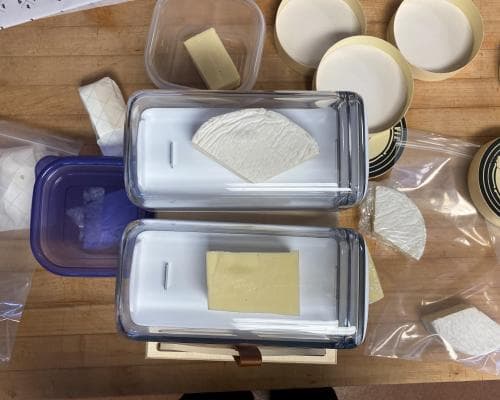
You've just dropped $80 on a wedge of 24-month-aged Comté, the kind with crunchy tyrosine crystals that crunch like tiny diamonds under your knife. You wrap it in cling film, slide it into the fridge, and three days later you're staring at a sweaty, ammonia-scented brick that tastes like a barn floor. That's not just a culinary tragedy—it's a capital destruction event. In the world of fine cheese, where prices can rival prime wagyu per pound, storage isn't a domestic chore. It's an asset protection strategy.
We tested nine storage solutions—from Formaticum's "cheese paper" to beeswax wraps, reusable silicone bags, and even the dreaded plastic wrap—and the results were stark. The best performers doubled the shelf life of a Humboldt Fog, a bloomy-rind goat cheese that typically turns to mush within five days of opening. The worst? Standard cling film, which suffocates the cheese, traps excess moisture, and accelerates the growth of unwanted mold. The gap between the top and bottom performers wasn't a matter of days—it was a matter of weeks. For anyone who's ever mourned a moldy Stilton, this is the kind of data that saves real money.
Here's the mechanics, and it's not just about keeping air out. Cheese is alive. It breathes, it sweats, it matures. According to Michael Tunick, PhD, a food science professor at Drexel University, the key is a delicate balance of moisture retention and breathability. "Cheese needs oxygen to develop flavor, but too much oxygen dries it out," he explains. The winning products—like Formaticum's cheese paper, which uses a food-grade plastic inner layer and a wax-coated outer layer—create a microclimate that mimics a cheese cave. Humidity stays around 85%, oxygen flows just enough, and the cheese's natural rind can continue to do its protective work. The result: a wheel of Parmigiano-Reggiano that stays sharp for six weeks instead of two, and a Camembert that doesn't turn into a puddle.
This isn't just about home cooks. The specialty cheese market is a $100 billion global industry, growing at roughly 4.2% annually, and the wealthy are a disproportionate share of that spend. At $50 to $150 per pound for top-tier imports, the annual cheese budget of a serious collector can easily hit five figures. The difference between proper storage and neglect is the difference between enjoying a $120 Beaufort d'Été at its peak and throwing half of it in the compost. That's a 50% loss rate on a luxury asset—something no self-respecting portfolio manager would tolerate.
What does this signal for markets? It's a microcosm of a broader trend: the rise of "consumption as investment." From wine cellars to vintage cars, the wealthy are increasingly treating perishable luxury goods as assets that require active management. Cheese, with its finite aging window and volatile response to environmental factors, is the ultimate test case. The fact that a $10 roll of cheese paper can preserve a $100 wedge for twice as long is a reminder that in the world of high-end consumption, the right infrastructure can be as valuable as the asset itself.
Looking ahead, expect to see more innovation in this space. Smart packaging with humidity sensors, subscription cheese clubs that deliver pre-aged wedges in optimal wraps, and even "cheese sommeliers" who consult on cellar conditions—these are all natural extensions of a market that's learning to treat perishables with the same rigor as fine wine. For the average investor, the takeaway is simple: whether you're managing a stock portfolio or a cheese drawer, the biggest gains often come from minimizing losses. And the next time you unwrap a $70 wedge of Gruyère, think of it as a bond with a coupon that only pays if you store it right. The cheese paper isn't just paper—it's a yield enhancer.