Canva’s backers bet on NZ hydrofoils to rewrite Perth’s river commute
Canva investors back NZ electric hydrofoil startup for Perth’s Swan River, signaling a new wave of clean maritime capital in Oceania.
When the people who bankrolled Canva—Australia’s most celebrated tech unicorn—decide to put their money into a New Zealand company building electric hydrofoil vessels for a river in Western Australia, the rest of us should stop and look at the water. This is not a routine venture round. It is a signal that the region’s wealth is quietly shifting from mining trucks and property towers to something far more fluid: the business of moving people without burning diesel.
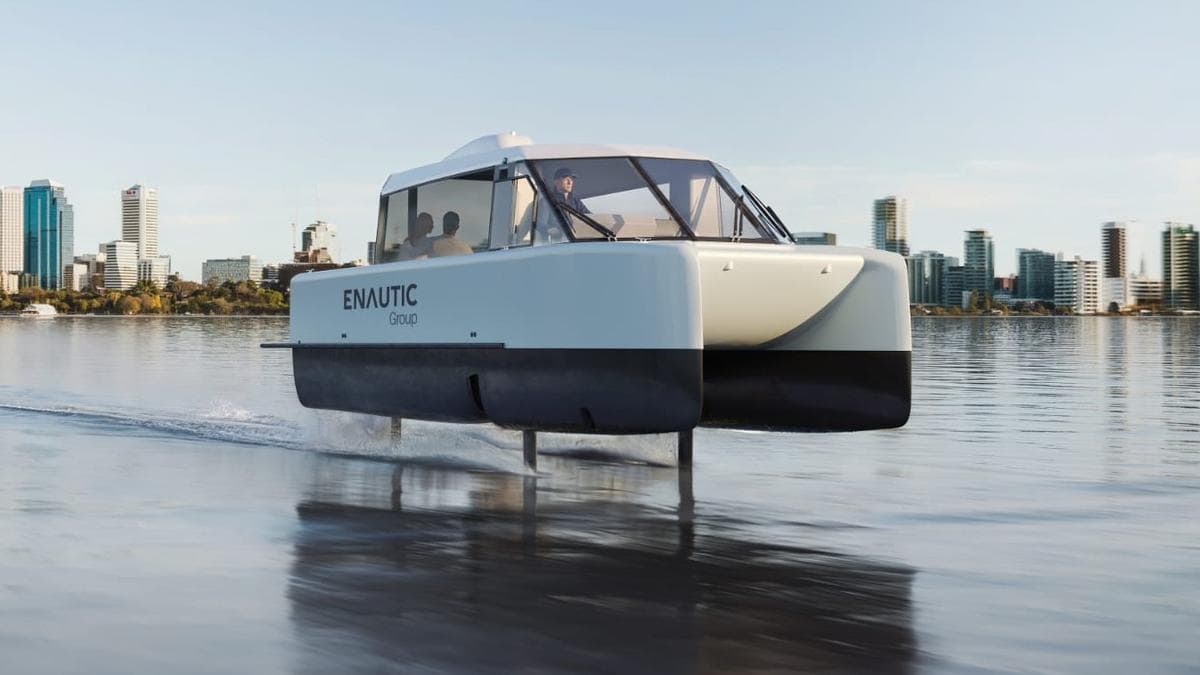
The deal, reported by The West Australian, sees Canva’s backers throw financial support behind a New Zealand firm that makes electric hydrofoil vessels, with the first commercial target being Perth’s Swan River. The source does not disclose the size of the investment or the exact valuation, so we won’t invent figures. What we know is that serious money from one of Australia’s most successful tech ecosystems is crossing the Tasman to back a niche maritime manufacturer. The vessels themselves are not ferries in the traditional sense—they are hydrofoils, meaning they lift out of the water at speed, reducing drag and energy use, which makes electric propulsion far more viable than on a conventional hull.
For outsiders, you need to understand the local texture. The Swan River is Perth’s watery spine, a broad, often underused artery that runs through the city’s heart. For decades, it has been a playground for weekend sailors and a backdrop for expensive riverside homes, but not a serious commuter corridor. That is changing, slowly, as Perth’s population grows and road congestion becomes a dinner-party complaint. The New Zealand firm—part of a small but scrappy cluster of maritime innovators that has emerged from the country’s boat-building heritage—sees the Swan as a perfect proving ground: calm waters, a city desperate for alternatives to the car, and a government that has talked up green transport but moved at the pace of a cargo ship.
This is where the Canva connection matters. Canva’s backers are not your typical mining magnates or property developers. They are tech investors who made fortunes on software margins and global scale. Their willingness to back a hard-asset, hardware-heavy venture in a small market says something about where they think the next wave of Oceania wealth will come from. It is not just about renewable energy generation—everyone is doing that—but about electrifying the last fossil-fuel holdouts, including the thousands of ferries, workboats and leisure craft that still burn bunker fuel across the region’s harbours and rivers.
The broader picture is that Oceania’s capital is maturing. For years, the region’s wealthy have recycled profits from commodities into real estate and infrastructure. Now, a newer cohort—many of them from the tech boom that gave us Atlassian, Canva and a dozen other unicorns—is looking for impact with a return. Electric hydrofoils are a perfect fit: they are photogenic, genuinely innovative, and they solve a real problem in a way that makes cities look forward-thinking. Perth, for all its resources-driven wealth, has often been dismissed as a backwater. Backing a New Zealand hydrofoil startup for the Swan River is a way to buy a slice of the future without having to build it yourself.
What happens next will be watched closely, not just in Perth but in Auckland, Sydney and Wellington. If these vessels prove themselves on the Swan—if they carry commuters reliably, cheaply and cleanly—the same investors will likely roll the model out to other cities with similar waterways: Brisbane, Auckland, maybe even Sydney Harbour. The technology is still young, and the economics of electric hydrofoils are unproven at scale, but that is precisely why this bet matters. It is a vote of confidence from people who have already won big once, and who are now willing to risk some of that capital on a future that moves faster than the tide.
For the rest of us who follow wealth in Oceania, this is not just a product launch. It is a reminder that the region’s next fortunes may be built not on what we dig out of the ground, but on how we move across the water—and that the people who backed a design tool in Sydney now think a hydrofoil in Perth is worth their time.