Cairo coding school for kids raises $3m to bet on Saudi's AI classroom boom
Egypt's 3C Coding School raises $3m seed led by MRG Economic Group to expand into Saudi Arabia and build an AI-driven learning platform.
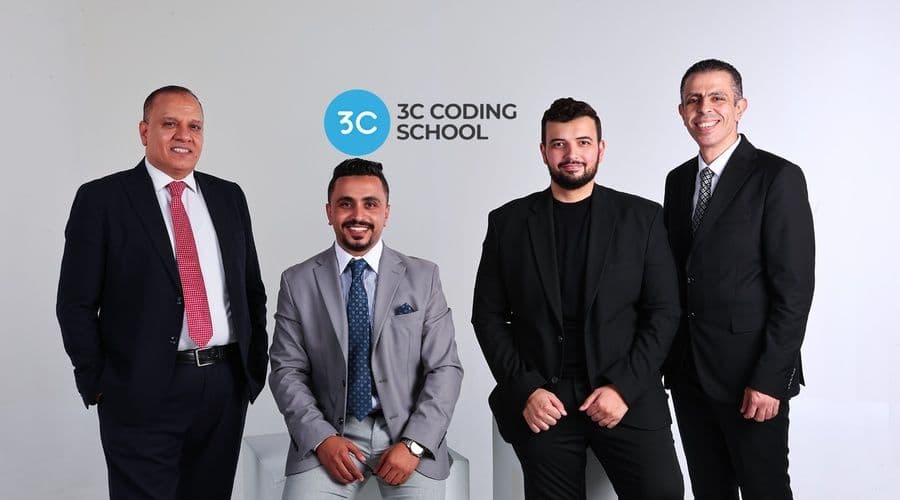
For a parent in Cairo or Riyadh, the most coveted status symbol is no longer a Swiss watch or a German sedan. It is a child who can talk to a machine as fluently as they talk to their teacher. That shift in aspiration is precisely what a small but fast-moving Egyptian startup is now riding all the way to the Gulf.
3C Coding School, founded in 2015 by engineers Hossam Hosny and Ahmed Khallaf, has closed a $3 million seed round led by MRG Economic Group, the vehicle of Egyptian business leader Mahmoud Ramadan, with backing from investor Amr Saad and a clutch of strategic angels. The company teaches children and teenagers everything from web and mobile development to data science, AI, machine learning, game design and cybersecurity. The money is earmarked for two things: a push into Saudi Arabia and the build-out of an AI-powered personalised learning platform that adapts course material to each student's pace and progress.
The numbers behind the pitch are what made this round credible rather than merely fashionable. 3C says it has passed 120,000 students and posted a 230% surge in revenue, figures that signal real demand in a region where coding academies have often been more hype than substance. The founders, both engineers by training, have spent nearly a decade refining a curriculum that goes beyond syntax drills to teach logical reasoning, creative problem-solving and critical thinking — the softer, harder skills that traditional computer science education in the Arab world frequently neglects.
For outsiders, the Saudi angle is the real story here. The Kingdom is spending billions to wean its economy off hydrocarbons, and its Vision 2030 agenda has made digital literacy a national priority. Parents in Riyadh and Jeddah, flush with disposable income and anxious about a post-oil future, are hungry for exactly what 3C sells. But entering Saudi is not simply a matter of crossing a border. It requires local partnerships, curriculum alignment with the Kingdom's educational standards, and a sensitivity to cultural norms that many Egyptian firms underestimate. 3C says it is refining its market entry strategy and plans to lean on strategic local alliances to scale quickly — a wise acknowledgment that in Saudi, trust is the true currency.
This deal also illuminates a broader shift in Middle Eastern capital flows. For years, Gulf money chased real estate, hospitality and fintech. Now, a new generation of investors — many of them Egyptian expatriates who built fortunes in the Gulf — is looking at human capital formation as the next great asset class. MRG Economic Group's involvement is telling: Ramadan is not a tech mogul but a diversified businessman who sees education as both a social good and a durable commercial bet. The participation of Amr Saad, a name well known in Egyptian investment circles, adds further local credibility.
The timing is no accident. Across the Middle East, governments are waking up to a painful truth: their young populations are digitally native as consumers but woefully underprepared as creators. Coding schools like 3C are stepping into a void left by rigid public education systems. The startup's move to deploy AI in its own platform is also a meta-signal — it is using the very technologies it teaches to make its product stickier and more scalable, a strategy that should resonate with investors who have watched too many edtech firms fail on engagement.
What happens next will be watched closely by rival startups from Amman to Dubai. If 3C can replicate its Egyptian traction in Saudi Arabia, it will validate a playbook for cross-border edtech expansion in a region where such journeys usually end in a quiet retreat. The founders have said their ambition is to become a multinational powerhouse, and this round gives them the runway to try. For the families who enrol their children, the promise is simpler: a generation of Arab kids who do not just use technology, but shape it. That is a story worth more than any valuation.