Bogoro's new boss vows to govern beyond party lines, leaning on Bauchi governor's playbook
Zakka Luka Magaji, new Bogoro LG chairman, credits Bauchi Gov. Bala Mohammed as his governance mentor, pledging inclusive, development-focused leadership.
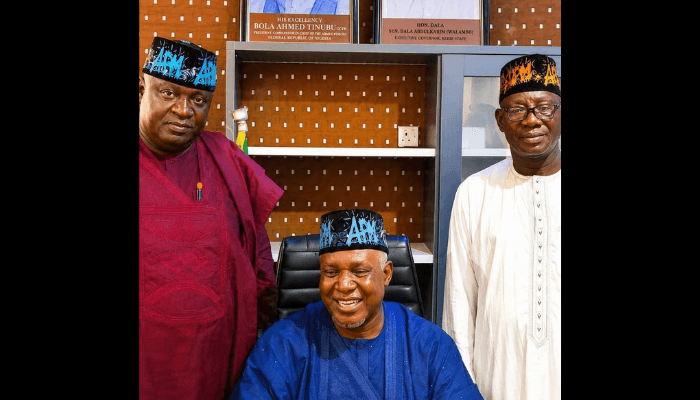
When Zakka Luka Magaji stepped up to the microphone in the Bogoro local government conference hall this week, he wasn't just accepting a certificate of return. He was announcing a political apprenticeship come full circle. The newly elected chairman of Bogoro Local Government Area, a largely rural constituency in Bauchi State, northeastern Nigeria, used his victory speech to name his mentor outright: Governor Bala Mohammed Abdulkadir. For anyone tracking how power actually reproduces itself in Africa's most populous nation, that public nod was the real headline — a younger politician planting his flag firmly in the governor's political soil, and signaling that the state's development agenda now has a loyal foot soldier in the hinterland.
Magaji's election on August 17th was, in his own words, "not merely a personal victory but a victory for the people of Bogoro." He ticked off the standard policy boxes — security, education, agriculture, healthcare — but the texture of his speech was anything but standard. He spoke of learning from Governor Bala Mohammed that leadership must be "purposeful, inclusive, people-centred and development-driven." This is not idle flattery. In Nigeria's local government system, chairmen are often seen as appendages of state governors, who control purse strings and party machinery. By openly framing himself as a student of the governor's methods, Magaji is both securing his political survival and signaling to Bauchi's power brokers that he will not be a rogue actor. For outsiders, this is the quiet mechanics of Nigerian federalism: the local government is where national politics gets its boots on the ground, and loyalty is the currency that keeps the system lubricated.
What makes this more than a routine handover is Magaji's explicit promise to govern as chairman of all Bogoro's peoples — the Zaar, Bambadi, Ayaa, Fulani, and every resident — with "no bias, prejudice or discrimination." That may sound like boilerplate unity rhetoric, but in a region where ethnic and pastoralist-farmer tensions periodically flare, it is a loaded commitment. Bauchi State sits in Nigeria's Middle Belt, a zone where identity politics and resource access have historically ignited violence. By naming every group in his constituency and vowing equitable distribution of "opportunities, attention and government services," Magaji is walking a tightrope: he must satisfy the governor's political base while not alienating the communities that may have voted against him. His pledge to align Bogoro's progress with the "broader development agenda of Bauchi State" and contribute to "the great Bauchi Plan" suggests he understands his job is as much about upward reporting as downward service.
The deeper signal here is about how Nigeria's political class reproduces itself. Magaji is not a firebrand outsider; he is a product of the system, a man who "had the privilege of serving under" Governor Mohammed's administration before seeking his own mandate. This is the classic Nigerian political trajectory — mentorship, appointment, then election — and it explains why governance styles often feel cloned across states. The governor's "fatherly support" is not just emotional; it is logistical, financial, and organizational. For the international reader, this is a reminder that African democracy, at least at the local level, often runs on patron-client networks that look undemocratic from the outside but are deeply rational from within. Magaji's speech, with its emphasis on accountability — "where I fall short, I expect you to hold me accountable" — is an attempt to graft a modern, service-delivery ethos onto that older patronage framework.
Looking ahead, the real test is whether Magaji can translate his mentor's lessons into tangible results in Bogoro. Local government chairmen in Nigeria control modest budgets but wield significant influence over land allocation, primary healthcare, and basic education. If he delivers on security and agriculture — the two sectors that most directly affect rural livelihoods in Bauchi — he could become a model for how governor-aligned local chiefs can actually govern well. If he fails, he will be just another chairman who talked unity and practiced exclusion. His closing line — "The election and politics are over. The work begins now" — is the kind of phrase every Nigerian politician deploys, but Magaji's audience will be watching for specifics. For those of us who track wealth and power in Africa, the story here is not just about one local government in Bauchi. It is about how the continent's political and economic future is being built, one mentored chairman at a time, in dusty conference halls far from the capital cities where the headlines usually get made.
For now, Magaji has done what any smart political heir does: he has claimed his inheritance, named his patron, and promised to expand the family business. Whether that business is good governance or just good politics is a question that Bogoro's farmers, herders, and traders will answer in the months ahead. But one thing is certain — the governor's playbook has found a new author, and the next chapter will be written in the villages and markets of Bogoro, not in the governor's office in Bauchi City. That is where the promise of inclusive, development-driven leadership will either take root or wither, and where the international community should look if it wants to understand how Nigeria's local governments actually function beyond the rhetoric of the state house.