Australia Tightens Gun Laws as Buyback Stalls: What It Means for Capital and Public Safety
Australia's national cabinet has agreed to stricter firearm regulations, including banning 3D-printed guns and restricting licenses to citizens, amidst a faltering buyback program. This move signals a shift in how governments manage public safety risks, with implications for investors in defense, technology, and public policy.
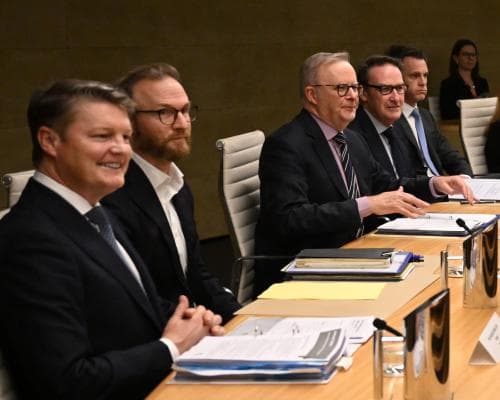
When Anthony Albanese stepped to the microphone in Sydney, the news wasn't about interest rates or iron ore—it was about Dolly Parton. The Prime Minister paused to mourn a cultural icon, but the real headline was buried in the agenda: Australia's leaders had just signed off on the most significant tightening of gun laws in years. For anyone who thinks capital flows only through spreadsheets and trading floors, think again. Policy shifts like this move markets, shape industries, and redefine risk.
The deal, struck at national cabinet, is a direct response to December's antisemitic shooting at Bondi Beach—a moment that shattered the country's sense of safety and forced a political reckoning. The agreement includes a ban on 3D-printed firearms and the sharing of their production blueprints, a move that targets the newest frontier of weaponry. It also restricts gun licenses to Australian citizens only, a measure aimed at curbing foreign influence and illegal ownership. But here's the catch: the federal government's national buyback plan, designed to remove existing weapons from circulation, is faltering. Only New South Wales and the Australian Capital Territory have signed up so far, leaving the rest of the country on the sidelines.
The numbers tell a story of mixed momentum. The buyback was meant to be a cornerstone of the government's strategy, a financial mechanism to incentivize surrender of firearms. But with low take-up, the program is bleeding credibility. The federal government will now share intelligence with state and territory law enforcement, a move that could tighten the screws on illegal gun networks. For investors, this is a reminder that public safety is increasingly a matter of federal coordination—and that's a trend with economic consequences.
Let's talk about the mechanics. The ban on 3D-printed guns is a first for Australia, and it's a direct challenge to a cottage industry that has grown in the shadows of the internet. These weapons are untraceable, made of plastic and metal, and can be produced with a printer that costs less than a mid-range smartphone. The government's move to criminalize the sharing of production materials is a clear signal: the era of DIY firearms is over. For tech companies that supply 3D printing hardware, this could be a regulatory headache, but for security firms and law enforcement tech providers, it's an opportunity.
The heritage angle here isn't about antiques—it's about the evolution of Australian identity. Since the Port Arthur massacre in 1996, Australia has been a global benchmark for gun control. This new agreement reinforces that legacy, but it also highlights a growing tension between state autonomy and federal authority. The buyback's low take-up is a political problem, not just a logistical one. States like Queensland and Western Australia, with their rural constituencies and hunting cultures, are wary of federal overreach. That's a dynamic investors should watch, because it affects everything from property values in regional areas to the cost of public safety infrastructure.
For the wealthy, this is a signal about risk management. Gun violence is a tail risk—rare but catastrophic when it hits. The Bondi shooting showed how a single event can ripple through markets, affecting tourism, insurance premiums, and even foreign investment sentiment. By tightening laws, Australia is betting that prevention is cheaper than reaction. That's a philosophy that resonates with the smartest capital allocators, who know that protecting assets is as important as growing them.
Looking forward, the real test will be implementation. Will the buyback gain traction, or will it become another unfunded mandate? Will the ban on 3D-printed guns actually be enforceable, or will it drive the practice further underground? These are questions that will shape Australia's risk profile in the coming years. For now, the signal is clear: the government is willing to act, even when the politics are messy. That's a bullish sign for stability, but a cautionary tale for anyone who thinks regulations are static. In a world where capital moves fast, policy is the new variable.