Arsenal's Post-Guardiola Warning: The Premier League's New Power Order Is Already Here
Arsenal's 3-0 demolition of Manchester City in the Community Shield signals a definitive shift in Premier League dominance, as Mikel Arteta's deeper, more ruthless squad outclasses Enzo Maresca's transitional City. This result is a forward-looking statement: the title race is no longer a question of if Arsenal wins, but how many times it will humiliate its rivals.
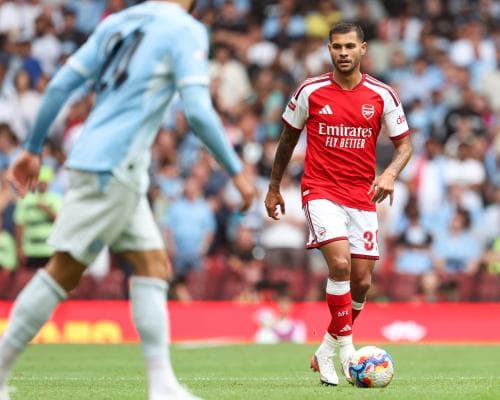
The first real football of the season ended with a message, not just a trophy. By the time Martin Ødegaard sat Gianluigi Donnarumma down with a finish that was as cold as it was precise, the Arsenal supporters in the Principality Stadium had turned from hopeful travelers into prophets. “Can we play you every week?” they sang, and the irony was not lost on anyone. This wasn't a friendly. This was a coronation rehearsal. Arsenal, the Premier League champions, had just dismantled Manchester City in 48 minutes, and the rest of the league should be very afraid.
This was the first match of the post-Pep Guardiola era, and it pitted two of his former assistants against each other, both claiming the inheritance. But where Enzo Maresca's City looked like a team in transition, Mikel Arteta's Arsenal looked like a machine that had simply upgraded its operating system. The additions of Bruno Guimarães and Christos Tzolis have given the squad a depth that was previously a luxury; now it's a weapon. This is not just a win. It's a warning shot fired across the bow of every title contender, and it's calibrated in a language they all understand: dominance.
The technological innovation here isn't in a lab or a silicon wafer; it's in the system. Arteta has built a midfield engine room that suffocates opponents before they can even think. Myles Lewis-Skelly, the young dynamo who was instrumental in Arsenal's title run-in last May, is the perfect embodiment of this new era. He's not just a player; he's a data point come to life, a product of a recruitment model that prioritizes tactical intelligence over mere athleticism. When Martín Zubimendi was brought in to solidify the spine, it wasn't just a purchase; it was a statement of intent. Arsenal are not just collecting talent; they are assembling a chess team that can checkmate you in the opening move.
The market context is brutal for City. They have been forced to watch their closest rivals strengthen while they navigate a post-Guardiola world, a transition that can break even the most well-funded clubs. The Community Shield is often dismissed as a glorified friendly, but this was different. This was a psychological blow. Viktor Gyökeres had said it beforehand: “Against City? In a friendly? We want to win.” That hunger, that willingness to treat every match as a final, is the new standard. City's fans, who have grown accustomed to humbling others, had to face the reality of being the ones humbled. The sky-blue confidence has been replaced by a question mark, and in elite sport, doubt is the first crack in the armor.
For the sector, this signals a shift from the era of the superstar manager to the era of the super-club. The Premier League is no longer a two-horse race; it's a one-team procession, with Arsenal setting the pace. The money is still there, the global appeal is still massive, but the strategic edge now lies in the hands of those who can build a system that outlasts any single personality. Guardiola's departure was always going to be a seismic event, but this result suggests that the tectonic plates have already shifted. The question now isn't whether Arsenal will win the league; it's whether anyone can make it a contest.
Looking forward, this is a preview of the next decade. Arsenal's approach—a blend of high-press, positional play, and relentless squad depth—is the blueprint for the new elite. Maresca has a mountain to climb, and he knows it. The Italian will need time, but in the Premier League, time is the most expensive commodity. As the season unfolds, keep an eye on how City adapts. If they stumble, the gap will widen. But for now, the message from Cardiff is clear: the future is red, and it's already here.