Aramco’s venture arm bets $20 million on digital twins for the office
Aramco Ventures co-leads $20M seed round in US AI startup Twin1 AI, signaling Saudi capital's push into enterprise software.
For anyone tracking where Gulf petrodollars are heading next, the message from Aramco’s venture arm could not be clearer: the future of Saudi investment is not just in rockets, reactors or renewables — it is in the quiet, unglamorous business of making office workers more productive. This week, Aramco Ventures co-led a $20 million seed round in Twin1 AI, a San Mateo and London-based startup that builds AI-powered digital twins for knowledge workers. The idea is simple to state, harder to execute: capture the expertise, context and working habits of a professional, and let that digital replica answer questions, retrieve documents and coordinate tasks across an organisation, even when the human is offline or elsewhere.
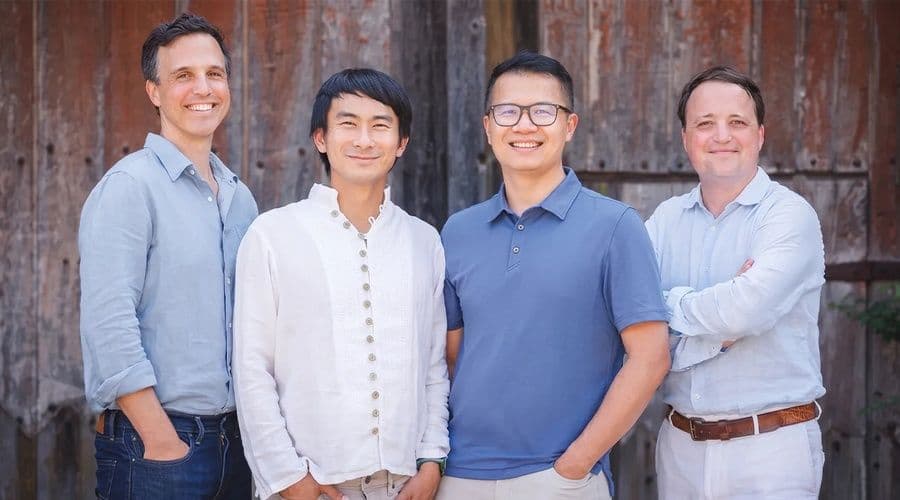
Twin1 AI emerged from stealth with backing from Bessemer Venture Partners and Tribeca Venture Partners alongside Aramco Ventures, with a long list of additional investors — EJF Ventures, Lakestar, Notion Capital, F-Prime and others — piling in. Founded in 2025 by Dr Lewis Z. Liu, Tom Cahn, Huiting Liu and Dr Jonathan Budd, the company positions itself as a coordination and trust layer for enterprise AI. Its platform pulls from approved workplace data — emails, meetings, documents, Slack, Teams, Outlook, Gmail, Google Drive, SharePoint — and applies privacy and governance controls to decide what each twin can access and share. The funding will go toward expanding teams in San Mateo and London, sharpening go-to-market efforts, and deepening the core technology. Early deployments are already underway in legal services, financial services and energy.
For the uninitiated, Aramco Ventures is the investment arm of Saudi Aramco, the state-controlled oil giant that is the kingdom’s economic engine. It has historically focused on technologies that serve the energy value chain — industrial AI, advanced materials, low-carbon solutions — but this deal marks a deliberate stride into general enterprise software. That is a meaningful shift. Saudi Arabia’s Vision 2030 agenda, driven by Crown Prince Mohammed bin Salman, is pushing the economy beyond hydrocarbons, and sovereign-linked capital is increasingly acting like a global tech investor, not just an oilfield tech scout. Aramco Ventures joining a US seed round for a workplace productivity startup signals that Riyadh’s appetite now extends to the software that powers white-collar work in Silicon Valley and London.
This is not charity or diversification theatre. The strategic logic runs deeper. Saudi Arabia is building its own AI ambitions, from massive data centres to national language models, and it needs to understand how enterprise AI will reshape global labour markets. By backing Twin1 AI, Aramco gets a front-row seat on how digital twins could change knowledge management — a concept that resonates in an economy where state-owned enterprises employ hundreds of thousands of professionals whose expertise is hard to replicate. If a senior engineer at Aramco can leave behind a digital twin that answers technical questions for the next generation, the kingdom’s human capital problem becomes less acute. That is a quiet but powerful motivation.
For international readers who track Gulf capital, this deal is another data point in a broader pattern: Saudi money is moving earlier, smaller and more globally. Seed rounds in US startups were once the domain of Silicon Valley angels and growth funds. Now Aramco Ventures is comfortable sitting alongside Bessemer at the table, writing cheques that are modest by its standards but strategically loud. The same money that funds oilfield robotics is now funding a startup whose pitch is that your email inbox can learn to think like you. That is the new reality of Middle East wealth — patient, global and increasingly software-native.
What comes next matters. Twin1 AI’s success will depend on whether enterprises actually trust digital twins with sensitive institutional knowledge, and whether governance controls can keep pace with the ambition. But for Aramco, the bet is not just on one startup. It is on a thesis: that the next trillion-dollar companies will be built on making human expertise scalable. If that thesis holds, the kingdom’s early entry into this niche could pay off in ways that no oil well ever could. For now, the cheque is written, the twins are learning, and Riyadh is watching closely.