Amatrice's $5.3 Billion Rebuild Is a Decade Late—and a Warning to Wealth
Ten years after the 2016 earthquake, Amatrice has spent billions but completed barely a third of its public reconstruction, exposing how slow capital deployment and bureaucratic drift erode the value of disaster funds. For wealthy investors and philanthropists, the town's stalled recovery is a case study in the hidden costs of waiting.
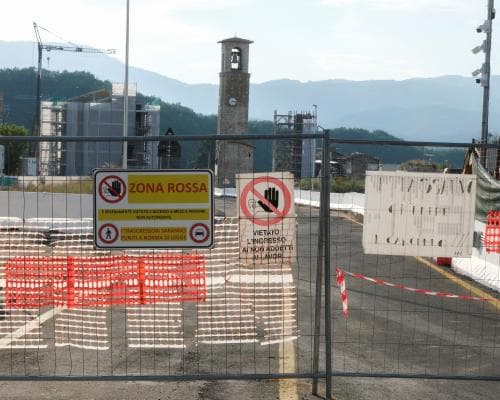
Ten years ago, at 3:36 in the morning, the earth under Amatrice didn't just shake—it erased a town. The 6.0-magnitude quake killed 303 people, flattened the historic centre, and turned a hilltop gem into a pile of rubble that looked more like a quarry than a community. Now, as politicians gather for Monday's anniversary mass to bow their heads and promise progress, the numbers tell a very different story. Roughly €4.85 billion—that's about $5.3 billion—has been earmarked for reconstruction. Yet as of April this year, construction on two-thirds of planned public projects hasn't even started. In the hardest-hit zones, that figure climbs to seven in ten. This isn't just a tragedy of memory. It's a brutal lesson in how capital, when trapped in bureaucracy, fails to compound.
Let's put the scale in perspective. Amatrice's population has shrunk to around 2,100, and more than half of those residents still live in temporary housing—what the Italians call 'soluzioni abitative di emergenza,' or emergency housing solutions that were supposed to last months, not a decade. The town's own grassroots committee, Comitato Civico 3e36, named for the exact moment the quake hit, is blunt: officials will say reconstruction is going well, but you can't call it progress when people are still in uninhabitable homes. Sonia Santarelli, who runs an agriturismo near the town, puts it more sharply: 'Nobody will put their neck on the line.' That's the sound of a wealth promise broken—billions allocated, but value trapped in red tape.
For the money-and-markets crowd, the mechanics here are as instructive as they are grim. The €4.85 billion is public money, but it's being deployed with the efficiency of a slow-motion liquidation. ActionAid Italy's report, published last week, shows that as of April 2026, roughly two-thirds of public projects haven't broken ground. That's not a construction delay; that's a capital allocation failure. Think of it like a mega-fund that raises billions, promises a 10-year horizon, and then sits on the cash while the underlying assets decay. In Amatrice, the 'assets' are homes, schools, and churches—the physical and social infrastructure that makes a community investable. Every year of delay erodes the value of the money already spent, not just in inflation-adjusted terms but in human capital: younger residents leave, businesses don't return, and the social fabric frays.
The heritage angle compounds the financial tragedy. Amatrice's historic centre wasn't just old—it was a palimpsest of medieval and Renaissance architecture, the kind of irreplaceable stock that wealthy buyers pay a premium for in places like Tuscany or Umbria. That's gone. What's being rebuilt is a simulacrum, and even that is incomplete. For wealthy investors eyeing Italian real estate, this is a cautionary tale: the 'buy, restore, flip' model only works when the restoration actually happens. Here, the market signal is clear—capital is frozen, not flowing. The €4.85 billion earmarked is effectively a sunk cost with a delayed return, and the return may never come if the bureaucratic clock keeps ticking.
What does this signal for the wealthy? First, that disaster capital is only as good as the governance that deploys it. Whether you're a billionaire philanthropist funding climate resilience or a fund manager buying distressed assets, the lesson is the same: the spread between allocation and execution is where value dies. Second, it highlights the growing gap between public promises and private reality. Politicians will stand in Amatrice on Monday and say 'we did a lot,' but the data says otherwise. For investors, that's a red flag on any project with heavy state involvement—whether it's infrastructure in Italy, energy transitions in emerging markets, or even domestic rebuilding after hurricanes. The timeline is the risk, and in Amatrice, the timeline has stretched past the point of no return.
Looking forward, the town's fate is a test case for how Europe handles its next disaster—and there will be a next one. Climate change is making extreme weather events more frequent, and the wealthy are increasingly diversifying into 'safe' geographies and assets. But Amatrice shows that safety isn't just about location; it's about execution. The €4.85 billion is still there, but its real value has already been discounted by delays. For those watching from the wealth desk, the takeaway is stark: in the world of capital, time is the most expensive currency. Amatrice has spent a decade learning that lesson, and it's still paying the price.