Alibaba's AI Pivot Recasts China's Tech Crown — and Africa Is Watching
Alibaba leads Hong Kong tech stocks with a 36% quarterly surge, powered by AI and cloud dominance. What it signals for global capital flows.
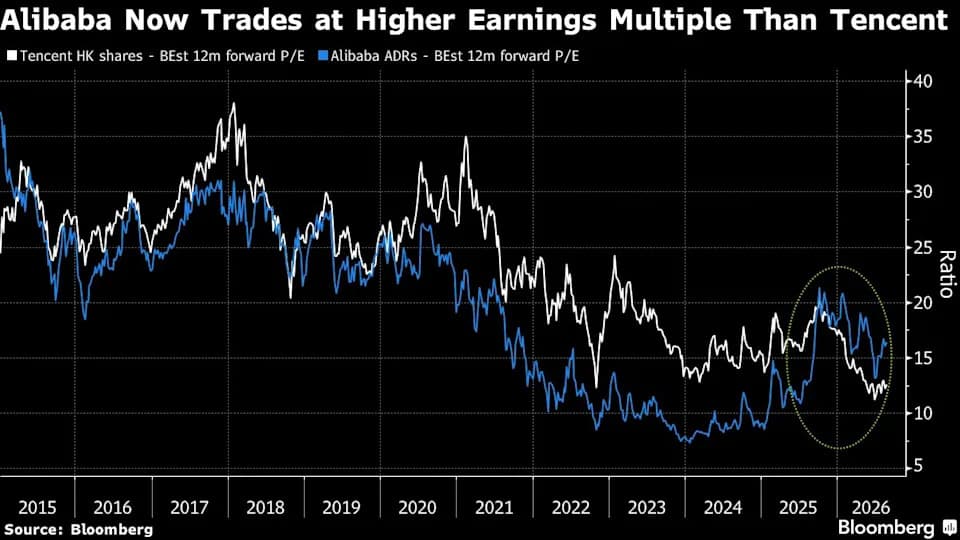
For anyone tracking where the world's next generation of digital infrastructure gets built, the past few weeks in Hong Kong have been a quiet earthquake. Alibaba Group Holding Ltd., the company that once defined Chinese e-commerce the way Safaricom defined mobile money in Kenya, has stormed back to the top of the region's tech leaderboard. Its shares have jumped 36% this quarter, the best performance on the Hang Seng Tech Index, and the gap between it and rival Tencent is the widest since early 2025. This is not a blip. It is a recalibration of what investors believe China's most valuable tech assets are actually for.
The numbers tell a story of strategic reinvention. Alibaba's cloud business now holds a commanding 37% market share in the fourth quarter, according to Omdia, more than double Huawei's 17% and nearly four times Tencent's 10%. That dominance is the engine of the rally, but it is the broader narrative that matters. Alibaba has spent heavily on generative AI models, proprietary chips, and cloud infrastructure — a full-stack bet that analysts say positions it to capture long-term enterprise value in ways that narrower players cannot. Tencent, by contrast, has kept its AI focus closer to its social media and content ecosystem. The market has made its choice: full-stack wins.
To understand why this matters beyond the trading floors of Hong Kong, you have to remember what Alibaba was supposed to be. For years, it was the poster child of Chinese consumer growth — a retail giant whose fortunes rose and fell with domestic spending. When that spending slowed, the stock languished and the narrative soured. What has changed is not just the technology but the identity. Alibaba has reframed itself from a shopping company with a cloud side business into a premier technology platform. The shift is not cosmetic. It reflects a deeper truth about where value is being created in the global economy: not in moving goods, but in moving intelligence.
For Africa, this is more than a distant stock-market story. The continent's own tech ambitions — from fintech hubs in Lagos and Nairobi to data-center builds in Johannesburg and Cairo — are increasingly tied to the platforms that dominate the global cloud and AI stack. Alibaba's cloud leadership means it will set pricing, availability, and innovation tempo for services that African startups and governments rely on, whether directly or through intermediaries. When Alibaba invests in chips and models, it is effectively investing in the infrastructure that African developers will build on. The 'model-agnostic' approach that enterprises are adopting — picking AI systems based on cost and performance rather than brand loyalty — is exactly how many African firms will shop for these tools.
The rally also signals something about capital flows. After years of caution around Chinese tech, investors are returning, and they are rewarding companies that can show tangible AI revenue acceleration, not just promises. Alibaba's cloud growth is accelerating, and its user ecosystem has been revitalized. That is a template for how technology companies anywhere — including Africa's own scale-ups — will be judged in the coming cycle. The days of funding user acquisition without infrastructure are over. The winners will be those who control the stack.
Looking ahead, the question is whether Alibaba can sustain this momentum as it heads into its earnings report. The market has already priced in a great deal, and expectations are high. But the deeper shift is structural. As the battleground moves from flashy models to robust platforms, Alibaba's heavy investment in chips, cloud, and applications puts it in a league few can match. For readers who track wealth and capital in Africa, the lesson is clear: the next wave of tech value creation will be built on infrastructure, not interfaces. And the companies that own that infrastructure — whether in Hangzhou, Seattle, or someday in Lagos or Kigali — will define the terms of digital growth for everyone else.