Africa's Crypto Traders Get a New Playbook: Inside the Prop Firm Boom
Crypto prop firms are reshaping African trading with instant funding and fast payouts, offering new capital access.
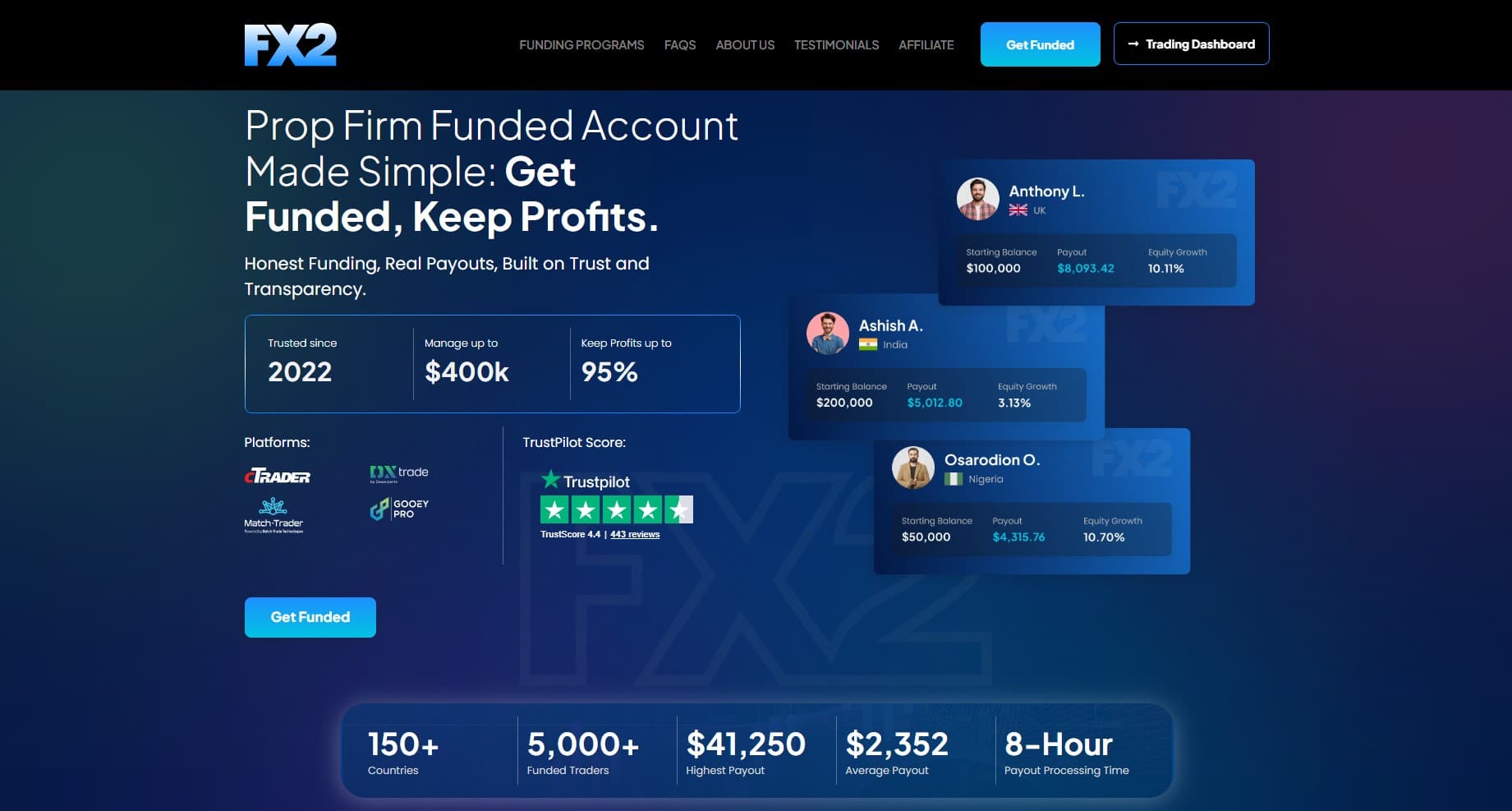
For years, the dream of trading crypto for serious money in Africa has hit the same wall: capital. You have the skill, the screen time, and the nerve, but the bank account says otherwise. That is changing, and not because of a bull market or a new exchange listing, but because of a quiet revolution in how trading capital is distributed. Proprietary trading firms—prop firms, as they are known—are now handing out funding like never before, and for the continent's growing legion of day traders and swing traders, this is the closest thing to a golden ticket that exists in the digital asset world.
The shift is measurable. Firms like FX2 Funding, Hola Prime, and FTMO are no longer niche experiments but institutionalized gateways to serious money. FX2 Funding, founded in 2022, has built its name on boring reliability: servers that do not buckle during high-impact news events, instant order fills, and evaluation rules designed to let skilled traders pass rather than trip them up. Hola Prime is the opposite end of the spectrum—aggressive scaling plans up to $4 million, payouts that can land in as little as one hour, and over 110 crypto pairs across six platforms. FTMO, the grandfather of the industry with over a decade in operation, offers the prestige and safety that comes with age, including swing accounts that let you hold positions over the weekend, a non-negotiable for serious crypto players.
To an outsider, this might look like a niche financial product. But in an African context, it is a lifeline. The continent's retail trading boom has been constrained by a simple paradox: local exchanges offer access but often with thin liquidity and high fees, while international platforms demand minimum deposits that feel like a month's salary in Lagos or Nairobi. Prop firms solve this by fronting the capital—you pay an evaluation fee, prove you can trade, and then you get a funded account where the firm takes a cut of profits, typically 80% going to you, sometimes up to 90% with add-ons. For a trader in Accra or Johannesburg, that is not just a tool; it is a promotion from gambler to professional.
The numbers in the source tell a story of a maturing industry. Max funding ranges from $10,000 to $400,000 at FX2, with scaling up to $2 million. Hola Prime pushes the ceiling to $4 million with scaling, while FTMO offers up to $1 million through its plan. These are not pocket-change figures. They represent a fundamental shift in who gets to deploy capital in the crypto markets. The old model was simple: you put in your own money and hoped you did not lose it. The new model is a meritocracy of sorts, where a track record, even a short one, can unlock institutional-level funding. This is particularly potent in Africa, where traditional credit systems are often broken and collateral requirements are prohibitive.
What does this signal for the wider African economy? It signals that the continent's youth are not just consumers of digital assets but sophisticated operators in a global, borderless financial system. The rise of firms like FundedNext, which pays traders 15% of profits even during the evaluation phase, is a direct response to a global pool of talent that refuses to work for free. For an international reader who tracks capital flows, this is the real story: Africa is not a passive recipient of fintech innovation but an active participant in its evolution. The traders are there, the skill is there, and now the capital infrastructure is catching up.
The road ahead is not without potholes. Regulation remains a patchwork, and the reputational risk of a firm defaulting on a payout is ever-present. But the direction is clear. As more African traders prove themselves on these platforms, the demand for local payment rails, stablecoin on-ramps, and even local prop firm branches will grow. The firms that win this market will not be the ones with the flashiest leverage charts but the ones that understand the specific needs of a trader in a time zone where the New York session ends at 10 p.m. and the Asian session starts before dawn. The infrastructure is here, the capital is flowing, and for a generation of African traders, the only limit left is their own risk management. That is a bet worth watching.
More in MONEY
Wiluna Mining's Victor Rajasooriar Says He Was 'Not Really' Surprised by Post-Listing Share Price Bloodbath
Woodside CEO Liz Westcott Answers Alex Pearce's Sponsorship Call as Fremantle Captain Pushes Back

Mukesh Ambani's brother Anil sees Reliance Capital creditors recover only 43% as Hinduja bid falls short