Actors vs. AI: The Fight to Own Your Own Voice
A coalition of UK actors, including Nicola Coughlan and Matt Lucas, is launching 'Save Our Voices Now' to combat AI voice cloning, demanding legal ownership of one's voice. The campaign highlights a critical battleground where personal identity, labor rights, and rapid AI advancement collide, potentially setting a global precedent for voice as property.
Three seconds. That's all it takes. In the time it takes to say "hello, is this thing on," an AI system can capture your voice, clone it, and make it say anything—your bank details, a political rant, a confession you never made. It's not a Black Mirror script; it's the reality that a growing coalition of British actors is now fighting against. Their weapon? Not a new app, but an old-fashioned open letter and a petition to Parliament.
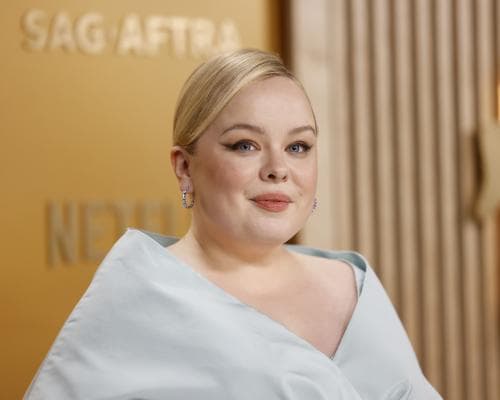
Led by Peter Caulfield, the founder of the new campaign 'Save Our Voices Now', a group of roughly 80 performers—including Nicola Coughlan (Bridgerton), Matt Lucas (Little Britain), Hugh Bonneville (Downton Abbey), and Siobhán McSweeney (Derry Girls)—is demanding that the UK government grant every citizen statutory ownership of their own voice. The ask is deceptively simple: make voice a legal property right, just like a physical asset or a copyrighted song. But the implications are profound. As Bonneville puts it, "My voice is unique, it's mine, it's part of my identity. So is yours." The campaign is a direct response to a technology that has moved from novelty to nuisance—and now to a genuine existential threat for anyone whose livelihood depends on their vocal cords.
The technology behind this push is not new; it's the same deep-learning models that power voice assistants and audiobook narrators. But its accessibility has exploded. Today, anyone with a few hundred dollars and a cloud subscription can clone a voice from a few minutes of captured audio. The campaign claims that 28% of UK adults have already been targeted by voice-cloning scams—a staggering figure that suggests this is no longer a niche concern for celebrities but a mainstream consumer risk. For actors, the stakes are even higher. As McSweeney notes, "My voice is one of my tools." If a studio can license a digital replica of her voice for a fraction of her fee, why would they ever hire her again? The fear is not just about fraud; it's about obsolescence.
This is not a Luddite revolt. The actors are careful to frame their fight as a call for regulation, not a ban on innovation. "I believe that there is a way to work alongside AI and to use it as a tool that benefits us rather than rendering us obsolete," says McSweeney. The campaign's petition to the Prime Minister and the Mayor of Greater Manchester, Andy Burnham, seeks to embed voice rights into statutory law—a move that would force AI developers and media companies to negotiate consent and compensation for any vocal replica, rather than treating it as fair game. It's a classic labor-rights battle, but with a digital twist: the asset being protected is not a factory tool or a piece of code, but the very thing that makes us human.
The timing is no accident. The entertainment industry is still reeling from the 2023 Hollywood strikes, which secured AI protections for actors in film and TV. But that agreement covers unionized work in the US; it does nothing for a British voice actor, a podcast host, or a random person on the street whose voice is scraped from a YouTube video. The UK, which has positioned itself as a global AI leader, is now at a crossroads. It can either follow the EU's lead with its AI Act, which includes transparency requirements for deepfakes, or it can set a bolder precedent by granting individuals exclusive property rights over their own voice. The latter would be a world-first—and a potential goldmine for the legal and tech industries that will have to figure out how to license and enforce such rights.
The push also reveals a deeper anxiety about the nature of identity in the age of generative AI. If a voice can be cloned, what else can be? Our faces, our writing styles, our decision-making patterns. The actors are not just fighting for their own livelihoods; they are fighting for a principle that will define the next decade of digital life. As Caulfield warns, "It's a Black Mirror episode, except it's real." The question is whether lawmakers will treat this as a science-fiction problem or as a pressing civil rights issue. The answer will shape not just the entertainment industry, but the very fabric of trust in our digital interactions.
What happens next? If the petition gains traction, the UK could become the first jurisdiction to legislate voice as property. That would send shockwaves through the AI industry, forcing companies like OpenAI, ElevenLabs, and Resemble AI to rethink their data sourcing and licensing models. It would also create a new market for voice rights—a kind of digital identity exchange where artists can monetize their vocal likeness with consent, rather than having it stolen. For the rest of us, it would mean that the next time an AI calls you, you can ask it to prove it's not a clone. The fight is just beginning, but the message is clear: your voice is yours. And no algorithm should ever take that away.