A Nigerian developer explains why Kigali beats Lagos for patient capital
Nigerian investor Tony Nwulu on why Rwanda's predictability beats Nigeria's returns for luxury real estate
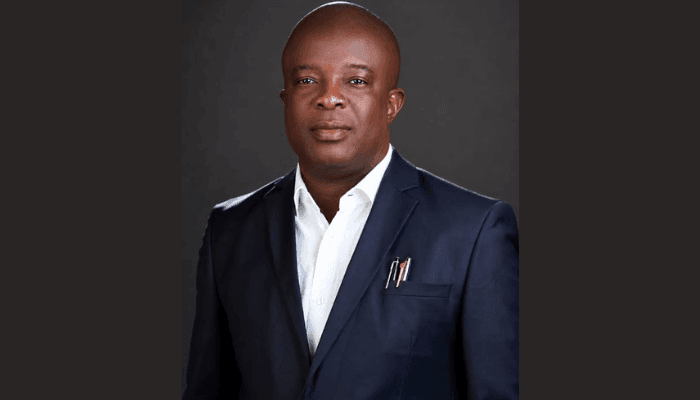
There is a quiet revolution happening in African real estate, and it is not taking place in Lagos or Nairobi. It is unfolding in Kigali, where a Nigerian investor named Tony Chinedu Nwulu has decided to bet his luxury property ambitions on a country that offers something rarer than oil wealth or population size: predictability. For anyone who tracks capital flows on the continent, that choice is more telling than any quarterly earnings report.
Nwulu, the founder of Azari Luxury Properties, is not a small player dabbling in cross-border speculation. His interests span real estate, fintech, security technology, hospitality and digital innovation. In an interview with BusinessDay Nigeria, he laid out a stark investment philosophy: African investors should treat the continent as one interconnected opportunity rather than being locked into their birth countries. That thinking led him to Rwanda, where he is building a premium residential and hospitality-led portfolio under the banner of what he calls Africa's Finest Address. The company is now moving from market entry into developing luxury estates, high-rise residences, branded residences and serviced apartments across Kigali.
To understand why this matters, you have to grasp what Rwanda offers that Nigeria does not. The Rwandan Development Board advertises no restrictions on foreign ownership or capital flows, a fully digitalised investment environment and one-stop investor services. For a developer thinking in 15- or 20-year cycles, that administrative efficiency is not a bureaucratic nicety; it is the difference between a project that breaks ground on schedule and one that drowns in permits. Nwulu is explicit about the trade-off: Nigeria can potentially offer higher returns in certain situations, but those returns come with higher operational and macroeconomic risks. Rwanda offers potentially more moderate returns accompanied by greater predictability.
That statement cuts to the heart of how wealth is now being built in Africa. For decades, the continent's biggest markets sold themselves on scale and raw opportunity. But a new generation of investors is asking a different question: not just how much can I make, but how safely can I make it over a long period? Nwulu's approach is deliberately patient. He has not rushed into construction merely to announce projects. Instead, he has spent time understanding Kigali's neighbourhoods, land values, consumer expectations, planning requirements and construction economics. That is the behaviour of someone who expects to be there for decades, not someone chasing a quick flip.
The luxury property angle is also significant. Premium residential and hospitality-led real estate in Kigali is not about serving expatriates alone; it is about creating destinations and communities that combine architecture, technology, security, wellness and lifestyle. Rwanda's development trajectory is generating demand for quality housing and professionally managed accommodation, and Nwulu is positioning Azari to capture that wave early. He declined to publish a specific consolidated investment figure, saying the portfolio is still in its building phase, but his ambition is clearly not limited to acquiring one or two properties.
What does this signal for the wider African economy? It suggests that capital is becoming more discerning, more willing to cross borders, and more focused on governance as a factor of production. Rwanda has deliberately manufactured the conditions for long-term investment, and investors are responding. For Nigeria, the message is uncomfortable but clear: size alone no longer guarantees loyalty. When a Nigerian entrepreneur of Nwulu's calibre chooses Kigali over Lagos, it is not a rejection of his homeland; it is a vote for a system where planning, security and institutional efficiency are not afterthoughts.
Looking ahead, the bet is that Kigali's luxury market still has considerable room to grow, and that being early matters more than being big. If Rwanda continues on its current trajectory, Nwulu's patience will look visionary. If it stumbles, he has hedged by building a scalable platform rather than a single project. Either way, his move is a signal to every wealthy African watching from abroad: the continent's investment map is being redrawn, and predictability is the new premium.