A Legacy in Motion: How Rhoda Roberts' Cultural Blueprint Is Shaping Tomorrow's Creative Economy
The posthumous Naidoc lifetime achievement award for Rhoda Roberts underscores a transformative model for preserving and monetizing Indigenous knowledge through technology and creative direction. Her work at the Sydney Olympics and beyond offers a blueprint for a future where cultural heritage drives innovation in the experience economy.
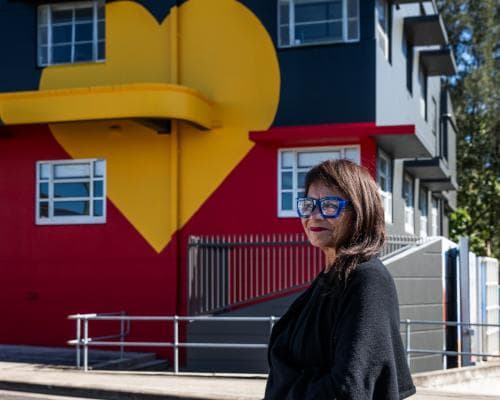
When the world watched the Sydney 2000 Olympics opening ceremony, few knew that the hauntingly beautiful Awakening segment—a fusion of ancient ceremony and modern spectacle—was the brainchild of a woman who would spend her life proving that culture is not a relic, but a living, breathing engine of innovation. Rhoda Roberts, a proud Widjabul Wieybal woman of the Bundjalung nation, passed away in March at 66, but her vision is only beginning to ripple through the corridors of power, technology, and capital. On Saturday night in Alice Springs, the Naidoc awards posthumously honored her with a lifetime achievement award, cementing her status not just as a cultural ambassador, but as a strategic architect of what the future of creative industries might look like.
Roberts' genius was her ability to translate the intangible—language, ceremony, dance—into experiences that resonated globally. Her choreography at the Olympics wasn't just a performance; it was a masterclass in cultural asset management. In an era where billionaires and tech giants are scrambling to own the next content frontier, Roberts demonstrated that the most valuable IP isn't in a server farm—it's in the stories and rituals that have survived millennia. Her work anticipated the current explosion of interest in Indigenous knowledge as a source of innovation, from land management algorithms to immersive VR experiences that let users walk through ancient landscapes. The Naidoc committee's co-chair, Lynette Riley, called Roberts "fearless, brilliant, and deeply committed to community and culture," a reminder that the sharpest minds in the cultural sector are often those who blend artistic vision with an entrepreneurial spirit.
The technology and capital behind this shift are quietly building. While Roberts herself wasn't a tech founder, her legacy is now being weaponized by a new generation of Indigenous entrepreneurs who see her as a founding figure. Startups in Australia and beyond are using AI to preserve endangered languages, blockchain to authenticate Indigenous art, and spatial computing to recreate ceremonies for educational platforms. These ventures are attracting serious funding—not just from government grants, but from impact investors and family offices looking for assets that are both culturally significant and commercially viable. The Naidoc awards themselves, celebrating 50 years, have become a barometer of this momentum, with this year's winners embodying what Minister for Indigenous Australians Malarndirri McCarthy called "leaders, advocates, artists, educators, innovators and community champions." Roberts' posthumous honor is a signal that the establishment is finally recognizing the economic and strategic value of cultural stewardship.
But the competitive context is stark. The global experience economy—valued in the trillions—is dominated by Western narratives, and Indigenous voices are often tokenized or exploited. Roberts' approach offers a counter-model: one where the community retains control of the narrative and the revenue. Her work as a creative director wasn't just about aesthetics; it was about governance. She insisted on protocols for sharing sacred knowledge, creating a template that is now being codified into legal frameworks and licensing agreements. This is a direct challenge to the extractive models of the past, and it's a model that could be replicated across sectors—from fashion to film to tourism. The question for investors is whether they can adapt to a world where the asset isn't a patent, but a relationship.
What Roberts' legacy signals for the sector is a shift from cultural preservation as a charitable cause to cultural preservation as a growth sector. The technology is already there—what's missing is the will to treat Indigenous knowledge as the ultimate hard asset. As the world grapples with climate change and social fragmentation, there's a growing recognition that Indigenous wisdom holds practical solutions, from fire management to biodiversity. Roberts' life's work was to make that wisdom accessible without diluting it, and her posthumous award is a call to action for the next generation of builders and investors. The Naidoc awards, with their 50-year milestone, are no longer just a celebration; they're a roadmap.
Looking forward, the real test will be whether the momentum outlives the moment. Roberts' legacy could easily be co-opted into a branding exercise, but her example suggests a more radical path: one where cultural leaders are given the same resources and respect as tech founders. Imagine a future where every major infrastructure project includes a cultural impact assessment, or where Indigenous creative directors are as sought-after as Silicon Valley product designers. That's the world Roberts was building toward, and her posthumous recognition is a reminder that the future is not just about artificial intelligence or space travel—it's about who gets to tell the story. As the sun sets over Alice Springs, one can almost hear her voice, urging us to move forward without forgetting where we come from. The next Olympic stage is already being built; the question is whether we'll have the courage to let culture lead the way.