A Himalayan Flash Flood Just Wiped Out a Border Economy—What It Means for Adventure Capital
A catastrophic flash flood on the Nepal-Tibet border has left 33 British citizens—including a 13-year-old—among 400+ missing, while destroying homes, roads, and hydropower infrastructure. For wealth builders, this is a stark reminder that frontier-market investments in tourism and energy carry uninsurable tail risks that no spreadsheet can price.
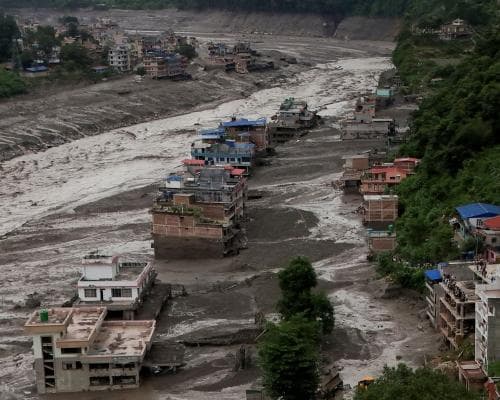
At 8:30 on a Wednesday morning, the Bhote Koshi River turned from a lifeline into a killing machine. A wall of mud and rock collapsed into the water on the Tibetan side of the border, and within minutes, dozens of people were being swept away—many of them Western trekkers who had paid thousands of dollars for the adventure of a lifetime. Nepal's tourism board now lists 33 British citizens, including a 13-year-old girl, among more than 400 travelers missing. This is not a weather report. It is a balance-sheet event for the entire adventure-tourism industry—and a brutal lesson for anyone who thinks frontier markets are just a higher-beta version of home.
The numbers are still moving, and they are ugly. At least 341 foreign nationals are unaccounted for, with over 100 yet to have their nationality confirmed. Nepal's police have recovered 157 bodies and are treating more than 40 people in hospitals. The UK's Alpine Eco Trek—a specialist operator that charges premium rates for guided Himalayan expeditions—says 12 of its own British clients are missing. Ram Kumar Adhikari, the company's owner, told the Press Association from the affected area that he had 'not much info to share at the moment.' That is the sound of a small business owner watching his entire season—and possibly his reputation—wash downstream.
Here is where the capital story gets sharp. This flood did not just take lives; it took infrastructure. Homes, roads, and energy installations were destroyed on the Nepali side, while officials in Tibet reported 'major casualties' after a mudslide hit a border land crossing in Gyirong county. Eight South Korean workers at a hydropower plant are missing, and ten others are unaccounted for. Hydropower is Nepal's biggest export and a magnet for foreign direct investment—Chinese, Korean, and European funds have poured billions into Himalayan river projects. But those rivers are not just sources of clean energy; they are also unpredictable, glacier-fed torrents that can turn into debris-laden missiles. The initial reports suggest an earthquake triggered the avalanche that caused the flood, but the deeper truth is that climate volatility is making these events more frequent and more violent. That is a risk factor no ESG rating or due-diligence report can fully capture.
For the wealthy, the immediate question is not just about humanitarian aid—though that matters—but about the resilience of their portfolios. Adventure tourism is a niche but lucrative sector, with high-net-worth travelers paying $10,000 to $50,000 per person for expeditions in the Himalayas. A single disaster like this can wipe out a season, trigger insurance disputes, and force operators to refund or reschedule. But the bigger exposure is in infrastructure. The Bhote Koshi corridor is a key trade and energy route between Nepal and Tibet. When it goes down, so does the revenue from border tolls, power sales, and logistics. For family offices and pension funds that have allocated to emerging-market infrastructure, this is a case study in 'fat tail' risk—the rare but catastrophic event that models often miss.
The market reaction has been muted so far, but that is typical. Frontier markets are illiquid, and the news cycle moves on quickly. Yet the smartest capital is already asking harder questions: Are the engineering standards for Himalayan hydropower plants adequate for a warming planet? Are tour operators carrying enough insurance to cover not just evacuation but long-term liability? And are governments in Nepal and Tibet willing to invest in early-warning systems that could save lives and assets? The answers are not reassuring. Nepal's tourism board is still counting the missing, and the country's foreign minister has only confirmed that an earthquake likely triggered the avalanche. That is not a risk-management framework; it is a hope and a prayer.
For wealth builders, the lesson is simple but powerful: in frontier markets, the premium you earn is often the premium for being willing to lose everything. The 13-year-old British girl, the South Korean engineers, the Nepali villagers—they are not just casualties; they are a stress test for the entire model of capital deployment in high-altitude, high-volatility zones. If you hold assets in such regions, now is the time to reassess your tail-risk hedges. If you are considering new investments, demand transparency on disaster preparedness that goes beyond glossy brochures. The flood will recede, but the financial aftershocks will ripple for years through insurance claims, reconstruction costs, and the re-pricing of risk in one of the world's most beautiful—and most dangerous—markets.