When Nature Calls the Shots: Nepal's Flood Crisis and the High Cost of Delayed Rescue
Nepal's refusal of foreign aid during a deadly flash flood underscores the geopolitical and financial tightrope developing nations walk in crisis. For wealth builders, it's a stark reminder that infrastructure resilience is now a premium asset class.
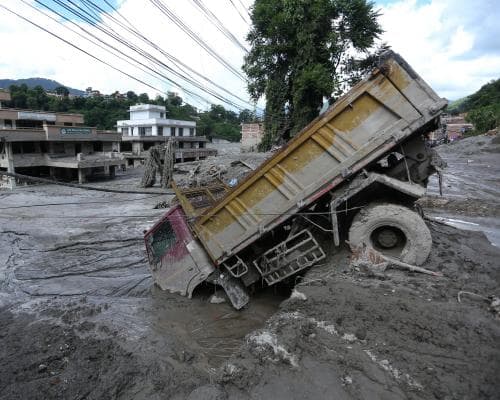
The roar of the water was the first warning. Then came the mud, the boulders, and the silence. In Nepal's Rasuwa district, a glacial lake burst its banks, sending a wall of debris down the valley and killing at least 469 people. But as the death toll climbs, the more striking story for anyone who watches capital flows is not the disaster itself—it's the response. Nepal's foreign ministry has politely but firmly told the world: thanks, but no thanks. No foreign rescue teams. No foreign helicopters. We've got this.
That decision, announced on Friday, is a masterclass in sovereign pride colliding with practical need. The ministry's spokesperson, Lok Bahadur Chhetri, said Nepal's own security agencies are handling search and rescue. South Korea, which has nine nationals missing at a hydropower plant and a rapid response team already sitting in Kathmandu, has been told to wait. Seoul has pledged $1 million in humanitarian aid through international organizations, but that's money, not manpower. For now, Nepal wants to control the narrative—and the risk.
Here's the financial angle that should make every portfolio manager sit up: the cost of inaction is compounding by the hour. Helicopter rescue operations were suspended after reports that a dammed lake in the flood-hit region began to overflow. Locals were seen rushing uphill, a Reuters witness said. The water level in the river is rising, according to Narendra Pariyar, the most senior bureaucrat in Rasuwa. Every hour of delay means more assets lost—not just human lives, but infrastructure, crops, and the economic lifelines that connect Nepal to its neighbors.
Nepal's reluctance to accept foreign aid is not new. It's a pattern seen across emerging markets: governments fear that accepting help comes with strings attached—debt, influence, or a loss of face. But in this case, the stakes are particularly high. The disaster has hit a region where hydropower projects are the crown jewels of foreign investment. South Korean companies are building plants there. Chinese firms are eyeing the same valleys. When a glacial lake overflows, it doesn't just wash away villages; it washes away the confidence of investors who need predictable, stable environments to deploy capital.
The irony is that Nepal's own security forces are likely stretched thin. The country has a small army and limited aviation capacity. Helicopters are expensive to operate, and pilots are scarce. By refusing foreign rescue teams, Nepal is betting that its own resources will suffice. But the math doesn't add up. A 90-minute suspension of rescue operations, as ordered by army officers on Friday, is a telling admission that the situation is fluid and dangerous. The lake that broke its bank could overflow again, triggering a second wave of destruction.
For the wealthy and the wise, this is a textbook case of tail risk. Climate change is turning once-rare events like glacial lake outburst floods into recurring threats. The market for disaster resilience—from early warning systems to hardened infrastructure—is booming. Countries that invest in these systems will attract capital; those that don't will face a growing risk premium. Nepal's decision to go it alone may be politically expedient, but it's economically costly. The longer the rescue is delayed, the higher the reconstruction bill.
What happens next? The water is still rising. The death toll could climb. South Korea is negotiating with Nepal to deploy its team, but no timeline is set. The world's wealthy are watching, not just with humanitarian concern, but with a cold eye on the region's stability. Nepal is a small economy, but it's a bellwether for how climate-vulnerable nations will handle crises in the coming decade. The message from Kathmandu is clear: we'll manage our own disasters, thank you. But for investors, the real question is whether that management is worth the risk.