Westpac's Anthony Miller breaks ranks: skilled migration is Australia's growth lifeline
Westpac CEO Anthony Miller defends skilled migration as federal politicians push for cuts, warning Australia's economy and aging workforce depend on it.
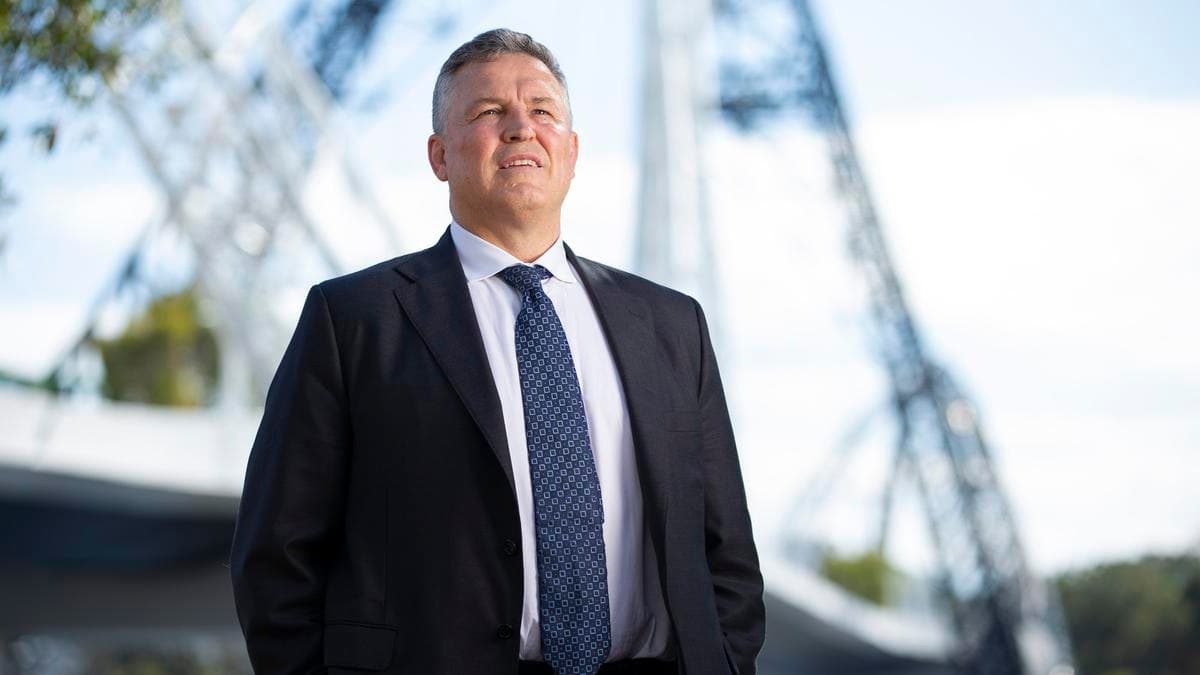
For anyone tracking the flow of capital and talent into Oceania, the past week has felt like watching two different countries argue about the same weather. Federal politicians, sensing an election mood, are sharpening their knives against migration numbers. But from the corner office of Australia's oldest bank comes a voice that cuts against that populist grain: Westpac chief executive Anthony Miller, who on Monday used an exclusive interview to make the case that skilled migrants are not a political inconvenience but an economic necessity.
Miller's intervention is significant not because it is controversial — it is, in polite corporate circles, almost banal — but because of when he chose to make it. As Canberra debates reducing intake levels, the CEO of a bank that has financed Australian homes, farms and businesses for over two centuries is publicly pushing back. He argued, in essence, that Australia cannot afford to close the door on the very people who keep its hospitals staffed, its construction sites active and its technology sector competitive. The message was aimed squarely at the federal push to slow the rate of arrivals, a policy instinct that polls well but, in Miller's view, ignores the demographic arithmetic.
To understand why this matters beyond the usual Sydney-Melbourne media bubble, you have to look at the shape of the Australian economy. This is a nation that has grown rich on commodities, but its real engine in recent decades has been population growth. Every suburb, every infrastructure project, every service industry from aged care to engineering relies on a steady stream of newcomers. Westpac, as the country's oldest banking institution, is not a neutral observer here. Its loan book, its deposit base and its long-term profitability are tied to a growing population. When a Westpac CEO speaks on migration, he is not offering a personal opinion; he is reading the balance sheet of the nation.
The timing is also telling. Australia's unemployment rate remains low by historical standards, but productivity growth has been sluggish, and the aging of the baby boomer generation is now hitting the workforce in real terms. Skilled migrants fill gaps that domestic training cannot quickly fill — in healthcare, in construction, in the renewable energy transition that is now a genuine economic pillar. Miller's defence of migration is not a moral argument, though it has moral weight. It is a practical one: without a steady inflow of skilled labour, Australia's capacity to build, to care and to innovate will simply stall.
What makes this particularly interesting for an international reader is the contrast with the broader Oceania region. Across the ditch, New Zealand has been wrestling with its own migration settings, and the Pacific islands are watching Australia's decisions with a mixture of hope and concern. Australia's migration program is not just a domestic policy lever; it is a gravitational force that pulls talent from across the region. When Australian politicians talk about cutting numbers, they are not just shaping Brisbane or Perth — they are shaping the labour markets of Suva, Port Moresby and Auckland.
Miller's comments also signal something about the mood inside corporate Australia. Business leaders have largely stayed quiet during the recent migration debate, wary of being painted as out of touch with suburban voters. By stepping forward, the Westpac CEO is giving permission for other executives to speak up. That matters because in Australia, the business community's voice often carries weight in policy circles, even if it is unpopular at the barbecue. The question now is whether the federal government listens, or whether it doubles down on a reduction that plays well in focus groups but poorly in boardrooms.
Looking ahead, the real test will come in the next federal budget. If migration numbers are cut sharply, expect the construction sector to feel it first, followed by healthcare and aged care. Westpac's own economists will be modelling those scenarios now. Miller's public stance is a warning shot — a signal that the banking sector, at least, will not quietly accept a policy it believes will damage the economy's long-term prospects. For those of us who cover wealth in this region, the takeaway is clear: the debate over migration is no longer just about borders. It is about the future of Australian capital, and who gets to build it.


