Washington's century-long play for Venezuela's oil: a deal that rewires the hemisphere
US negotiates stakes in Venezuelan oil fields with 100-year leases, reshaping energy geopolitics and post-Maduro wealth flows.
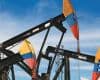
For anyone tracking the movement of capital in South America, the news out of Caracas this week is not about barrels per day or reserve estimates. It is about time itself. The United States government is quietly negotiating with Venezuela's interim administration for ownership stakes in roughly a dozen oil fields — under lease terms that could stretch a full century. That is not a contract; that is a dynasty. And it lands at a moment when the old certainties of the region's oil economy are being torn up and rewritten in real time.
The talks, first reported by Axios and Bloomberg and citing unnamed senior US officials, cover fields holding some 90 billion barrels of proven reserves — nearly a third of Venezuela's certified total of around 300 billion, the largest on the planet. A list of 17 fields seen by Reuters includes fresh tracts in the Orinoco Belt and mature wells in Lake Maracaibo, some currently run by a Chinese company under a contract signed during Nicolás Maduro's tenure. Secretary of State Marco Rubio and acting president Delcy Rodríguez are leading the negotiations. There is no timetable, and Energy Secretary Chris Wright has floated a trip to Venezuela as soon as next week. One official told Axios: 'Calling this deal huge would be an understatement.' No one has confirmed a thing — the White House punted to the Department of Energy, which stayed silent, and PDVSA, the oil ministry and hydrocarbons minister Paula Henao were all unreachable.
To understand why this matters, you have to step back from the boardroom and look at the map. Venezuela has the world's largest certified oil reserves, yet it produces around 1.25 million barrels a day — a fraction of what it pumped in the 1990s, when it was an OPEC heavyweight and regional anchor. The state company PDVSA has been hollowed out by mismanagement, sanctions and the collapse of infrastructure. The interim government led by Rodríguez, installed after Maduro's capture by US forces in late January, inherited a machine that barely runs. The hydrocarbons law reform she enacted on January 30 — less than a month after Maduro's fall — plus the Treasury's easing of the oil embargo, opened the door for foreign capital to return. But this is not a normal reopening. Washington is not asking for a seat at the table; it is asking to own the table, the chairs, and the building for a hundred years.
This is also a story about the new shape of American power in the hemisphere. The so-called Donroe Doctrine — a Bloomberg coinage — is not a metaphor anymore. The US government has already taken stakes in Intel, MP Materials and Lithium Americas, extending its reach into critical minerals and semiconductors. Venezuela's oil is the biggest prize yet. The domestic logic is just as pressing: petrol prices are climbing ahead of November's midterm elections, and the Strategic Petroleum Reserve needs refilling. A century-long stake in Venezuelan crude gives Washington something no ally or adversary can offer — a locked-in supply chain for generations, run by private American companies modernising fields while Caracas collects higher revenues from increased output. The officials cited by Axios acknowledge the political risk: Rodríguez could be accused of handing over the country's natural resources, a charge that would echo across Latin America's nationalist left and right alike.
Meanwhile, Bloomberg reports that Caracas is mulling an exit from OPEC — the cartel Venezuela helped found in 1960 and whose quotas it has failed to meet for years. The UAE left in April, and Iraq flirted with departure in June before backtracking. If Venezuela follows, it would be a symbolic rupture: the founding member walking away from the very institution that once gave it global leverage. But the move makes a certain brutal sense. With Washington as a partner and a century of leases on the table, OPEC's production ceilings become an inconvenience, not a strategy. Venezuela would rather sell its oil to a superpower with a long memory than to a cartel with a shrinking one.
What does this mean for the wider region? For decades, South America's wealth story has been cyclical — boom, bust, populism, default. This deal, if it closes, would break that loop. A hundred-year lease is not a cycle; it is a permanent realignment. It says that the United States is no longer content to buy oil on the open market. It wants equity in the ground itself, and it is willing to back an interim government with diplomatic muscle, legal cover and the implicit threat of force. For investors watching from São Paulo, Buenos Aires or Santiago, the signal is unmistakable: the era of pure extraction contracts is over, and the era of state-to-state equity deals has begun. The risk is equally clear — if Rodríguez falls, or if a future Venezuelan government repudiates the leases, the hemisphere could see its most explosive resource nationalism since the nationalisations of the 1970s.
For now, the only certainty is uncertainty. No confirmation, no timetable, no numbers beyond what the unnamed officials chose to leak. But the fact that the talks are happening at all — with a century as the starting point — tells you everything about how Washington views its future in South America. It is not looking for a quick win. It is looking for a permanent address. And for a region that has spent two centuries selling its resources to the highest bidder, that is either the most pragmatic deal in history or the most dangerous one. The next few months will reveal which.