Trump's Venezuela oil gambit: Washington takes 55% of a nation's crude future
US secures majority control of Venezuela's oil reserves via joint venture, reshaping South America's energy map.
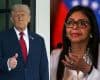
For anyone who tracks capital in South America, the news that landed on Friday was not just another diplomatic cable — it was a seismic shift in who will own the region's most contested resource. US President Donald Trump announced that Washington has secured majority control of more than 65 billion barrels of proven Venezuelan crude reserves, roughly a fifth of the country's total. Acting president Delcy Rodríguez confirmed the deal, and the numbers are staggering: a joint venture between the US government and an undisclosed private operator based in Venezuela, with 100-year concessions over fields holding some 63 billion barrels. Washington will control 55% of effective output — split between an equity stake and the right to buy crude at cost. The same unnamed US official described the new entity as the world's second-largest corporate holder of proven reserves, trailing only Saudi Arabia's Aramco.
The political framing was pure Trump: 'We have secured majority US control of more than 65 billion barrels of proven oil reserves in Venezuela, at no cost to the American taxpayer,' he wrote on his social network, adding that the transaction 'more than doubles American oil reserves.' That claim deserves a closer look. US proven crude reserves sit at around 48 billion barrels, but the reserves being added lie in Venezuelan territory and are controlled through a corporate stake — not by pumping in Texas or the Gulf of Mexico. Still, the optics matter. Two months before US midterm elections, with petrol averaging above four dollars a gallon and strategic reserves at their lowest since the early 1980s, after six months of war with Iran that has disrupted a fifth of global supply, this is a story about energy security dressed as a business deal.
For outsiders, the context is essential. This is not a normal oil contract. It comes almost nine months after US forces captured then-president Nicolás Maduro in Caracas and transferred him to New York, where he awaits trial on drug trafficking charges. Rodríguez assumed the acting presidency and in January enacted a reform allowing private companies to manage extraction. The US Treasury subsequently eased sanctions on the sector. So this deal is the culmination of a regime change — not a commercial negotiation between equals. The Venezuelan government's statement puts the project at 17 strategic fields, with investment exceeding 100 billion dollars and more than 209 billion in taxes for the state. Rodríguez said the aim is 'to consolidate our position as an energy-producing power, putting our immense reserves at the service of national development.' Secretary of State Marco Rubio, who negotiated alongside Defence Secretary Pete Hegseth, called it a victory for both sides. The Wall Street Journal reports Chevron and services provider Halliburton are involved so far.
What does this signal about capital and wealth in South America? First, that the old rules of resource nationalism have been upended. Venezuela, once the poster child of state-controlled oil under Hugo Chávez, is now handing 100-year concessions to a foreign government. That is a radical pivot, and it will reverberate across the continent — from Brazil's pre-salt fields to Argentina's Vaca Muerta shale. Investors who have long shied away from Venezuelan assets will now watch how this joint venture is structured, particularly the identity of the private operator, which remains undisclosed. The deal also underscores a brutal reality: when a state collapses economically, its strategic resources become bargaining chips. Venezuela's annual inflation runs at around 600%, and the minimum monthly income of some 240 dollars covers less than half of a basic basket costing more than 500. In such a climate, survival trumps sovereignty.
The forward-looking question is whether this arrangement delivers what both sides promise. For Washington, it is a hedge against global supply disruptions. For Caracas, it is a lifeline — but one tied to a foreign power's interests. The 100-year horizon is extraordinary; it outlasts any political cycle in either country. If the venture works, Venezuela could rebuild its production capacity and regain a place in global energy markets. If it fails, the country will have traded one form of dependency for another. Either way, for anyone following wealth and power in South America, this is the story to watch — a corporate entity, born of geopolitical rupture, now holding more proven reserves than almost anyone on Earth except Aramco. The map of the region's energy future has just been redrawn, and the pen is in Washington's hand.