Trump’s Venezuela Oil Gambit: A $100 Billion Bet on a Nation’s Future
US takes majority control of Venezuela’s oil reserves in a historic deal, promising $100B investment and a new era for the nation.
It is not every day that a superpower quietly slips its hand into another nation’s most prized resource and calls it a partnership. But that is exactly what happened on Friday, when President Donald Trump announced a deal that gives the United States majority control of Venezuela’s proven oil reserves—65 billion barrels, to be precise. For anyone tracking capital flows in South America, this is not just another headline; it is a tectonic shift in how the region’s wealth is controlled, shared, and contested. The announcement, made on Trump’s Truth Social platform, was framed as the “biggest oil deal in world history,” and while hyperbole is the norm in Washington, the numbers behind it are staggering.
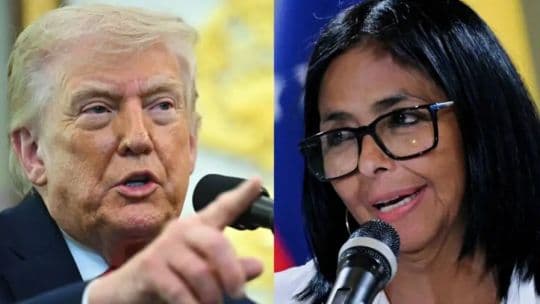
The core of the agreement, as reported by the Buenos Aires Times, is that the US will take a majority stake in Venezuela’s oil reserves, a move that would more than double America’s own reserves at a time when its strategic petroleum reserve is at a 40-year low. Secretary of State Marco Rubio and Defense Secretary Pete Hegseth reportedly brokered the deal with interim leader Delcy Rodríguez, who has been running the country since the US ousted and captured longtime ruler Nicolás Maduro in January. Rodríguez, once Maduro’s vice-president, now toes a careful line between survival and submission, and she has hailed the agreement as a “historic” step that could bring “more than US$100 billion” in private investment and over US$209 billion in tax revenue to the state. The deal also promises to lower gasoline prices for American consumers, a politically charged issue as Trump faces midterm elections and the fallout from a war on Iran that has disrupted global oil supplies.
For outsiders, the scale of this deal might seem abstract, but in South America, it is deeply personal. Venezuela sits atop the world’s largest proven oil reserves—300 billion barrels—yet its infrastructure is crumbling, and foreign investors have long been burned by expropriation and political chaos. The Maduro era left the country’s oil sector in tatters, with production falling to historic lows. Now, under Rodríguez, the government has seemingly opened the doors wide, allowing US companies to develop a dozen productive fields with 90 billion barrels of reserves, as Axios reported. Chevron, the only US oil major still operating in Venezuela before Maduro’s fall, has already ramped up production to 280,000 barrels a day and plans a 50% increase by 2028. This deal, however, goes far beyond Chevron’s existing footprint—it hands over the nation’s crown jewels in exchange for a promise of reconstruction.
What does this signal about the state of capital in South America? For one, it underscores the region’s persistent dependency on external powers, even in the face of nationalist rhetoric. Venezuela’s leaders have long preached resource sovereignty, yet here they are, ceding majority control to the very power that toppled their predecessor. It also highlights a broader trend: the US is aggressively reasserting its influence in its own backyard, using energy as a lever. For private investors, the deal is a double-edged sword. On one hand, it offers a rare opportunity to enter a market with vast untapped potential, backed by US government muscle. On the other, the memory of past asset seizures looms large, and the dilapidated state of Venezuela’s infrastructure means that billions will need to be spent before the oil flows freely. The promise of “high-paying jobs” and economic rebirth, as Rubio put it, is seductive, but the path to realization is fraught with risk.
Looking ahead, the deal’s success hinges on execution. Can Venezuela’s broken industry actually absorb $100 billion in investment and deliver on its promises? Will the US political calculus hold, especially as Trump’s approval ratings sag and the war on Iran complicates global oil markets? For South America, this is a moment of reckoning. If the deal works, it could transform Venezuela into a regional powerhouse again, lifting an entire economy that has been in freefall for over a decade. If it fails, it will be another chapter in a long history of foreign exploitation and broken promises. Either way, the world’s eyes are now fixed on Caracas, and the stakes could not be higher. This is not just about oil; it is about whether a nation can reclaim its future by surrendering its past. The world will be watching, and so will every investor with a stake in the continent’s fortunes.