The Zen of Cold Noodles: Why Zaru Soba Is the Ultimate Status Symbol of Summer
In the sweltering heat of a July afternoon, while the rest of the world reaches for a chilled soup or a fizzy drink, the truly discerning palate finds its salvation in a bowl of cold, buckwheat noodles. There is a quiet luxury in simplicity, and nowhere is that more evident than in Japan's zaru soba—a dish that turns a humble grain into a meditation on texture, temperature, and taste. For the ultra-wealthy, summer is not about escaping the heat; it's about mastering it. And what better way to conquer the sun than with a bowl of perfectly al dente noodles, served on a bamboo mat, accompanied by a dipping sauce that whispers umami? This is not just lunch. This is a statement.
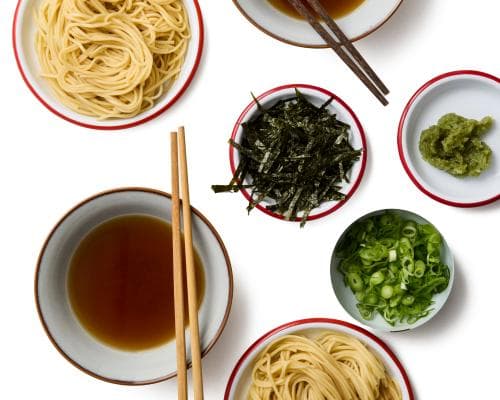
The dish itself is deceptively simple: cold soba noodles, a savory tsuyu dipping sauce, and a scattering of nori. But as with any great masterpiece, the devil is in the details. Namiko Hirasawa Chen of Just One Cookbook calls it her family's go-to when the humidity soars, and for good reason. It takes fifteen minutes to prepare, yet it carries the weight of centuries of culinary tradition. The buckwheat noodle, or soba, is the star. And here's where the connoisseurship begins. Not all soba is created equal. The ratio of buckwheat to wheat flour is the first secret: the more buckwheat, the more intense the nutty flavor, the higher the price tag. A 100% buckwheat noodle is the holy grail—fragile, expensive, and utterly sublime. It's the difference between a mass-produced sedan and a handcrafted hypercar. The serious soba devotee, as Yumiko Maehashi of RecipeTin Japan notes, wouldn't even consider the noodle in hot soup; it's only when cold that the true character of the buckwheat shines.
But the magic doesn't stop at the ingredient list. It's in the technique. The noodles are boiled without salt—a deliberate choice to preserve the contrast with the dipping sauce. You swirl them in the pot for the first fifteen seconds to prevent clumping, then rinse them thoroughly under cold water to halt the cooking and wash away the excess starch. This is the critical step that separates the silky from the sticky, the elegant from the disastrous. Some chefs, like Chen, take it further, plunging the noodles into iced water. Others, like Lisa Kitahara, warn that this can cause the noodles to tighten too quickly, losing their texture. The debate is fierce, and it's exactly the kind of obsession that defines true luxury: the pursuit of perfection in the smallest details. It's the same spirit that drives a watchmaker to spend hours on a movement no one will ever see.
For the billionaire palate, zaru soba is more than a meal; it's a signal. It says you understand restraint, that you value quality over quantity, and that you have the patience to appreciate a dish that offers no hiding place. There's no creamy sauce, no rich broth to mask a subpar noodle. It's just you, the buckwheat, and the soy. This is the culinary equivalent of a minimalist penthouse with a single Rothko on the wall. The recent surge in premium soba brands, some with buckwheat ratios printed like a wine vintage, speaks to a market that craves authenticity and provenance. The fact that you can now find artisanal soba in London's finest grocers, or have it flown in from a legendary Nagano soba master, is a testament to its status as a global luxury commodity.
Looking forward, the summer of zaru soba is only getting more refined. As climate change pushes temperatures higher, the demand for cold, elegant, and healthy dining will only grow. The ultra-wealthy are already investing in private chefs who can execute this dish to perfection, and in home kitchens with dedicated soba-boiling stations. The next frontier? Perhaps a soba bar on a superyacht, with a dedicated noodle master on call. But you don't need a yacht to experience this. You need only a good source of buckwheat noodles, a willingness to master the rinse, and the taste to know that sometimes, the coolest thing you can do is eat a bowl of noodles that are, in every sense, ice cold.
The Experience
To experience the art of zaru soba like a true connoisseur, book a private soba-making masterclass with a Tokyo-based chef, or commission a bespoke soba tasting menu from a Michelin-starred kaiseki restaurant for your next summer soiree.