The Quiet Heir: Inside Apple's $4.5 Trillion Handoff
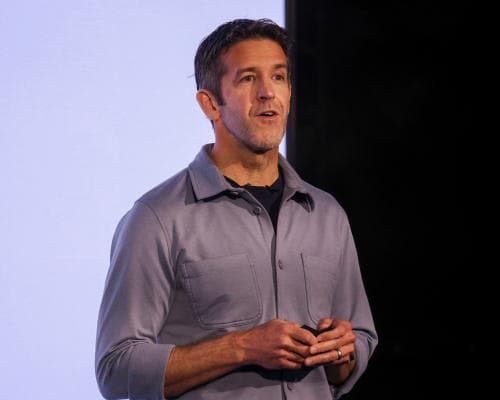
On a sun-drenched California morning, the most valuable company in human history changed hands without a single keynote, without a drumroll, without even a new product on stage. Tim Cook, the man who turned Steve Jobs' wild ambition into a $4.5 trillion fortress of profit, quietly slid into the chairman's chair. And John Ternus—a name most of the world has never heard, but one that has been whispering in the corridors of Cupertino for two decades—took the helm. For the ultra-wealthy, this isn't just a corporate shuffle. It's a signal that the era of the celebrity CEO is over, replaced by something far more interesting: the era of the invisible mastermind.
Ternus is not a showman. He doesn't have the messianic aura of Jobs or the serene diplomacy of Cook. He's an affable mechanical engineer from the University of Pennsylvania, a former varsity swimmer who once built virtual reality headsets for a startup that nobody remembers. But he's the man who made the Mac soar again, who gave Apple its silicon soul. When Apple swapped out Intel chips for its own M-series silicon in 2020, sales exploded—and that was Ternus. When the Apple Watch and AirPods became cultural must-haves, that was Ternus. When the Vision Pro flopped, that was also Ternus, but failure, it turns out, is a luxury he can afford. Apple's yearly profit now tops $100 billion, and iPhone revenue hit record highs this year, fueled by a resurgent China. This is not a turnaround story. This is a coronation of the status quo—but the status quo has never been this rich.
Here's what the connoisseur of fine things needs to understand: Ternus is the rarest of creatures in the tech world—a true craftsman who rose through the ranks without ever seeking the spotlight. He started at Apple in 2001, back when the company was still a niche player, and worked under Jobs himself. He took over hardware engineering in 2013 and became the department's head in 2021. His fingerprints are on every physical object Apple has shipped in the last decade, from the titanium frame of an iPhone Pro Max to the acoustic engineering inside AirPods. Cook called him 'the mind of an engineer, the soul of an innovator, and the heart to lead with integrity and with honor.' That's not a press release talking. That's a mentor handing over the keys to a kingdom he built with his own hands. And Ternus, for his part, is humble to the point of invisibility: 'Having spent almost my entire career at Apple, I have been lucky to have worked under Steve Jobs and to have had Tim Cook as my mentor,' he said. That's the voice of someone who understands that power is best wielded quietly.
For the luxury market, this handoff is a bellwether. Ternus represents the triumph of substance over style—a man whose management style is closer to the calm Cook than the volcanic Jobs. In a world where billionaires buy yachts for their silhouettes and private jets for their logos, Apple is now betting on the opposite: a CEO who is defined by what he does, not what he says. And that's a profound shift in taste. The ultra-wealthy have long understood that true rarity isn't loud; it's the quiet watch that only a collector recognizes, the unmarked bottle that costs more than a car. Ternus is that watch. He's the human equivalent of a bespoke suit with no label. His ascension tells us that the era of the celebrity founder is fading, and the era of the institutional craftsman is here.
But the pressure is already building. While Apple dominates consumer hardware, it has lagged behind Silicon Valley's AI arms race. OpenAI, Google, and Microsoft are sprinting ahead in machine intelligence, and Ternus—the engineer who built the chips that might one day power their rivals—now has to catch up. He'll have help: Johny Srouji, the semiconductor wizard behind Apple's silicon, steps into Ternus' old role. That's a dream team for the hardware side, but AI is a different beast. Ternus has spent his career perfecting physical objects; now he has to master the intangible. If he can pull it off, Apple will remain the ultimate status symbol—the brand that doesn't just make devices, but defines how the 1% interacts with the world. If he stumbles, the $4.5 trillion fortress might start showing cracks.
For the rest of us, this is a rare glimpse into how the super-rich think about succession. Tim Cook planned this handoff for nearly a year, telling his board he wanted to work less. He didn't panic. He didn't parachute in a star from outside. He groomed a loyalist, a man who had been in the trenches for two decades, and he handed him the keys with the confidence of a master craftsman passing his tools to an apprentice who has already proven he can build better than the master. Ternus is 49 years old. He has maybe two decades of leadership ahead of him. And if his first decade as head of hardware is any indication, Apple's next chapter will be defined not by flashy launches, but by quiet, relentless engineering that makes the competition look like they're still using Intel. The message for the wealthy is simple: the best investments are the ones you never see coming. And the best CEOs are the ones you never see at all.
The Experience
To witness the next era of Apple firsthand, schedule a private briefing at the Steve Jobs Theater in Cupertino—where Ternus will unveil his first major product as CEO. Access is by invitation only, but a well-placed call to your private banker can work wonders.