The Original Power Behind the Throne: What Agrippa Teaches Us About Building Wealth That Outlasts Fame
Robert Harris's new novel 'Agrippa' reframes the Roman Empire's architect as the ultimate silent partner—a lesson in how the wealthiest and most powerful figures often depend on overlooked operators. For modern capital builders, it's a masterclass in leverage, loyalty, and the quiet accumulation of influence that never makes the headlines.
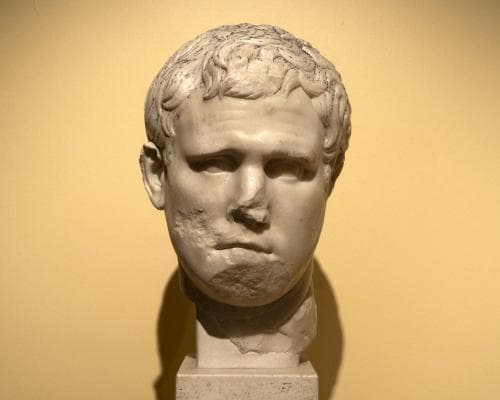
If you've ever wondered why the richest people on Earth seem to have a shadow—someone who handles the messy logistics, the brutal negotiations, the unglamorous grind—Robert Harris has just written your biography. His new novel, 'Agrippa,' pulls back the curtain on Marcus Vipsanius Agrippa, the man who built the Roman Empire while his best friend Octavius took the credit and the crown. This isn't ancient history; it's a playbook for anyone who's ever wondered why some fortunes compound quietly while others evaporate in a puff of publicity.
Here's the deal: Agrippa wasn't just a general; he was the operational genius behind the most consequential wealth transfer in Western history. Harris's narrative runs from civil war through the assassination of Julius Caesar, past the bloodbath at Actium, and lands at Octavius's transformation into Caesar Augustus—the first Roman emperor. While Octavius gets the statues, the coins, and the deification, Agrippa gets... two passing mentions in the emperor's official memoir, the Res Gestae Divi Augusti. It's the ultimate case of the founder's story erasing the COO. For wealth builders, it's a warning: if you're the one doing the heavy lifting, make sure your equity stake is documented in blood, not just in gratitude.
The mechanics of Agrippa's rise are as instructive as any leveraged buyout. He wasn't born to the purple; he was a nobody from the provinces who happened to be good with his fists and quick with his mind. Harris shows him as a meathead who duffs up bullies, then discovers he's just saved Caesar's nephew. Their bond forms over schoolwork and street fights—'He helped me with my classwork. I showed him how to fight.' That's the original founder-friend dynamic: trust built in the trenches, before the cap table gets crowded. Agrippa became Octavius's sole confidant, the only person the sickly, vain, manipulative future emperor could sort-of trust. In modern terms, he was the co-founder who handled operations while the visionary schmoozed the VCs. And it worked—for a while.
But here's the capital angle that should make every family office sit up: Agrippa's reward for building the Roman world was near-total erasure. He left no speeches, few letters, and only a couple of sentences of direct quotation. Harris calls him 'effective co-ruler of the Roman world for many years' and 'the greatest general of the period,' yet Octavius wrote him out of the story. Sound familiar? It's the same pattern as a tech founder who pushes out the early engineer, or a hedge fund star who takes credit for the quant team's models. The lesson isn't cynical; it's strategic. Agrippa's power was real—he commanded armies, won battles, and shaped policy—but he never translated that operational control into lasting institutional ownership. He didn't build a dynasty; he built someone else's.
What does this signal for the wealthy today? It's a stark reminder that the market rewards visibility, not just competence. The ultra-rich who endure—think Buffett, think the Rockefellers—are the ones who understood that capital needs a story, a brand, a public face. Agrippa had the capital of trust and competence, but he let Octavius hold the narrative. The result? While Augustus's name became synonymous with an age, Agrippa's became a footnote. In a world where wealth is increasingly measured in attention as much as assets, that's a dangerous asymmetry. If you're the silent partner, the back-office genius, the operational heart of a fortune, you need to ask yourself: who's telling my story? Because if you don't, someone else will—and they'll probably edit you out.
Looking forward, Harris's portrait offers a contrarian investment thesis: the next great wealth shift won't come from the charismatic founders in the spotlight—it'll come from the Agrippas who make their visions operational. As markets churn and AI reshapes industries, the quiet operators who build the systems, the logistics, the distribution networks, and the risk-management frameworks will be the ones capturing the real value. The Octaviuses will take the credit, but the savvy money will follow the Agrippas. The book is a reminder that the most durable fortunes are built by people who don't need applause—but who know exactly how to get paid. And if you're building your own empire, take the lesson: don't just be the power behind the throne. Be the throne—or at least make sure your name is on the deed.


