The Oracle of Wyoming: Kevin Warsh's Jackson Hole Gambit and the New Etiquette of Power
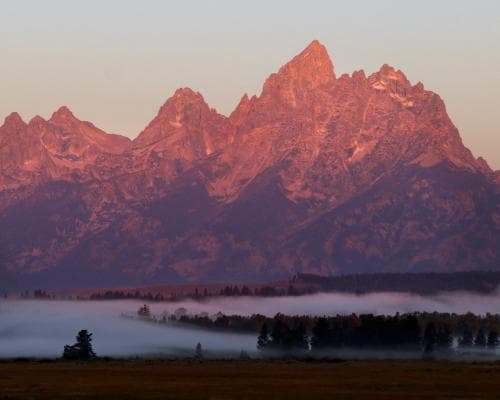
There is a moment, just before the elk wander down from the Tetons and the last private jet touches down on the cracked asphalt of Jackson Hole's runway, when the world's financial elite hold their breath. It's not the mountain air that does it. It's the anticipation. For one weekend each summer, this valley—more accustomed to fly-fishing millionaires and ski chalet moguls—becomes the Davos of the central banking set, a conclave where the most powerful unelected figures on Earth gather to whisper about interest rates, inflation, and the hidden currents of global capital. And this year, the hush is deafening. Because the man at the podium, Federal Reserve Chair Kevin Warsh, has made a career of refusing to tell you what he's thinking.
Warsh, who took the helm of the world's most consequential central bank just months ago, has already proven himself a different breed of power broker. His first press conference in July left investors scrambling for thesaurus apps, searching for nuance in his commitment to 'curbing inflation' while offering zero specifics on the path of rates. Now, at Jackson Hole—the traditional stage for telegraphing monetary policy—he has hinted he might not telegraph anything at all. 'Whether it's going to be a big-picture speech or something more traditional,' he mused in July, as if the choice were between a keynote and a haiku. According to Kathleen Brooks, research director at trading firm XTB, the speech could focus on 'how he plans to run the world's most important central bank, and what changes he will make and when.' In other words, Warsh may be about to redefine what a central bank speech is for—not as a roadmap, but as a mirror.
The stakes could not be higher. Inflation is still running hot, the Iran conflict is squeezing energy prices, and Treasury Secretary Scott Bessent has been quietly buying long-dated bonds in an attempt to push down borrowing costs—a move that puts him on a collision course with the Fed's inflation fight. Lower borrowing costs stimulate the economy, which is the last thing you want when you're trying to cool prices. So the bond market is braced for anything. Deutsche Bank's US economists suggest Warsh might use the platform to discuss the Fed's internal taskforces or the economic impact of artificial intelligence. Or, in a more traditional vein, he could 'clean up' the confusion from July and directly counter the narrative that policy actions will be delayed until those taskforces finish their work. Either way, as Ozkardeskaya of Swissquote notes, every syllable will be dissected like a rare vintage—swirled, sniffed, and analyzed for hints of oak, or in this case, hawkishness.
But here's the rub: Warsh has long argued that forward guidance—the practice of signaling future rate moves—is useless outside of economic crises. He's a purist. He believes the markets should tighten financial conditions themselves, not wait for the Fed's hand. That's a radical stance for a central bank chief, and it's precisely why his Jackson Hole address is such a coveted ticket. This is not a man who will give you a discount on a first-class seat; he'll make you earn it through careful reading of every pause, every qualifier, every glance at the clock. For the ultra-wealthy, this is the new etiquette of power: the ability to sit with ambiguity, to read the silence between words as clearly as the words themselves.
What does this signal about the luxury market? Everything. The ultra-wealthy don't buy assets—they buy certainty. When the Fed chief refuses to provide it, the price of that uncertainty is measured in basis points, in volatility, in the frantic rebalancing of portfolios from Monaco to Manhattan. But there's a deeper message here, one that resonates with anyone who has ever commissioned a bespoke yacht or acquired a first-edition folio. True value is not in the explicit, the stated, the obvious. It's in the implied, the hidden, the carefully curated ambiguity. Warsh is not being opaque for opacity's sake; he's signaling that the era of hand-holding is over. The markets, like the discerning collector, must learn to appreciate the art of the unspoken.
Looking forward, the question is not whether Warsh will cut rates in September or December. The question is whether he will fundamentally change how the Fed communicates with the world. If he succeeds, Jackson Hole will no longer be a site of prophecy, but of philosophy. And for those who can afford to wait—who can hold their positions through the noise—that may be the most valuable asset of all. The mountain valley will empty, the jets will depart, and the elk will reclaim their meadow. But the echo of Warsh's words—or his silence—will ripple through portfolios for months to come. For the world's wealthiest, the only certainty is uncertainty. And the only way to navigate it is with the patience of a collector and the nerve of a central banker.
The Experience
For a front-row seat to the next shift in global monetary policy, consider a private economist's briefing at your residence, followed by a curated portfolio review with a top-tier wealth manager. Access the thinking before the markets do.