The Odyssey's $1B Shadow: Why Greek Tragedy Is the New Blue-Chip Asset
As Christopher Nolan's The Odyssey grosses over $1B, a parallel boom in Greek tragedy—from London's sold-out Oresteia to San Francisco Ballet's Pandora—signals a cultural capital shift where ancient stories are outperforming modern IP. For wealth builders, the lesson is clear: timeless narratives are the ultimate hedge against market volatility.
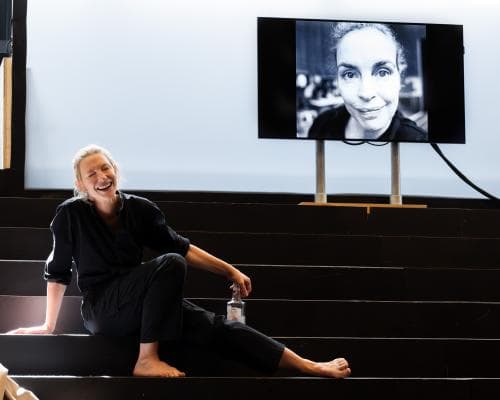
Move over, Odysseus. The men of ancient Greece have had the stage—and the box office—for millennia. But this summer, a quiet revolution is underway in the cultural capital markets, and it's not being led by a hero with a bow and arrow. It's being led by the women: Clytemnestra, Medea, Pandora. And for anyone who thinks art doesn't move money, consider this: Christopher Nolan's The Odyssey has already crossed the $1 billion mark globally, while London's Bridge Theatre is packing houses for a modern reworking of Aeschylus's Oresteia—on a Thursday afternoon, no less. The real story isn't just the revival of ancient texts; it's the premium investors are suddenly placing on narratives that have survived 2,500 years of market crashes, regime changes, and cultural shifts.
The deal here isn't a merger or an acquisition—it's a reallocation of attention, which in today's economy is the scarcest asset of all. Simon Stone's Oresteia, starring David Morrissey and Mary-Louise Parker, has turned a family's intergenerational violence into a must-see event, with audiences paying top dollar for a story that predates the Roman Empire. Meanwhile, San Francisco Ballet's Mere Mortals, inspired by Pandora, is drawing crowds in Edinburgh before heading to Sadler's Wells in September. This isn't niche theater for classics professors; it's a mainstream cultural phenomenon with real economic velocity. When a Thursday matinee sells out, that's not just art—that's a signal.
Let's talk mechanics. Stone's genius—and his market value—lies in his ability to strip these ancient stories down to their emotional and financial bones. His 2023 Phaedra with Janet McTeer blended Euripides, Seneca, and Racine into a single, devastating narrative. His 2019 Medea, starring Marieke Heebink, began with the title character leaving an asylum after attempting to kill her ex-husband—a choice that turned a myth into a contemporary psychological thriller. The dread piled up like bodies, and audiences paid premium prices for the privilege of feeling it. This is the economics of catharsis: people will always pay for stories that make them feel something real, especially in a world where AI-generated content is flooding the market with cheap, disposable narratives.
The rarity angle is crucial here. You can't manufacture a 2,500-year-old story. You can't IPO a myth. The Oresteia, Medea, and Pandora are not intellectual property that can be leveraged, licensed, or diluted. They are cultural blue-chips, with a track record longer than any stock on the S&P 500. For the ultra-wealthy, who increasingly diversify into art, theater, and cultural patronage as a hedge against inflation and geopolitical instability, these stories offer something that tech stocks can't: permanence. A tech company can be disrupted in a decade; a Greek tragedy has already survived every disruption humanity has thrown at it.
What does this signal for markets? First, the success of The Odyssey proves that audiences are hungry for stories with weight—not just franchise IP. Second, the surge in Greek tragedy, particularly the female-led narratives, suggests a cultural shift toward stories that grapple with power, revenge, and consequence, themes that resonate in an era of wealth inequality and political instability. For investors, this is a leading indicator: when cultural capital flows toward ancient narratives, it often precedes a flight to safe-haven assets. People are looking for stability, and what's more stable than a story that has been told for 25 centuries?
For the wealthy, the takeaway is twofold. On one level, this is a reminder that the most valuable assets are often the ones you can't put a ticker on. On another, it's a practical play: cultural patronage—funding theater, ballet, and the arts—is not just philanthropy; it's a strategic allocation. When you back a production like Mere Mortals or a reworked Oresteia, you're not just buying a tax write-off; you're aligning your brand with timelessness in a world obsessed with the next quarter. And unlike a startup, these assets don't dilute, don't get disrupted, and don't go bankrupt. They only appreciate in meaning—and, increasingly, in market value.
So, as the summer scorches on and Nolan's Odysseus sails past yet another box-office milestone, watch the women of ancient Greece. They're not just having their moment in the sun—they're quietly becoming the most reliable investment in the cultural economy. The smart money, as always, is on the stories that outlast us all.


