The High-Stakes Rescue Beneath the Himalayas: When Nature Tests the Limits of Modern Wealth
Imagine this: you're sipping a single-origin espresso in your Mayfair study, and your phone buzzes with a WhatsApp message from a Himalayan tour guide that you'll never forget. It's a voice note, crackling with static, saying your mother and aunt are trapped somewhere near the Friendship Bridge, the gateway between Nepal and Tibet, and that a wall of mud has just erased the road behind them. That's the nightmare that unfolded for Tulshi Patel, a pharmacist from Milton Keynes, who has spent the last 72 hours doing what any of us would do—scrolling through TikTok, tracing GPS pings, and praying for a blue tick on a message that may never be read. But Patel's story isn't just a human tragedy; it's a stark reminder that even the most privileged among us are helpless against nature's fury. And for the ultra-wealthy, who often treat the Himalayas as their personal playground, this crisis is a sobering lesson in the limits of money, technology, and influence.
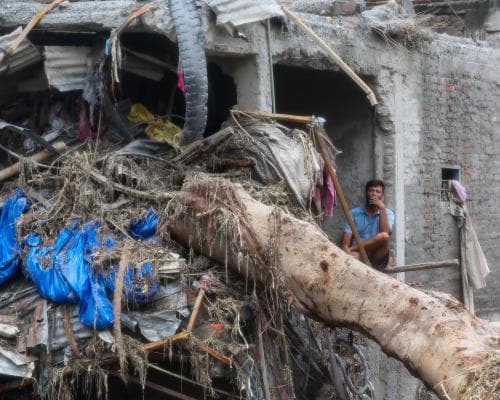
The numbers are staggering. Nearly 3,000 people are missing after flash floods and landslides tore through Nepal's mountainous terrain, with over 100 workers believed to be trapped inside the Trishuli 3A and 3B hydropower tunnels. The Nepali army has been drilling through mud and rock, sending air pipes and cameras into the darkness, hoping to reach survivors. Meanwhile, the National Disaster Risk Reduction and Management Authority has issued a stern warning: unauthorized drones are grounded. Why? Because these flying gadgets, the same ones you might use to capture that Instagram-worthy shot of Everest, are interfering with rescue helicopters. It's a classic case of privilege colliding with reality. Your toy could be the difference between life and death for someone buried alive. The authority's message is clear: no permission, no flight, no exceptions. Legal action awaits those who ignore the ban, and that's a warning that even billionaires should heed.
But let's talk about the craftsmanship of rescue itself. The operation at Trishuli is a masterclass in precision engineering under pressure. The Ministry of Energy reports 'partial success' in drilling operations, with teams now attempting to send cameras and oxygen into the tunnel. This is not your average construction site; it's a high-stakes, life-or-death endeavor where every millimeter of progress is measured against the clock. The rescue workers are using specialized air compressors, borehole cameras, and oxygen supply systems—equipment that would cost a fortune in any luxury market, yet here it's deployed with a different kind of value: human life. The fact that these efforts are being led by home minister Sudan Gurung, who has personally overseen the operation, underscores the gravity. For those of us who are used to buying our way out of any situation, this is a humbling reminder that some things can't be expedited with a private jet or a platinum card.
The Patel family's ordeal also highlights a new, unsettling trend in the luxury travel sector: the digital footprint of the elite. Patel found her mother's last known location through a TikTok video posted by the tour guide, a snippet that showed her mum and aunt waiting at the border with three others. In the high-end travel world, where bespoke itineraries and exclusive guides are the norm, this reliance on social media is a paradox. We pay for privacy, but in a crisis, it's the public, unfiltered feed that becomes our lifeline. The guide's video, perhaps meant to capture a moment of anticipation, became a forensic clue for a daughter 4,000 miles away. It's a haunting image: a group of pilgrims, their backpacks and prayer beads, standing at the edge of the world, unaware that in a few hours, the earth will swallow the path ahead.
For the luxury market, this disaster signals a shift. The ultra-wealthy are no longer content with just buying experiences; they're demanding resilience. We're seeing a rise in 'extreme expedition' insurance, satellite communication devices, and even personal safety drones—though, ironically, these are now banned in disaster zones. The message is clear: true luxury is not about opulence; it's about security. It's about having a team of experts who can navigate the unthinkable, from a boutique hotel in Kathmandu to a rescue helicopter that can reach a stranded party in minutes. But as Nepal's floods have shown, even the most sophisticated plans can be washed away in a moment. The question for the world's elite is not whether they can afford to travel to the world's most remote corners, but whether they can afford the risk.
Looking ahead, this crisis will likely reshape how the wealthy approach adventure travel. Expect a surge in demand for 'safety-integrated' expeditions, where guides are equipped with real-time satellite tracking and emergency response plans that are rehearsed, not just theoretical. The Patel family's relentless research—calling WhatsApp numbers, scouring social media, and coordinating with local authorities—offers a blueprint for the future: a hybrid of human intuition and digital forensics. And while the rescue efforts continue, with air pipes now delivering oxygen to the trapped, there's a glimmer of hope. But for now, the Himalayas remain a reminder that nature doesn't negotiate, and even the most powerful among us are just guests in its domain. For those who wish to experience the world's highest peaks, the only way forward is with humility, preparation, and perhaps, a little less drone footage.
The Experience
For those seeking to explore the world's most remote destinations with absolute safety, private concierge services now offer bespoke crisis-response planning, including satellite communication and on-call rescue teams. Contact your luxury travel advisor to design an expedition that prioritizes your security without sacrificing the thrill.