The High Fens Inferno: Europe's Climate Risk Just Got a New Price Tag
As wildfires kill two in Greece and scorch Belgium's High Fens reserve, the continent's insurers, asset managers, and wealthy property owners face a stark new reality: climate risk is no longer a Mediterranean problem, it's a core portfolio threat. The cost of protecting capital in Europe is rising faster than the flames.
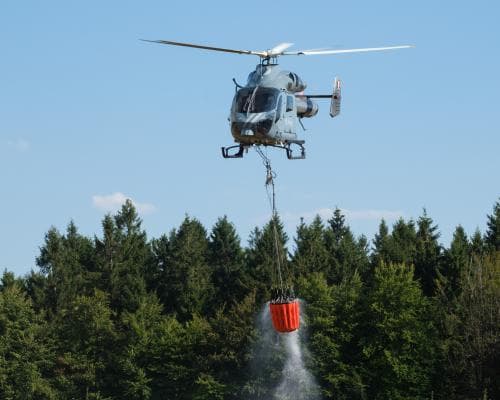
Two bodies recovered from a beach on the Greek island of Salamis. A Belgian nature reserve, the High Fens, reduced to 3,000 hectares of ash. And a fleet of Swedish water-bombers, Dutch helicopters, and German firefighters scrambling to hold a line that keeps moving east toward the German border. This isn't a distant humanitarian headline — it's a live stress test for European capital. For anyone managing money in this region, the message is brutal and unmistakable: the geography of risk has shifted, and your portfolio's defensive lines are likely drawn in the wrong place.
The scale of the Belgian blaze is what should make wealth managers sit up. Authorities are calling it the largest wildfire in the country in over a century. That's not hyperbole — that's a once-in-a-hundred-years event happening on a random weekend in July. And it's happening in the High Fens, a peat-rich plateau that sits at 700 meters elevation, not in the sun-baked Mediterranean. The peat is the problem: it smolders underground, resists surface suppression, and can reignite days after the flames appear to be out. For investors, peat bogs are the perfect metaphor for climate risk — the real damage is below the surface, invisible, and compounding.
Now, let's talk about the money. The immediate response has cost Belgium's Liège province hundreds of thousands of euros in emergency services alone — 250 firefighters, four helicopters, two fixed-wing aircraft, and a fleet of farmers' tractors hauling water from Lake Robertville. But the real bill comes later. Expect a wave of insurance claims for property damage, business interruption, and — critically — liability claims against municipalities for failing to manage forest fire risk. The High Fens is a protected area with wooden boardwalks and fragile ecosystems; those boardwalks are now either ash or a legal liability. In the coming quarters, European reinsurers like Munich Re and Swiss Re will be updating their models, and premiums for wildfire exposure in northern Europe — previously negligible — will start to move. That's a direct hit to commercial real estate values in regions like Wallonia, the Ardennes, and even parts of Germany's Eifel.
For the wealthy, this is a wake-up call about where they're parking their capital. The traditional playbook said put money in 'safe' northern European real estate, buy a chalet in the Ardennes, or hold timberland as an inflation hedge. But timberland is now a fire asset — literally. The High Fens is a prime example of a 'green' investment turning into a liability because its very nature — dense forest, dry peat, limited access — makes it both ecologically precious and operationally indefensible. The evacuation orders in Waimes and Bütgenbach, affecting 600 people, are a preview of the 'climate migration' that will hit even wealthy enclaves. The governor of Liège, Hervé Jamar, has already flagged the challenge of coordinating cross-border firefighting; imagine coordinating cross-border insurance claims.
But here's the deeper signal for markets: this is a demand shock for climate adaptation infrastructure. Europe is going to spend billions on water-bombing aircraft, early warning systems, and firebreak construction. Sweden sent two planes; the Netherlands sent helicopters. That's a supply chain for emergency capital that didn't exist a decade ago. Companies that build fire-resistant materials, satellite-based detection systems, or peatland restoration technologies are going to see a surge in government contracts and private investment. For the discerning investor, the 'fire economy' is becoming a distinct asset class — think of it as the inverse of the fossil fuel divestment trade. You're not just avoiding carbon; you're buying protection against its consequences.
The other angle is the human capital flight. The two deaths in Greece are tragic, but they also underscore a pattern: fires are now killing people in places where they never did before. Salamis is a small island near Athens, not a remote wilderness. For family offices with second homes in Greece, Spain, or Portugal, this is a pricing signal — insurance for coastal properties is already climbing, and it's about to climb faster. The 'lifestyle hedge' of owning a Mediterranean villa is now a climate risk concentration. Smart allocators are already diversifying their property exposure away from high-risk zones, and this weekend's events will accelerate that rebalancing.
So what does the next quarter look like? Expect European reinsurance rates to firm up for wildfire coverage, expect municipal bond spreads to widen for regions like Liège that face repeated disaster costs, and expect a new wave of 'climate adaptation' IPOs and private placements. The High Fens fire is not a one-off — it's a benchmark. When the next one happens, and it will, the market will be watching not just the flames, but the balance sheets they torch. For now, the smartest capital is moving toward resilience — not away from risk, but toward the businesses that make risk manageable. That's where the alpha is, and it's burning brighter than the peat.


