The Cool Escape: How a Northern Retreat Became the Ultimate Status Symbol
There is a moment, somewhere north of the Pennines, when the car thermometer drops below 20 degrees and the air smells of wet heather. That is the moment I knew I had escaped. Not to the Riviera, not to a private island, but to a rented studio in the Scottish Highlands, where the mornings demand porridge and the evenings require a jumper. For the past month, I have been watching the mercury rise across London, and with it, the collective patience of the city fray. My elderly dog, a creature of habit and thick fur, was wilting. My second novel, a project that demands clarity, was stalling. So I did what any sensible person with a deadline and a car would do: I drove north until the heat became a memory. And in that drive, I rediscovered something more valuable than any asset in my portfolio: the joy of cooking for pleasure, not necessity.
This is not a story about weather. It is a story about priorities. In a world where the ultra-wealthy charter jets to Saint-Tropez or Aspen, the true connoisseur knows that the most exclusive destination is often the one that offers a different kind of climate—one that cools the mind as much as the body. My studio is modest, unassuming, and utterly perfect. It has no air conditioning because it needs none. The wind off the loch does the work. And in this simplicity, I have found a luxury that no five-star resort can replicate: the ability to turn on the oven at four in the afternoon without guilt. The British supermarket chain Waitrose recently reported a spike in sales of cottage pie and robust South African red wine—a quiet signal that even the masses are craving comfort. But we, the discerning few, know that comfort is not about nostalgia; it is about intention.
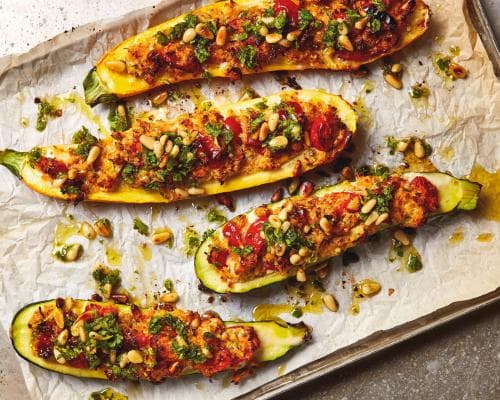
Consider the ingredients. I brought tomatoes from London, not because the Scottish west coast lacks them, but because I wanted to test a theory: that a tomato, when treated with respect, can be the star of a meal that feels both summery and substantial. I have been eating them on toast, slathered with good butter, and dreaming of Joe Woodhouse's luxuriant version with crème fraîche and mint. But the real magic happens when I turn to the classics. Yotam Ottolenghi's Mexican-inspired prawn-stuffed peppers, with their smoky heat and sweet flesh, are a revelation. Sami Tamimi's Palestinian freekeh with lamb and spicy tomato sauce is a masterclass in layering. And my own Provençal-style stuffed courgettes—a recipe I have honed over years—are a quiet tribute to the Mediterranean, but made bearable by the cool Scottish air. The secret, as Rachel Roddy's partner's Sicilian grandmother knew, is to do the frying early in the morning, so the heat of the kitchen is finished by ten. Here, that advice is not a survival tactic; it is a pleasure.
The craftsmanship of this lifestyle lies in its restraint. There is no need for a Michelin-starred chef when you have a good knife, a heavy pan, and the time to let a sauce reduce. The aubergine, that most demanding of vegetables, becomes a canvas for Atul Kochhar's Chettiar curry, with its deep, spiced complexity, or Arto Der Haroutunian's tagine, which perfumes the whole house with saffron and cumin. Anna Del Conte's aubergine pasta pie is a showstopper, a towering construction of silky layers that impresses even the most jaded palate. These are not recipes for the faint-hearted; they are for those who understand that the act of cooking is a form of self-care, a way to mark time that is both productive and pleasurable. And when I do find a less worthy tomato, it goes straight into Nigel Slater's sausage, tomato, and lentil bake, gilded with chilli oil, or perhaps Jessica B. Harris's fried green tomatoes—a dish that, as a lady from Alabama once informed me, needs no accompaniment. She was right.
What does this signal about wealth and taste? It signals that the ultimate luxury is no longer a branded handbag or a limited-edition watch. It is the ability to choose your environment, to curate your own microclimate, and to find joy in the simplest of rituals. The wealthy have always sought escape—from the city, from the heat, from the noise. But the new frontier is not a private island; it is a rented studio in the Highlands, where the rain on the window is a symphony and the chill in the air is a welcome guest. This is not about escaping reality; it is about reconnecting with it. The market for such retreats is booming, as those who can afford anything realize that the most precious commodity is not gold or crypto, but a cool evening and a warm oven.
As the season turns, I will return south, but I will carry this lesson with me: that true luxury is not about accumulation, but about attention. The attention to a tomato, to a dog's comfort, to a novel's pacing. The attention to the moment when the oven heats up and the kitchen fills with the smell of garlic and herbs. This autumn, I will be the one in the kitchen, sleeves rolled up, a glass of robust red wine in hand, cooking not because I have to, but because I want to. And I invite you to do the same. Find your own cool escape, whether it is a cottage in the Cotswolds or a penthouse with a north-facing terrace. And when you do, remember: the best recipes are the ones that make you feel alive, no matter the weather.
The Experience
To embrace this lifestyle, consider renting a remote estate in the Scottish Highlands for a week, where you can source local produce and cook with abandon—or book a private chef to recreate these dishes in your own kitchen.