The Art of the Comeback: How Tennis Royalty Is Redefining Grit at the 2026 US Open
There is a moment in every champion’s life when the script flips. When the perfectly manicured narrative of inevitability — the one that has you pegged for a quarterfinal exit or a fifth-set collapse — suddenly tears at the seams. At this year’s US Open, we witnessed that moment in its rawest, most riveting form, courtside in Flushing Meadows. It wasn’t just a tennis match. It was a masterclass in the psychology of reversal, a live demonstration that the most valuable asset in any portfolio — athletic or otherwise — is the nerve to rewrite your own story when the world has already written you off.
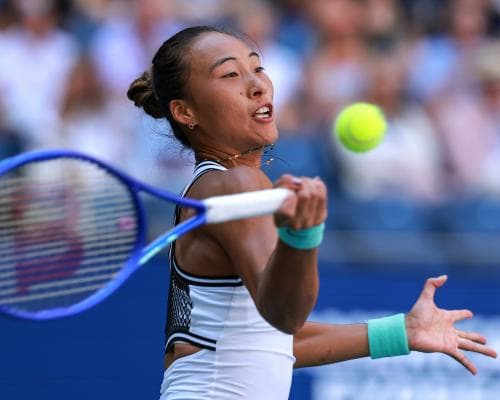
Consider the scene: Olympic champion Zheng Qinwen, down 5-0 in the opening set against Iga Swiatek, the Polish powerhouse who has made a career of suffocating opponents with her relentless baseline artillery. Most players would have quietly packed their racquets, mentally booking their flight home. Instead, Zheng did something far more interesting. She stopped fighting the match and started playing the point. As she later put it, with the kind of understated clarity that separates the greats from the merely gifted, “I start the match not so well and little by little I find my radar.” That radar, once locked, turned a seemingly insurmountable deficit into a straight-sets victory that left Swiatek waving a mournful farewell to the crowd, tears glistening under the Arthur Ashe lights. It was, by any measure, an upset. But for those of us who watch wealth and power closely, it was something else entirely: a reminder that status is never static, and that the ability to recalibrate under pressure is the ultimate marker of class.
The numbers tell a story of their own. Zheng, who had not beaten a top-10 player in what felt like an eternity, found her aggression just when Swiatek’s own power began to betray her. A 118-mile-per-hour serve here, a reflex winner dug out from the shadows there — these weren’t just shots. They were statements. Meanwhile, across the court, a parallel drama unfolded as Mirra Andreeva, the teenage sensation with the poise of a veteran, staged her own comeback against a tearful Anastasia Potapova, who crumpled to the baseline with a knee injury that threatened to end her match prematurely. Andreeva’s post-match words were a study in grace: “She’s my good friend, and seeing her fall like this, it’s not easy.” That blend of competitive ferocity and genuine compassion — the ability to win while holding space for another’s pain — is the kind of emotional intelligence that money cannot buy, but that the ultra-wealthy recognize instantly in their own boardrooms and bidding wars.
This is where the story transcends sport. For the collector of rare experiences, for the connoisseur of human excellence, the 2026 US Open has become a living gallery of resilience. Zheng’s victory wasn’t just a win; it was a recalibration of the sport’s power dynamics, a signal that the old guard — even one as formidable as Swiatek — is no longer immune to the ambitions of a hungrier generation. The craftsmanship here is not in the forehand or the footwork, but in the mental architecture: the ability to lose the first five games and still see the match as a blank canvas. That is the same mindset that drives a founder to pivot a failing startup into a unicorn, or a collector to spot a forgotten masterpiece in a dusty estate sale. It is the rarest of luxuries: composure under fire.
For the luxury market, this match is a mirror. We prize limited-edition timepieces and bespoke yachts for their scarcity, but true exclusivity has always been about character. Swiatek’s departure — a single, mournful wave of her racquet — was a reminder that even the most polished careers have their shadow seasons. Zheng’s collapse to the floor, followed by the widest of smiles, was the opposite: a declaration that the comeback is the new status symbol. In a world where the ultra-wealthy increasingly seek experiences that test their mettle — from summit expeditions to hyper-marathons — tennis offers a front-row seat to the most refined form of risk management. You can’t buy a comeback, but you can witness one, and that vicarious thrill is worth more than any box seat.
Looking ahead, the implications are electric. Zheng’s next match will be watched with a different kind of reverence, not just for her shots but for her newfound ability to bend fate to her will. Andreeva, too, is on the ascent, her friendship with Potapova a subplot that adds texture to the sport’s brutal individualism. The 2026 US Open is no longer just a tournament; it is a case study in how the elite adapt, survive, and ultimately thrive when the odds are stacked against them. For those of us who chronicle wealth, the lesson is clear: the most coveted asset of all is not a watch or a jet, but the nerve to keep swinging when the first set is lost. That, my friends, is the true mark of a champion — and the only investment that never depreciates.
The Experience
Reserve a courtside suite for the 2027 US Open through premium hospitality partners, or book a private coaching session with a former Grand Slam finalist to learn the mental game firsthand.