The $650,000-Copy Blueprint: Why a 1942 Welfare Report Still Moves Capital
A new Simon Callow film revives William Beveridge's radical 1942 welfare blueprint, a document that sold 650,000 copies and reshaped British state finance. For wealth builders, it's a reminder that policy shifts—not just markets—determine where capital flows and how fortunes are protected.
In 1942, a government-issued pamphlet with the dreariest title imaginable—Social Insurance and Allied Services—caused a queue a mile long outside a London stationery office. Six hundred and fifty thousand copies sold. That's not a typo. A bureaucratic report outsold most novels. And now, a new film starring Simon Callow is dragging that moment back into the spotlight, just as Britain's new prime minister vows to rebuild the state. For anyone managing serious money, this isn't a history lesson. It's a warning that the political weather can shift faster than any portfolio.
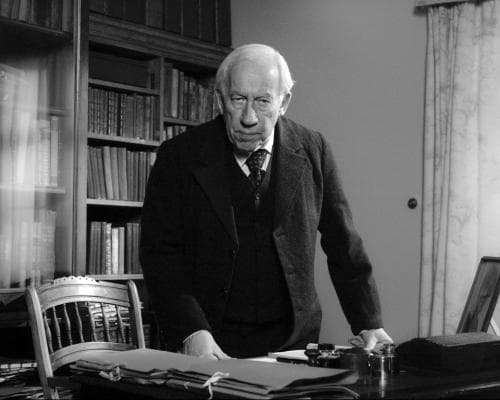
The film, The Man With the Plan, tells the story of William Beveridge—the Liberal peer who designed Britain's postwar welfare state. But here's the twist: Beveridge was far more radical than the history books suggest, and certainly more radical than Winston Churchill expected when he commissioned the report. Churchill wanted a tidy review of social insurance. Beveridge delivered a blueprint for slaying five giants: want, disease, squalor, idleness, and ignorance. That's not a policy document. That's a manifesto. And it landed in the middle of a war, when the nation's finances were already stretched to breaking point.
Let's put the scale in perspective. The report proposed a universal system of social security, a national health service, and full employment—all funded by the state. In today's money, that's trillions in commitments. Beveridge's plan didn't just create a safety net; it created a permanent claim on government revenue. For the wealthy of the era, it was a seismic shift. Inheritance, property, and capital gains were about to be taxed to fund a social contract that had never existed before. The wealthy didn't just lose a few basis points. They lost the assumption that the state would stay small.
The film's journey is as unconventional as its subject. It's not heading to multiplexes. It's touring libraries, community centres, and small venues—a fitting tribute to a document that was written for the common citizen, not the boardroom. Christine Edzard, who wrote and directed, runs Sands Films Studio in Rotherhithe with producer Olivier Stockman. Their previous work includes Little Dorrit and As You Like It. But this isn't just a costume drama. The Man With the Plan uses a young student, Flea, who encounters Beveridge's five giants personified—squalor voiced by Miriam Margolyes, no less—to confront the sceptics who still argue that the state can't afford compassion.
Why should a wealth desk care about a 1942 report and a small-budget film? Because Beveridge's legacy is still shaping where capital goes. The NHS, born from his blueprint, now consumes over £180 billion a year. That's a permanent drag on UK government bonds, a structural buyer of gilts, and a reason why British pension funds behave differently from their American counterparts. When the new prime minister talks about 'mission-driven' government, he's reaching for the same rhetorical toolkit. And when governments expand, they need money. That means higher taxes, more issuance, and a reshuffling of who gets paid first.
For family offices and private investors, the lesson is simple: policy is a market force. Beveridge's report didn't just change lives—it changed the yield curve. It made government debt a permanent feature of the financial landscape. It created a new class of public-sector assets. And it taught the wealthy that the state can reach into your pocket at any time, with a popular mandate and a queue of citizens demanding more. The film's title, The Man With the Plan, is almost ironic. Beveridge's plan wasn't just a plan. It was a redistribution of national wealth, dressed up as a bureaucratic necessity.
So as the film tours Britain's small halls, watch the reaction. If audiences embrace Beveridge's radicalism again, the political conversation will shift. And when the conversation shifts, capital moves. Not because of a single report, but because the ideas in that report never really died. They just went dormant. The Man With the Plan is a reminder that the next great reallocation of capital might not come from a tech IPO or a central bank decision. It might come from a quiet evening in a community centre, where someone rediscovers a blueprint for a fairer world—and the markets will have to price it in.