Syrian exiles build a digital bridge home: My Syria super app launches from the UAE
UAE-based Syrian founders launch My Syria, the country's first tourism super app, backed by the Tourism Ministry.
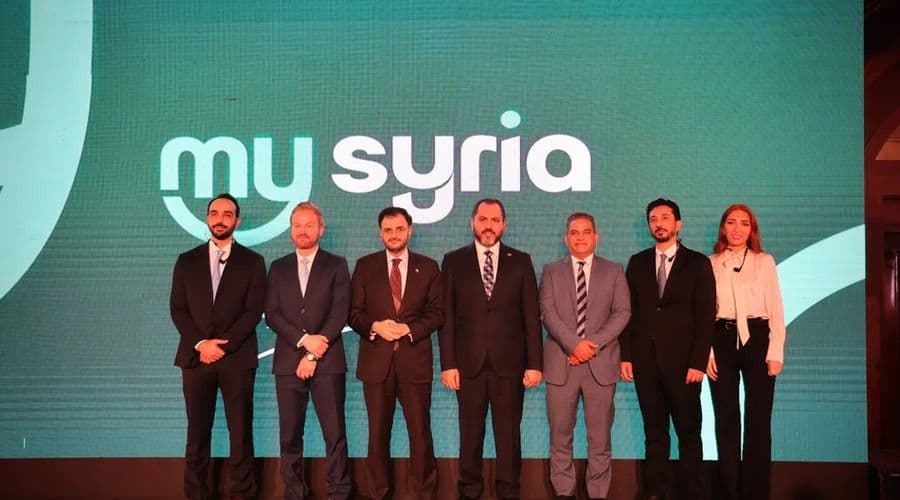
For a generation of Syrian businesspeople who built their careers in Dubai, the home country they left behind has often felt like a closed chapter — a place of memory, not markets. This week, four of them turned the page in a very public way. Rami Kaiem, Feras Kaiem, Waseem Qudmani and Kinan Madi, the founders of UAE-based startup 121 Living, have launched My Syria, the country's first integrated super app for tourism, lifestyle services and digital payments. The launch, held under the patronage of Syria's Minister of Tourism, Mazen Al-Salhani, is a small piece of infrastructure with an outsized symbolic weight: it is the first serious attempt to wire Syria's hospitality economy into the global payment system since the country's long isolation began.
The platform itself is straightforward in design, ambitious in scope. My Syria currently bundles eight services — hotel bookings, restaurants, transport, tourist attractions, experiences and food delivery — into a single mobile application. The stated plan is to expand to more than 40 verified tourism and hospitality providers across the country. But the real headline is the payments layer. My Syria is the first platform in Syria to accept cross-border digital payments through Apple Pay, Google Pay, Visa, Mastercard and American Express. That means an international visitor can land in Damascus, open the app and pay for a hotel or a meal with the same card they use in London or Riyadh, without hunting for a local currency exchange or a bank that will touch a Syrian merchant. For a country where international sanctions and banking restrictions have long made even simple transactions a logistical nightmare, that is not a feature — it is a statement.
The founders are not newcomers to this kind of bridge-building. 121 Living is registered in the UAE, and its principals are part of a larger Syrian business diaspora that has flourished in the Gulf over the past decade. They know both sides of the equation: the efficiency of Dubai's digital economy and the friction of operating inside Syria. The strategic backing of the Ministry of Tourism matters here beyond the ceremonial. Minister Al-Salhani framed the launch as part of a deliberate government push to enable private-sector innovation, and the ministry's roadmap for digital transformation is clearly designed to signal to outside investors that Syria is open for business — or at least for tourism — in a way it has not been in years. The timing is not accidental. Visitor arrivals to Syria more than doubled in the first half of 2026, according to the ministry's own data, and the appetite for digital services is growing alongside that influx.
What makes this deal significant for readers who track Middle East capital is not the size of the investment — no figures were disclosed — but the direction of it. The UAE has become the launchpad for Syrian entrepreneurs rebuilding ties with their homeland, and this app is a practical test of whether that dual identity can work commercially. It also reflects a broader regional pattern: Gulf-based founders and investors are increasingly looking at post-conflict markets as the next frontier, not as charity cases but as underserved consumer bases with pent-up demand. The fact that the first mover in Syria's tourism digitization is a UAE-based company rather than a local one tells you where the expertise and the capital have been parked for the last decade.
There is, of course, a long road ahead. A super app is only as good as its network of merchants, and convincing hundreds of Syrian hotels and restaurants to standardize their booking systems will take time. The payment infrastructure, while a genuine first, will still face the practical realities of international banking compliance and the lingering caution of global card networks. But the bet here is not just on tourism — it is on the normalization of Syria as a place where digital commerce can flourish. For the Syrian diaspora, and for the Gulf investors watching from the sidelines, My Syria is less an app than an argument: that the country's recovery will be built, at least in part, by the people who left — and that they are coming back with better tools than they left with. The next phase, as the founders themselves say, is about expanding coverage and adding services. If they pull that off, this quiet launch in Damascus may be remembered as the moment Syria's economy started to rejoin the region's digital mainstream.


