Scotland's Bold Bet: A 39-Year-Old Belgian and the High-Stakes Economics of National Team Rebuilding
Scotland's decision to hire Sébastien Pocognoli as Steve Clarke's successor is a calculated gamble by the SFA, trading stability for innovation in a bid to maximize the commercial and competitive value of a golden generation. For wealth builders, it's a case study in how institutions price risk when a legacy asset underperforms.
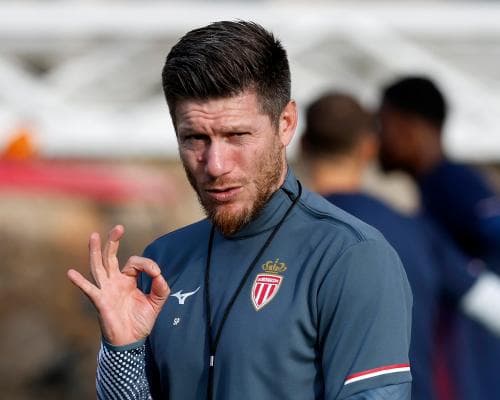
When a national football association fires a manager who just signed a four-year extension days before a World Cup, it's not just a sporting decision—it's a boardroom admission that the old playbook is broken. Scotland's abrupt parting with Steve Clarke after a group-stage exit wasn't about tactics; it was about the bottom line. Miss another tournament cycle, and the revenue streams from broadcast rights, sponsorship, and merchandise dry up faster than a penalty shootout hope. So the Scottish FA did what any distressed asset manager would do: they cut their losses and placed a contrarian bet on youth, hiring 39-year-old Sébastien Pocognoli, a Belgian who was sacked by Monaco in June, as the first non-Scottish boss since Berti Vogts two decades ago.
The move is a stark repricing of Scotland's football equity. Clarke delivered three major tournament appearances in seven years—a historic run that filled the SFA's coffers with UEFA prize money and gate receipts. But his pragmatic, defensive style was a drag on the brand, alienating fans and, crucially, underwhelming the commercial partners who pay premium for excitement. The SFA's decision to pivot to Pocognoli, despite his recent Monaco failure, signals a shift from valuing safety to valuing upside. It's the equivalent of a family office dumping a blue-chip bond for a growth stock: higher risk, but a potentially transformative reward if the bet pays off.
Financially, the stakes are enormous. Scotland's Nations League campaign, starting with a trip to Slovenia on 26 September, is not just about pride—it's a direct pipeline to World Cup and Euro qualification, where group-stage participation alone is worth millions in UEFA distributions. A successful run under Pocognoli could unlock an estimated £20-30 million in additional revenue over the next cycle, a meaningful boost for a federation that operates on a fraction of England's budget. The SFA is betting that Pocognoli's innovative approach, honed during his title-winning spell at Union Saint-Gilloise—where he ended a 90-year drought in 2025—will translate to a national team that has often punched above its weight but never fully capitalized on its talent pool.
Pocognoli's appointment is also a cultural and economic arbitrage. At 39, he's younger than some of his players, a generation shift that mirrors the broader trend in elite football where clubs and countries are increasingly hiring data-driven, progressive coaches over seasoned veterans. His brief, disastrous eight-month stint at Monaco—38 games, a sacking—is a red flag, but it's also a crash course in managing egos and expectations at the highest level. The SFA is essentially buying a distressed asset at a discount, hoping the Monaco failure was a fit issue, not a fundamental flaw. The addition of Kevin Mirallas, the former Everton and Belgium winger, as his likely assistant, adds a layer of familiarity and tactical nous that could smooth the transition.
For the wealthy and the institutional investors watching from the sidelines, this is a masterclass in risk management. The SFA didn't panic; they recalibrated. They recognized that Clarke's model had hit its ceiling—three tournaments, but no knockout-round wins—and that the cost of inertia (another failed qualification cycle) far outweighed the risk of a bold hire. Pocognoli's mandate is clear: play attractive, attacking football that fills Hampden Park, attracts new sponsors, and, most importantly, delivers results. If he succeeds, Scotland becomes a more valuable property, both on and off the pitch. If he fails, the SFA can point to the data-driven rationale and move on, but the opportunity cost of another lost cycle is incalculable.
Looking ahead, the real test isn't the friendly against Switzerland on 29 September—it's the competitive matches that will define Scotland's financial future. Pocognoli's ability to adapt his club success to the international stage, where training time is limited and player availability is fragmented, will be the ultimate arbitrage. The SFA has made its move; now the market will judge. For fans, it's hope. For the suits, it's a leveraged bet on a new asset class. Either way, Scotland has signaled that in the high-stakes game of football economics, standing still is the most expensive strategy of all.


